
LyfeFocus does not sell fantasies. A posture corrector can work, but only if you stop treating it like a magic fix and start using it as feedback training. Wearing it all day can create bracing and discomfort. Using it in short, targeted windows can build self-correction.
Why a posture correctors and back support is feedback, not a replacement
Most people do not notice their slump until pain shows up. Feedback shifts that timeline. You correct earlier, which reduces the total hours you spend in the position that irritates the neck and upper back. That is why posture correction can reduce symptoms, not because it “forces” you, but because it improves awareness and timing.
If you expect instant posture perfection, you will be disappointed. Posture is a habit built over years. Tools accelerate learning, they do not remove the need for practice.
How posture corrector neck strain improves when the upper back stops collapsing
Forward head posture often comes from a collapsed ribcage and stiff upper back. When the chest opens gently and the ribcage stacks, the neck stops doing emergency stabiliser work. The corrector can cue that open, stacked position, but you must breathe and relax into it. If you brace, you get posture corrector pain, not posture improvement.
Posture corrector uk routine that avoids dependence and creates change
Use posture correctors during slump-prone periods, then remove it and practise maintaining posture without it. Repeat daily. Pair these posture correctors with a simple evening routine that reduces stiffness, such as decompression or gentle mobility, because posture change is easier when tissues are less rigid.

Posture Corrector S1 (Black)
Take the first step toward better posture and lasting comfort.
Shop Now →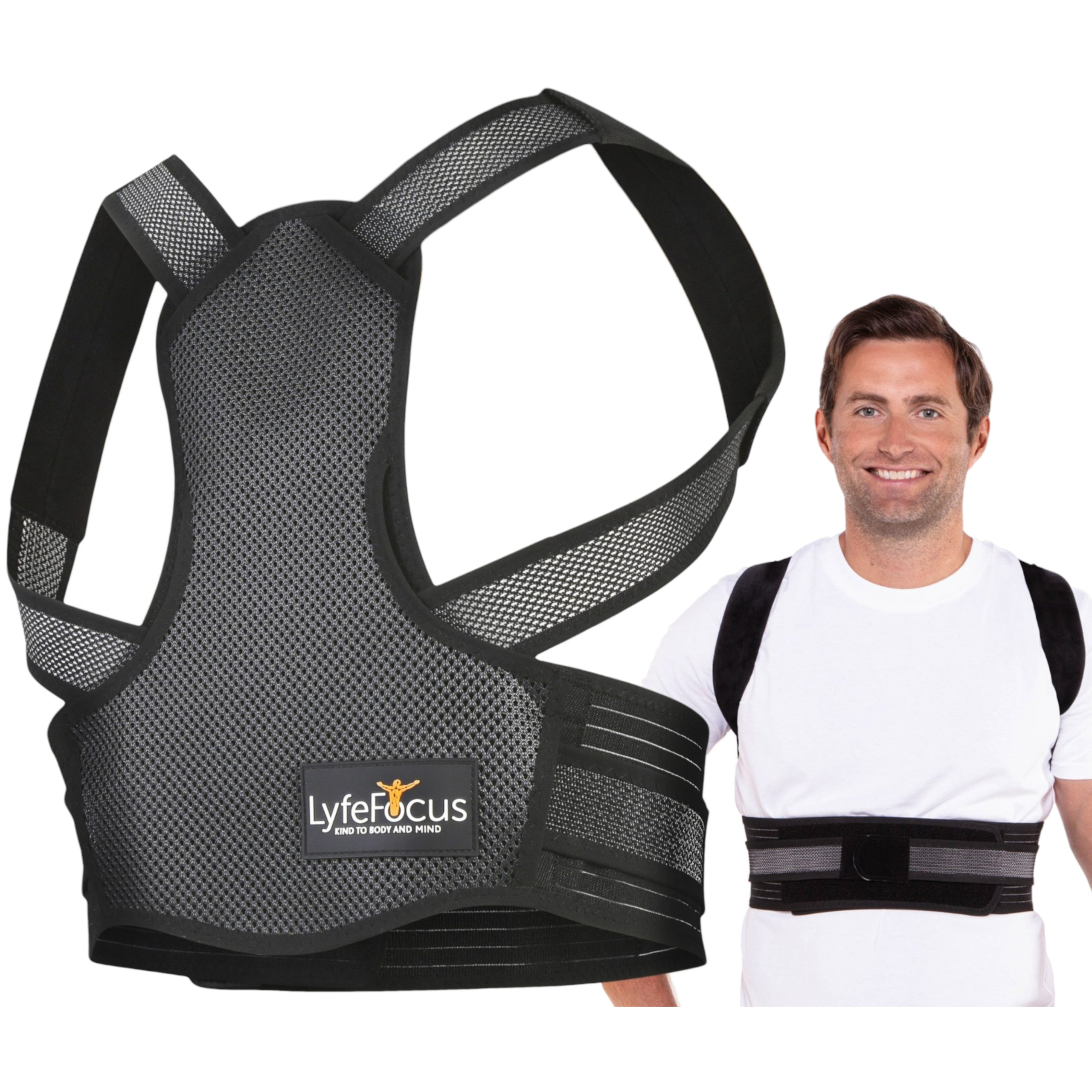
Related posts:
 How to Fix Rounded Shoulders From Desk Work (Without Turning Your Life Into a Gym)
 Lower Back Pain That Shoots Down Your Legs: What It Usually Means And What To Do Today
 Foam Roller for Back Pain: The 10-Minute Routine That Actually Hits The Right Spots
 Heat vs Ice For Back Pain: What Works, When To Use It, And How Long
