Foam Roller for Back Tension: A Smarter Way for Desk Workers to Loosen Up
A foam roller for back gets recommended so often that many people stop taking it seriously. That is a mistake. Used properly, it can be one of the simplest ways for desk workers to relieve built up tension, especially through the upper back, glutes, and the areas around the lower back that stiffen up after too much sitting.
The key is using it with a bit of intelligence. A back roller is not there to punish sore muscles or to prove how much discomfort you can tolerate. It works best when you use it to reduce stiffness, improve awareness, and make the body feel easier to move again.
Why desk workers get so stiff
Sitting still for long periods does not just make the back feel tired. It changes how the surrounding muscles share the workload. The chest tightens, the upper back gets rigid, the hips become less forgiving, and the glutes often switch off more than they should. The lower back then ends up carrying tension that really belongs elsewhere.
That is why many people say their back feels tight even when they have not done anything physically demanding. The issue is not necessarily heavy strain. It is low movement variety and a body that has been held in one shape for too long.
Where a foam roller for back helps most
For desk workers, the best areas are usually the upper back, the lats around the side of the torso, the glutes, and sometimes the hips. These areas often become stiff from sitting and poor positioning, and when they loosen up a little the whole back can feel more comfortable.
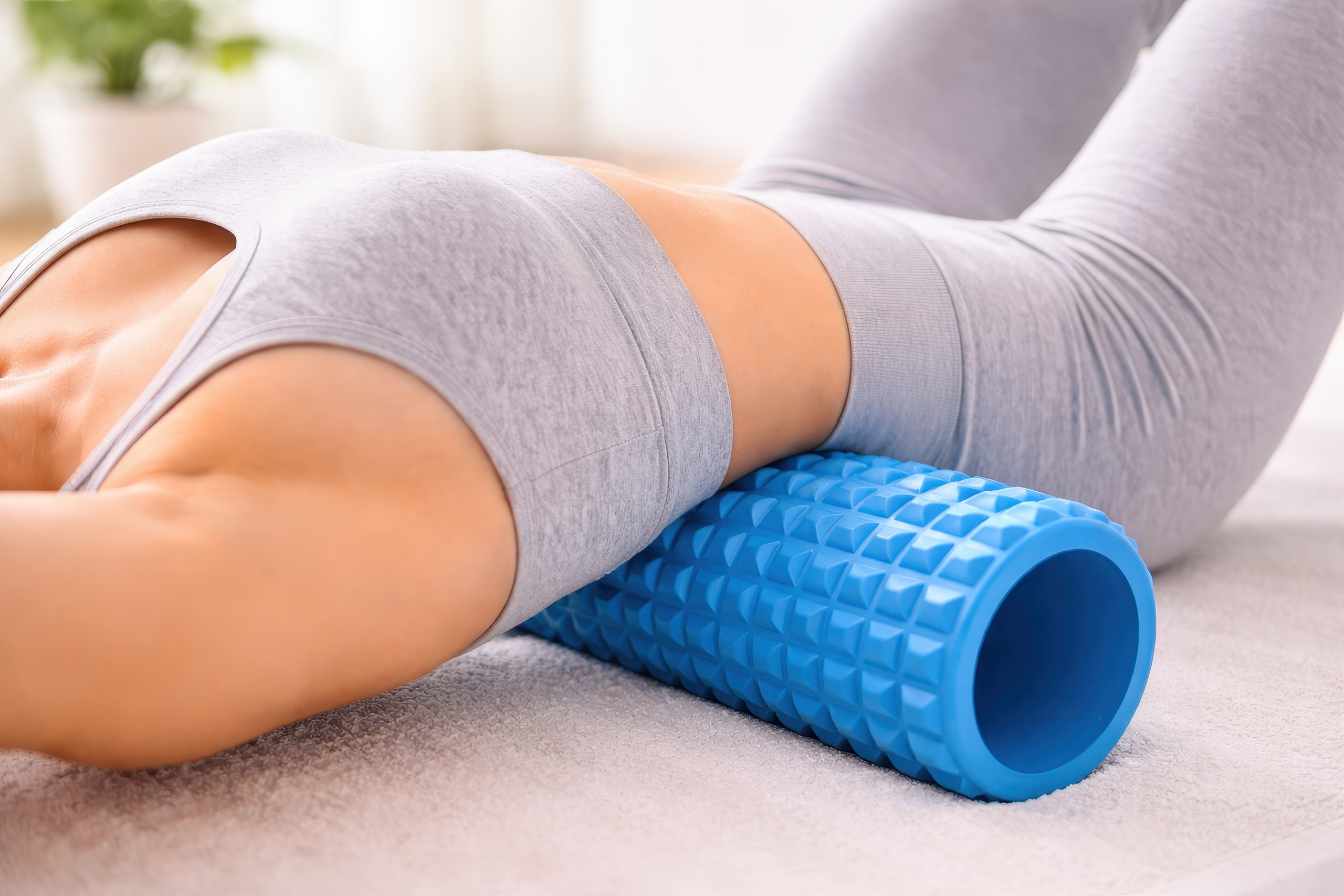
The upper back is usually the easiest place to start. Gentle rolling there can help the chest feel less closed and can make the shoulders and neck less tense. A foam roller for lower back tension also works well here — tight glutes and hips often change how the pelvis sits, which feeds into that familiar dragging sensation in the lower back.
With the lower back itself, more caution is better than aggression. Many people do better by working the surrounding muscles and then using simple movement to help the lower back feel less guarded, rather than grinding directly into the sorest spot.
A better way to use it
Keep the pressure controlled. Roll slowly, breathe properly, and spend more time on the areas that feel dense rather than racing over everything. Thirty to sixty seconds per area is usually enough. Using a foam roller for back stiffness works best when the goal is to come away feeling looser, not battered.
A good order for desk workers is:
- upper back
- lats
- glutes
- hips
After that, stand up, walk for a minute, and notice whether you move more freely. That step matters because a back roller works best when it leads into better movement, not when it becomes the entire recovery plan.
Common mistakes
The first mistake is going too hard. When people attack the tightest area, they usually tense up more, which defeats the point. The second mistake is using the roller once in a while and expecting a huge change. Like most recovery tools, a foam roller for back pain works best when it becomes a regular part of the week.
The third mistake is ignoring the routine that caused the tension in the first place. If you roll for five minutes but then spend another nine hours hunched over a laptop without breaks, the stiffness will keep returning. Recovery tools help most when they support better daily habits.
Why it can be a genuinely worthwhile buy
A good foam roller for lower back pain earns its place because it gives people a practical way to interrupt tension before it turns into a bigger problem. For desk workers especially, that matters. A tool that lives at home and can be used in five minutes after work is often far more realistic than relying on motivation alone.
It also pairs well with other simple changes. If you are trying to sit better, move more often, or stay on top of physio exercises, a foam roller for back tension can make the body feel more ready to do that work. That is why it is not just an optional extra. For many people, it becomes one of the easiest ways to stay consistent with recovery.
A simple post-work routine
This foam roller for back routine takes less than five minutes and works well after a long desk day:
- Roll the upper back for 45 seconds
- Roll each glute for 30 seconds
- Stand up and walk for two minutes
- Finish with a gentle chest stretch
That is enough to create a noticeable reset without overcomplicating the evening.
A foam roller for back pain is not a gimmick when it is used properly. For desk workers with regular back tension, it can be a smart, practical tool that helps the body feel less stuck and more ready to move. Keep it simple, use it consistently, and let it support a better routine rather than trying to make it do the whole job on its own.

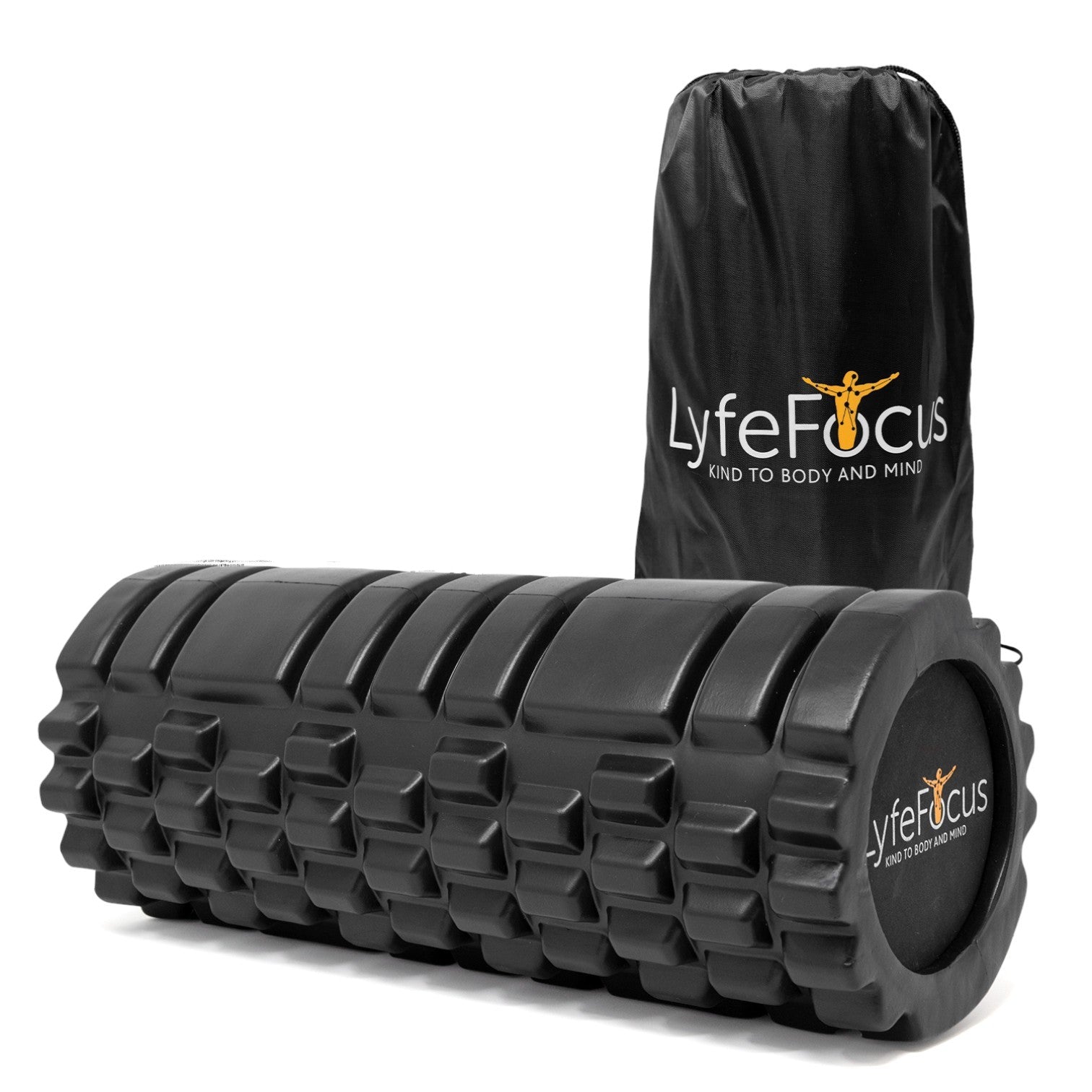
Foam Roller (Black)
Ease muscle pain fast with deep-tissue relief you can take anywhere.