Thoracic Spine Exercises: 4 Simple Moves to Reduce Upper Back Pain
If you sit at a desk for most of the day, you may already be feeling the effects in your upper back. Tightness between the shoulder blades, a nagging ache when you turn to reach something, or that familiar slump that creeps in by mid-afternoon are all signs that your thoracic spine exercises routine is overdue. The thoracic spine is the middle section of your back, running from just below the neck to the base of the rib cage. Unlike the neck and lower back, it is built for controlled rotation and extension. When desk work, poor posture, or repetitive movements restrict that range, the surrounding joints and muscles compensate, and discomfort follows.
The good news is that targeted thoracic spine exercises can reverse this pattern. A consistent routine of even a few minutes per day can restore flexibility, improve posture, and significantly reduce upper back stiffness. This guide covers four effective thoracic spine exercises, explains why mobility in this region matters, and shows you how to support long-term progress with smarter daily habits.
Why Thoracic Spine Exercises Matter for Desk Workers
Most people understand that the lower back and neck carry a lot of daily tension, but the mid-back is equally vulnerable, especially for anyone who spends hours in a fixed seated position. When the thoracic spine loses mobility, the body compensates by shifting load onto the neck and lower back. This is why people with a stiff mid-back often experience headaches, shoulder discomfort, and lumbar pain alongside their upper back tightness.
Regular thoracic spine exercises address this directly by restoring the rotation and extension the mid-back is designed to produce. The NHS recommends gentle mobility work as part of managing many musculoskeletal conditions, and the thoracic region responds particularly well to consistent, low-load movement. Improving mobility here takes pressure off surrounding structures and allows the whole spine to function more efficiently.
Limited thoracic mobility can contribute to:
- Upper back stiffness and aching between the shoulder blades
- Neck tension and forward head posture
- Shoulder discomfort and restricted overhead reach
- Poor seated posture that worsens throughout the day
- Reduced rotation when driving, exercising, or working at a desk
Including thoracic spine exercises in your daily routine is one of the most effective steps you can take to address these issues at the source rather than just managing symptoms.
4 Thoracic Spine Exercises to Start Today
Before starting any exercise programme, move slowly and pay attention to how your body responds. Stop if you experience sharp or worsening pain and speak to a healthcare professional if symptoms persist.
1. Seated Thoracic Rotation
This is one of the most accessible thoracic spine exercises you can do at your desk. Sit upright in your chair with your feet flat on the floor and your arms crossed over your chest. Keeping your hips still, rotate your upper body slowly to one side as far as is comfortable. Hold briefly, return to centre, then rotate to the opposite side. Perform 10 repetitions on each side.
Seated rotation directly trains the rotational movement the thoracic spine is designed for. It is particularly useful for desk workers who spend hours facing forward without any lateral movement, as this exercise gently mobilises the spinal joints and warms up the supporting muscles. When you first start thoracic spine exercises like this one, focus on smooth, controlled movement rather than forcing range of motion.
2. Cat-Cow Stretch
Begin on your hands and knees with your wrists below your shoulders and knees below your hips. On an exhale, round your back towards the ceiling, tucking your chin and tailbone. On an inhale, let your back arc naturally, lifting your chest and tailbone gently. Move smoothly between both positions for 10 to 15 repetitions.
Cat-cow is a staple among thoracic spine exercises because it mobilises the entire spine in a safe, supported position. The extension phase is especially valuable for counteracting the sustained flexion that builds up during hours of desk work. Even a single set of this movement can create an immediate sense of relief in a stiff mid-back.
3. Thoracic Extension Over a Chair
Sit in a chair with a firm, supportive back. Place both hands behind your head with your fingers interlaced. Gently lean backwards over the top of the chair back so your upper back drapes over it. Hold the position for three to five seconds, focusing on the stretch through the mid-back, then return to the upright position. Repeat four to six times, moving slightly higher or lower along the chair back to target different segments.
This is one of the most targeted thoracic spine exercises for people who sit for long periods, because it directly addresses the loss of extension that accumulates during seated work. The chair acts as a fulcrum, creating a gentle but effective stretch through the thoracic region without placing stress on the lumbar spine or neck.
4. Thread the Needle
Start on your hands and knees in a neutral position. From here, slide one arm underneath your body, palm facing up, allowing your shoulder to lower towards the floor and your upper back to rotate. Hold the position briefly, feeling the stretch through the upper back, then return to the starting position. Repeat 8 to 10 times on each side.
Thread the needle is one of the more effective thoracic spine exercises for targeting the rotation and lateral mobility that desk workers lose most quickly. The supported position means the lower back stays out of the movement, allowing the thoracic region to do the work. Many people notice a significant difference in upper back tightness after just a few sessions of this exercise.
Thoracic Spine Exercises Work Best with Better Daily Habits
Adding thoracic spine exercises to your routine is a strong starting point, but lasting results come from making small adjustments to how you move throughout the day. Exercises performed once a day cannot fully offset twelve hours of poor posture and minimal movement. The following habits support the progress you make with your routine and help protect the thoracic spine between sessions.
- Take a short break from sitting every 45 to 60 minutes, even just standing for two minutes makes a measurable difference
- Set your screen height so the top of the monitor is roughly level with your eyes, reducing the tendency to hunch forward
- Keep the keyboard close enough that your elbows can stay near your body, avoiding the forward reach that rounds the shoulders
- Strengthen your core progressively, as a weak core increases the load placed on the thoracic spine when sitting
- Sleep on a supportive surface that keeps your spine in a neutral position overnight
For a more detailed guide to posture habits and back health strategies, the LyfeFocus blog covers a range of practical topics for desk workers dealing with upper back stiffness and pain.
Supporting Your Thoracic Spine Exercises with the Right Tools
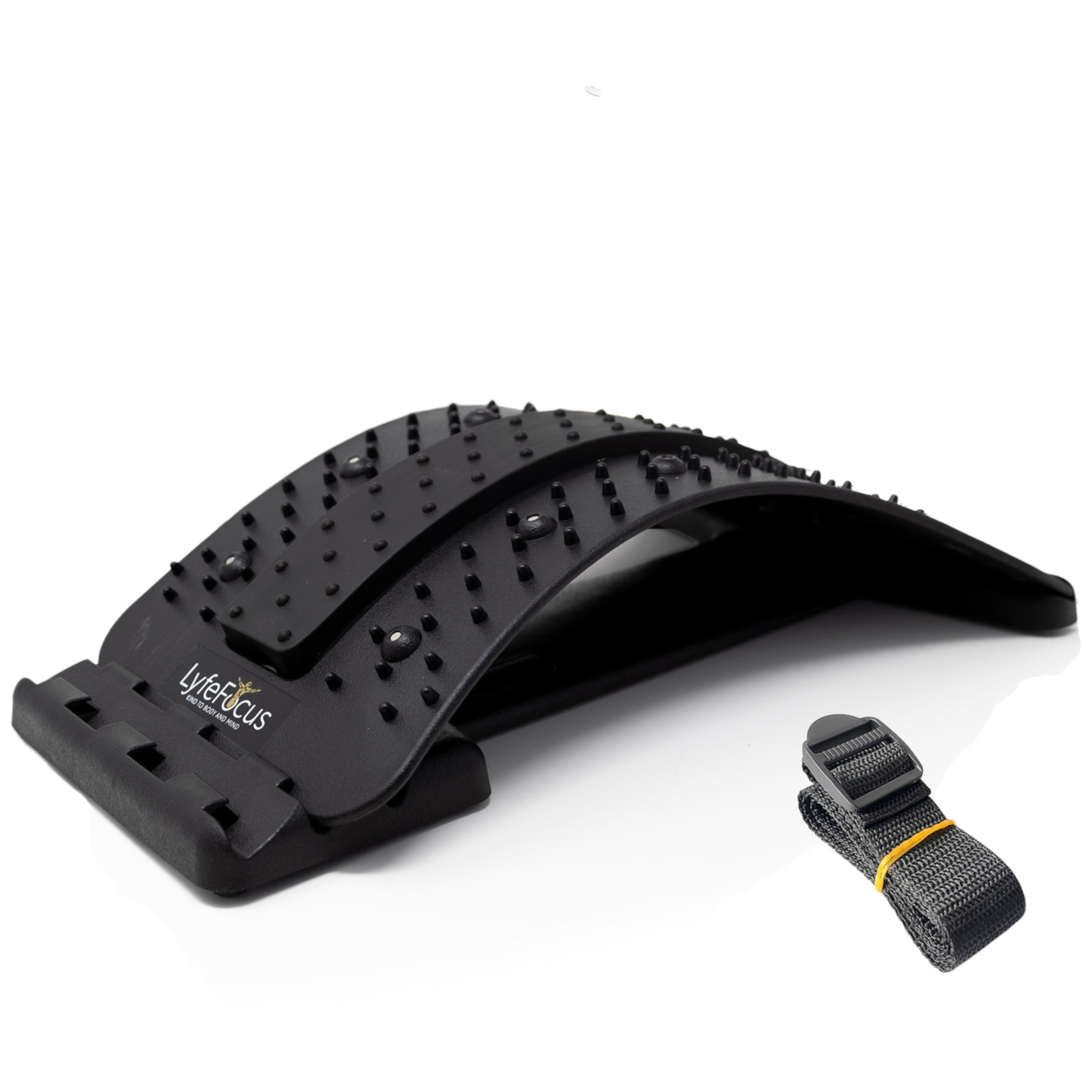
Thoracic spine exercises are most effective when combined with good postural support, particularly during the hours you spend seated at work. A back stretcher provides a passive way to encourage thoracic extension in between active exercise sessions. By gently restoring the natural curvature of the spine, it complements the mobility work of your thoracic spine exercises and reduces the rate at which stiffness rebuilds during the day.
The LyfeFocus Back Stretcher S1 targets the mid and upper back directly, working across three adjustable levels to suit different comfort levels and stages of recovery. It can be used on the floor or strapped to an office chair for postural support while seated, making it a practical addition to any thoracic spine exercises routine. Many users find that combining regular active mobility work with short sessions on the back stretcher produces noticeably faster improvements in upper back flexibility and pain levels.
For further evidence-based guidance on thoracic mobility rehabilitation, Cambridge University Hospitals NHS Foundation Trust provides a detailed exercise resource: Thoracic Spine Exercises (CUH NHS).
When to Seek Professional Advice
Mild stiffness in the thoracic spine typically responds well to consistent thoracic spine exercises over a period of weeks. However, some symptoms require professional assessment rather than self-managed exercise.
Seek advice from a GP or physiotherapist if you experience:
- Upper back pain that persists beyond several weeks despite regular thoracic spine exercises
- Numbness, tingling, or weakness that radiates into the arms or hands
- Pain that began following a fall, impact, or sudden movement
- Symptoms that are worsening rather than improving with exercise
- Difficulty completing everyday tasks such as dressing, driving, or sleeping
A qualified physiotherapist can assess the underlying cause of your thoracic spine pain, identify any structural factors contributing to your symptoms, and build a rehabilitation programme around your specific needs. Self-managed thoracic spine exercises are highly effective for general stiffness and posture-related discomfort, but professional support is important when symptoms move beyond this.
Start Feeling the Difference
Upper back stiffness and poor posture are not conditions you simply have to live with. A consistent commitment to thoracic spine exercises, combined with smarter daily habits and the right postural support, can produce real improvements in how your back feels and how you move. The four exercises in this guide are a practical starting point that requires no equipment and can be completed in under fifteen minutes.
Start with one or two exercises and build from there as your confidence and mobility improve. For personalised product advice, get in touch with the LyfeFocus team directly at lyfefocus.com/pages/contact.
Relieve back pain and restore your posture with a gentle, effective stretch.
Back Stretcher S1