Acupressure Mat for Neck Pain: How We Target Traps, Shoulders, and Upper Back (LyfeFocus UK Guide)
Neck pain is everywhere, especially if you spend long hours at a laptop, commute, drive, or scroll with your head creeping forwards. For most people, the pain is not just “in the neck”. It is a tension chain through the trapezius muscles (traps), shoulders, and upper back.At LyfeFocus, we focus on practical, at-home recovery tools that help you reduce stress-tension, ease muscular tightness, and support a calmer nervous system response. If your neck feels permanently switched on, an acupressure mat and pillow set is one of the simplest ways to start.
What an acupressure mat actually does (and why it can help neck pain)
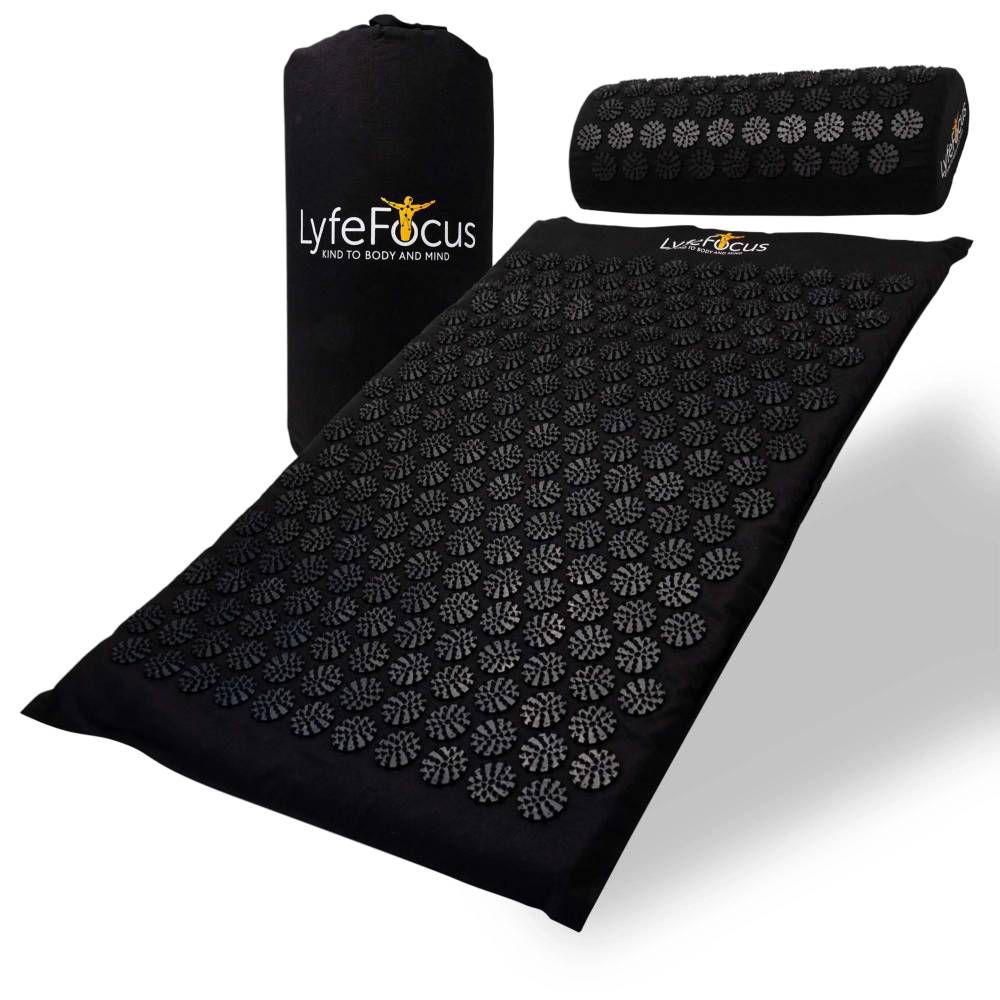
Acupressure is based on applying pressure to specific points to support relaxation and recovery. An acupressure mat scales this up by using thousands of contact points across a wider area. When you lie or lean onto the mat, those points stimulate the skin and underlying tissues.
In plain English, people use an acupressure mat to help:
- Reduce stress-tension that keeps muscles “guarding”
- Encourage local blood flow across tight areas
- Promote a calmer, more relaxed state after long days at a desk
Important: this is not a medical diagnosis tool and it is not a replacement for clinical assessment when you need one. It is a practical tool that many people find useful for tension-driven neck pain, especially when tight traps and rounded posture are part of the picture.
Why your traps, shoulders, and upper back are the real culprits
When people say “my neck hurts”, what they often mean is that the whole upper chain is overloaded. If your upper traps and upper back are locked up, your neck rarely relaxes properly.
Upper traps (trapezius)
These run from the base of the skull into the shoulders. They flare up with forward head posture, laptop work, phone use, and stress. Tight upper traps are a common cause of stiffness at the base of the skull and pain that spreads into shoulders.
Shoulders
Your shoulder complex is built for movement, but modern life pins the shoulders forward. When the front of the shoulders tighten and the upper back muscles fatigue, the neck takes the load. This is why shoulders and neck pain often travel together.
Upper back
The area between the shoulder blades often aches because it is doing overtime trying to hold you upright. If it is tense and stiff, the neck and traps compensate, and you feel “stuck”.
How we recommend using the LyfeFocus acupressure mat for neck pain (positions that actually work)
If you do this wrong, it feels like punishment. If you do it right, it becomes a fast way to downshift tension. Start easy, build tolerance, then target tighter areas.
1) Upper back first, neck second (best for beginners)
Goal: relax the upper back and traps before loading direct neck pressure.
- Place the mat on a firm surface (floor, carpet, yoga mat).
- Lie back so the mat contacts your upper back and shoulder blades first.
- Keep knees bent, feet flat, and arms relaxed.
- If you use the pillow, keep your neck neutral and comfortable, not forced.
Session length: start with 5 to 10 minutes, build towards 15 to 25 minutes as tolerance improves.
2) Trap targeting (where most neck pain lives)
Goal: load pressure into the upper traps without jamming your neck.
- Slide your body slightly so contact points sit across the top of shoulders and upper back, not directly on the cervical spine.
- Turn your head gently side to side to find the “hotspot” in the traps.
- Once you find it, stay still and breathe slowly.
If intensity is too much: wear a thin t-shirt for the first week. Intensity is not the goal, consistency is.
3) Seated wall lean (perfect for office workers)
Goal: target mid-upper back, rhomboids, and traps without lying down.
- Place the mat against a wall or sofa back.
- Lean your upper back into it while seated.
- Micro-adjust your position to find tight spots between the shoulder blades.
4) Shoulder edge work (advanced, optional)
Goal: reach side-shoulder tissues that refer into the neck.
- Lie slightly angled so one shoulder bears more load.
- Support your head so your neck stays neutral.
- Keep it short, 2 to 5 minutes per side.
Stop immediately if you feel sharp pain, numbness, tingling, weakness, or symptoms travelling down the arm.
What you should feel (and what you should not)
Normal: warmth, temporary redness, a “good pressure” sensation, deeper relaxation afterwards, mild post-session soreness similar to a firm massage.
Not normal: sharp or stabbing pain, pins and needles, numbness, weakness, dizziness that does not settle quickly, or symptoms that flare into the next day. If you get the “not normal” list, reduce intensity (clothing layer, shorter sessions, less direct neck contact) or stop and get checked.
Precautions and who should speak to a clinician first
Use common sense and prioritise safety. Speak to a clinician before use if you have open wounds, active skin infections in the area, bleeding disorders, you are on blood-thinning medication, or you are pregnant. If your pain is severe, persistent, or accompanied by neurological symptoms (numbness, radiating pain, weakness), get assessed.
Make it work better (LyfeFocus “stack” approach)
- Acupressure mats: shop acupressure mats.
- Posture correction support: shop posture correctors.
- Back and neck stretchers: shop back and neck stretchers.
- Hot and cold packs: shop hot and cold packs.
Ergonomics: do not ignore the cause
- Top of monitor at eye level
- Elbows roughly at 90 degrees
- Feet flat and hips supported
- Micro-breaks and movement every hour
FAQs
How long should I use an acupressure mat for neck pain?
Start with 5 to 10 minutes per session. Build up to 15 to 25 minutes as it becomes comfortable. Daily short sessions beat occasional long sessions.
Will it hurt?
It can feel intense at first. That is normal. Sharp pain is not normal. Use a thin top initially, adjust position, and build tolerance.
Can I use it every day?
Yes, provided you tolerate it well and you are not aggravating symptoms. Consistency is the point.
Is there a difference between an acupressure mat and an acupuncture mat?
People use the terms interchangeably, but acupuncture uses needles while acupressure uses pressure. Mats are pressure-based.
Can it help tension headaches linked to neck tightness?
Many people find that when traps and upper back tension drops, headache frequency can reduce. If headaches are severe, sudden, or unusual for you, get assessed.
How do I clean it?
Use the product instructions for your specific model. As a general rule, spot clean or gentle hand clean, then air dry fully before storing.

Acupressure Mat & Pillow (Black)
Relax your body and calm your mind with gentle acupressure relief.
Shop Now →