Back Stretcher vs Posture Corrector: Which Do You Need?
Sore back after a long day at your desk? Two products come up again and again. So which is better, a back stretcher vs posture corrector? The honest answer is that they do different jobs. One gives your back a gentle stretch, and the other reminds your shoulders to stay back while you work. This guide explains what each one does, gives you four simple checks, and shows when it makes sense to use both. By the end, you will know which one to try first.
Back Stretcher vs Posture Corrector: What Each One Does
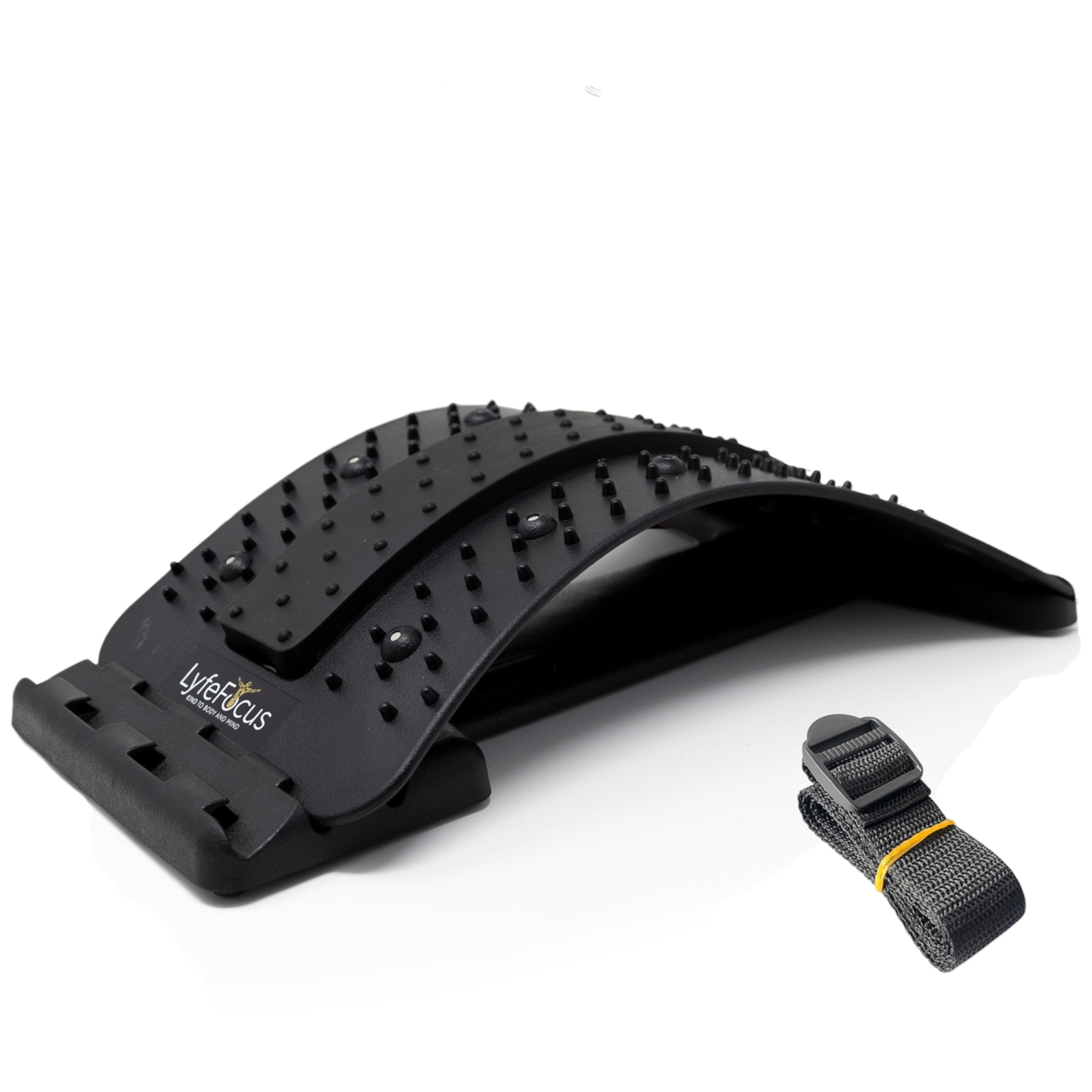
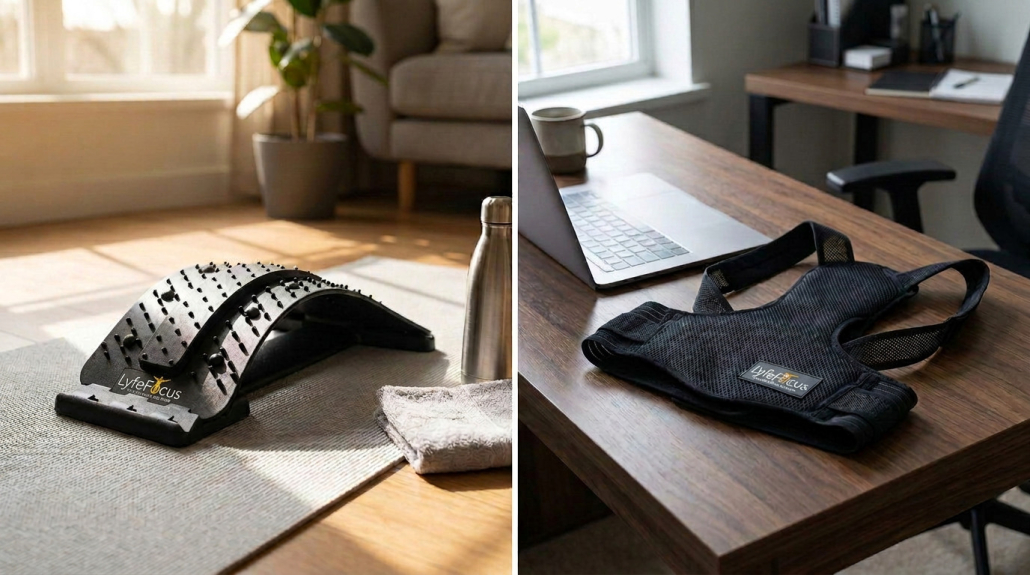
A back stretcher is a curved support that helps you stretch your back gently, usually while you rest on it. It supports the natural curve of your spine, so you can ease off after sitting for hours. The LyfeFocus Back Stretcher S1 is built around that idea.
A posture corrector is a wearable support with shoulder straps and a back panel. It gently draws your shoulders back, so you notice when you start to slump. You wear it while you work, and it prompts you to sit tall.
That is the heart of the back stretcher vs posture corrector question. One is something you use for short stretching breaks, and the other is something you wear during the day. Neither replaces movement, and neither is a cure.
How to Choose Between a Back Stretcher vs Posture Corrector
Run through these four checks. They will point you to the right product quickly.
1. Where You Feel the Strain
Rounded shoulders and a tight upper back suggest a posture corrector. A stiff, tired lower or mid back after sitting suggests a back stretcher. If both are true, you may want both. Make a note of where it hurts at the end of the day, because that tells you a lot.
2. When You Want to Use It
A posture corrector works while you type, take calls or drive. A back stretcher needs a few quiet minutes, so it suits a break, lunchtime or the evening. In a back stretcher vs posture corrector choice, your daily routine often decides it.
3. What You Want It to Do
If you want a reminder to sit tall, choose a corrector. If you want a gentle stretch to loosen up, choose a stretcher. A reminder builds awareness, while a stretch gives your back a break from sitting.
4. How Comfortable It Feels
A corrector has to feel comfortable for short spells under a shirt. A stretcher has to feel comfortable when you lie back on it. Start with short sessions for either one, and stop if anything hurts. The best back stretcher vs posture corrector choice is the one you will actually use.
Back Stretcher vs Posture Corrector for Desk Workers: Side by Side
Here is a quick comparison for a typical desk worker:
- Best for: a posture corrector suits rounded shoulders, while a back stretcher suits a stiff back after sitting.
- When you use it: a corrector is worn while you work, and a stretcher is used during breaks.
- What it does: a corrector prompts better posture, and a stretcher gives a gentle stretch.
- Time needed: a corrector adds no extra time, and a stretcher takes a few minutes each session.
- Price at LyfeFocus: the Back Stretcher S1 is £21.99 and the Posture Corrector S1 is £24.99.
Looking at the back stretcher vs posture corrector comparison this way, neither wins outright. They answer different problems, so pick the one that matches yours.
A Simple Rule for Your Back Stretcher vs Posture Corrector Decision
If you still cannot decide, use these quick rules:
- Your shoulders roll forward when you type: start with a posture corrector.
- Your back feels stiff when you stand up after sitting: start with a back stretcher.
- You want something that works while you are busy: start with a posture corrector.
- You prefer a calm routine at the end of the day: start with a back stretcher.
These rules are not strict, but they give you a sensible starting point. The back stretcher vs posture corrector choice becomes much easier once you know which habit you want to change.
Can You Use a Back Stretcher and a Posture Corrector Together?
Yes, many people do. A corrector helps you sit better through the day, and a stretcher helps you unwind afterwards. Using both is a sensible plan if you have rounded shoulders and a stiff back at the same time.
Start with one product for a week or two. Add the second once you know how your body responds. This makes it easier to see what is helping, and it keeps your spending down. Whichever back stretcher vs posture corrector route you take, build up slowly.
Our guide to using a back stretcher for better posture explains the stretching side in more detail.
How Long Before You Notice a Difference?
Give yourself a few weeks before you judge either product. A corrector may make you more aware of your posture within days, but real habits take time to change. A stretcher can feel relaxing after the first few sessions, though your back needs regular breaks from sitting to feel the benefit.
Keep a simple note of how your back feels at the end of each working day. After two or three weeks, you can see whether the back stretcher vs posture corrector choice you made is working for you.
Common Mistakes When Comparing a Back Stretcher vs Posture Corrector
Avoid these five slips:
- Choosing by price alone. Pick the one that fits your problem.
- Wearing a corrector all day. Your muscles still need to do their own work, so build up slowly.
- Staying on a stretcher too long. Short sessions are enough when you begin.
- Expecting a quick fix. Neither product replaces exercise, breaks or a good desk setup.
- Ignoring pain. If something hurts or gets worse, stop and speak to a GP or physiotherapist.
Most buyers who get a back stretcher vs posture corrector decision wrong simply chose the wrong tool for the wrong area. Match the product to where you feel the strain.
Safety and Daily Habits That Matter Most
No product does the job alone. The NHS advises that you stay active with back pain and avoid long spells in bed. It also says specific exercises and stretches can help, but you should stop if the pain gets worse and see a GP. You can read the NHS guide to back pain for the full advice.
Try these habits alongside either product:
- Stand up and move at least once an hour.
- Keep your screen about an arm’s length away.
- Keep your feet flat and your back supported.
- Add short stretching breaks between tasks.
Speak to your GP first if you have numbness, tingling or pain that keeps getting worse. A professional can tell you what is causing it, and that matters more than any back stretcher vs posture corrector comparison.
Where the LyfeFocus Back Stretcher S1 and Posture Corrector S1 Fit
If your main problem is a stiff, tired back after sitting, the LyfeFocus Back Stretcher S1 is a good place to start. It gives your back a gentle stretch and supports the natural curve of your spine. It costs £21.99.
If your problem is rounded shoulders, look at the Posture Corrector S1. It comes in black and white, and in small, medium and large, so you can pick a size that suits you. It costs £24.99. In a back stretcher vs posture corrector comparison, our range covers both sides at a fair price.
Not sure which suits you? Pick the area that bothers you most and start there. Add the other later if you need it.
Taking the Next Step
The back stretcher vs posture corrector question comes down to four checks: where you feel the strain, when you will use it, what you want it to do and how comfortable it feels. Start with the one that matches your biggest problem, keep sessions short and build up over time.
Still unsure which option is right for you? Our team is one message away.
Relieve back pain and restore your posture with a gentle, effective stretch.
Back Stretcher S1