Foam Roller for Tight Hips: 6 Moves That Actually Loosen Stiff Hip Muscles
Tight hips are not just uncomfortable. They pull on your lower back, throw off your posture, and make even simple movements like getting out of a chair feel like a task. If you have tried stretching and seen limited results, it is time to reach for a foam roller for tight hips. Unlike a static stretch, a foam roller reaches deep into the muscle tissue, breaks up adhesions, and resets tension at the source. In this guide, you will find out exactly why using a foam roller for tight hips works, which muscles to prioritise, and a six-move routine you can run through in 15 minutes at home.
Why Your Hips Get Tight in the First Place
The hip flexors, glutes, piriformis, IT band, and tensor fasciae latae all converge around the hip joint. When any one of these muscles shortens from prolonged sitting, repetitive exercise, or inactivity, the whole area suffers. Most people who experience tight hips spend the majority of their day seated, which keeps the hip flexors in a permanently shortened position. Over time, that shortening creates trigger points, small knots of contracted muscle fibre that stretch alone cannot release.
This is precisely why a foam roller for tight hips is more effective than stretching alone for many people. Stretching lengthens a muscle but does not address the adhesions within the fascia that are keeping it locked in place. A foam roller applies direct sustained pressure, which breaks up those adhesions and allows the muscle to return to its full resting length.
According to the NHS, regular mobility work and self-care techniques are key to maintaining healthy muscle function and preventing the kind of stiffness that builds up from sedentary routines.
What to Look for in a Foam Roller for Tight Hips
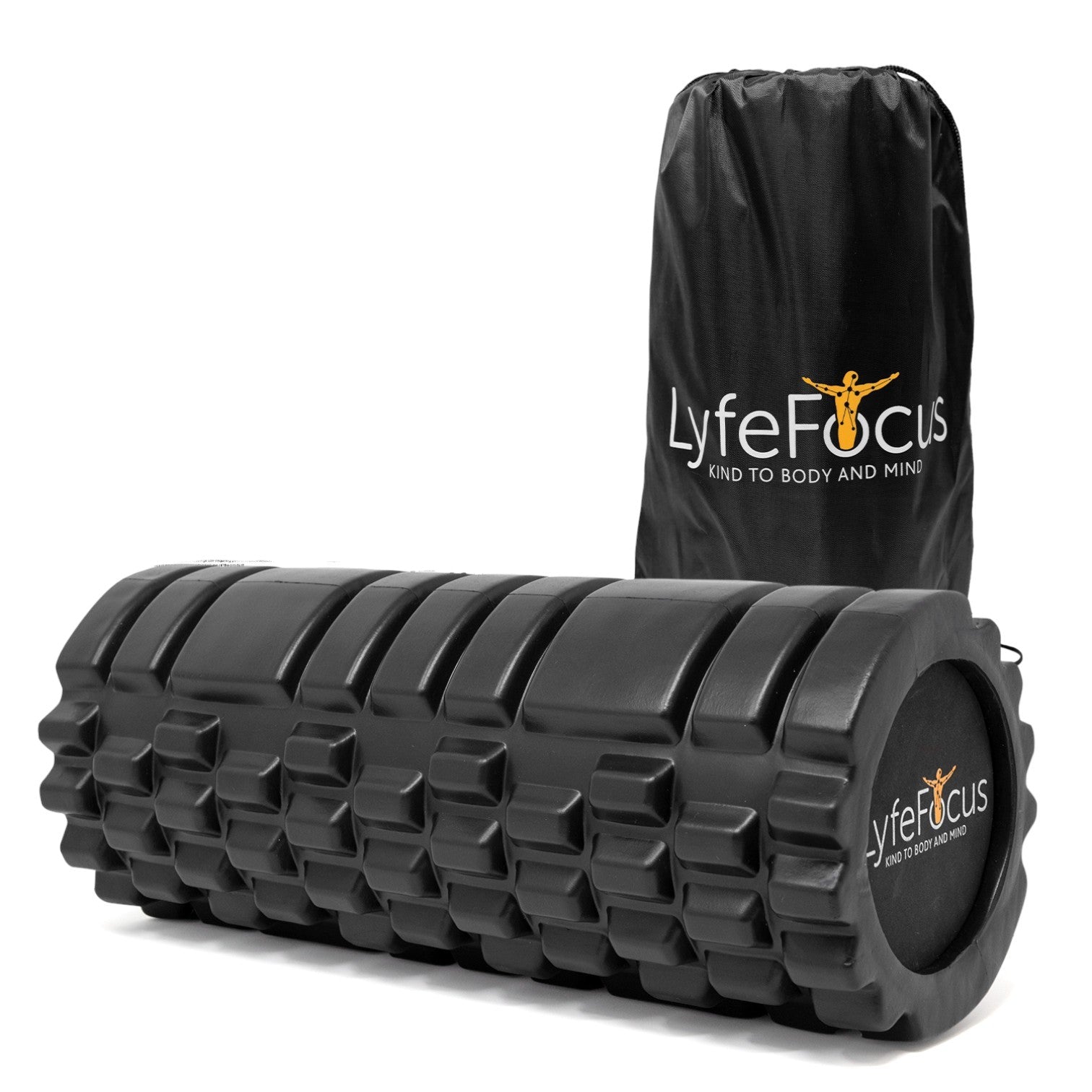
Not every foam roller is built for deep hip work. A smooth, soft roller tends to compress under bodyweight before it reaches the muscle depth needed to address serious tightness. For tight hips specifically, you need a firm roller with surface texture that can replicate the targeted pressure of a professional massage.
The LyfeFocus Foam Roller is designed with three distinct surface zones. The broad zone applies even, palm-like pressure for general rolling, the tubular zone delivers medium-depth finger-like pressure, and the smaller raised points give firm, targeted contact for trigger point work. That combination makes it a well-suited foam roller for tight hips, where you often need to shift between broader rolling and precise pressure in a single session.
Foam Roller for Tight Hips: The 6-Move Routine
Roll slowly throughout, spending 60 to 90 seconds per muscle group. When you find a tender spot, pause and hold for 20 to 30 seconds rather than rolling straight through it. Breathe steadily and never apply direct pressure to a bone or an acutely inflamed area.
1. Glute Roll
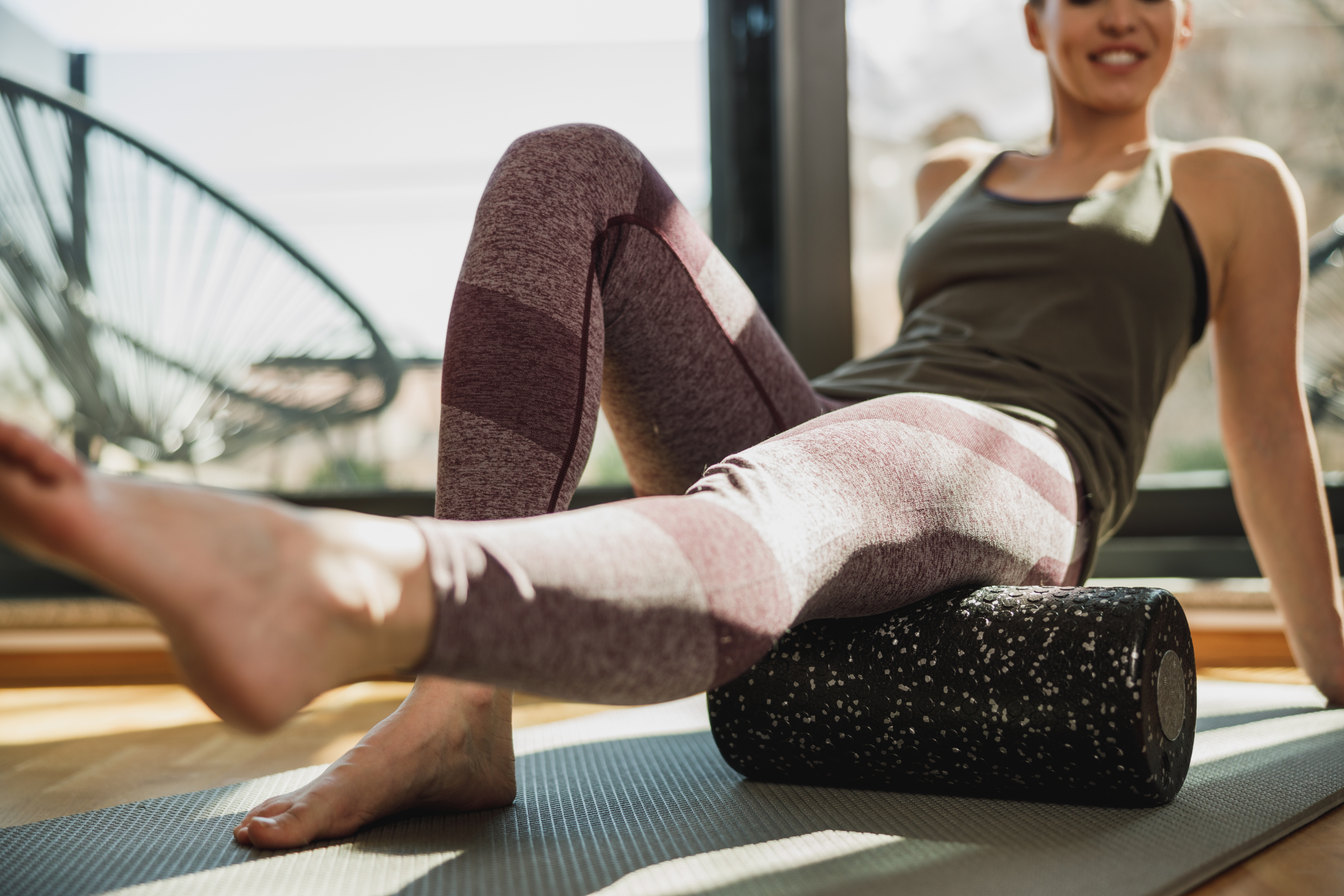
Sit on the roller with your weight loaded through one glute. Cross the ankle of that side over the opposite knee to open up the hip. Lean slightly into the working side and make slow, controlled rolls across the full width of the glute. The gluteus maximus and medius are among the most commonly tight muscles in people who sit all day, and this is the most accessible starting point when using a foam roller for tight hips.
2. Piriformis Release
From the glute roll position, shift your weight slightly toward the back pocket of your jeans. The piriformis is a small, deep muscle sitting underneath the glutes. When it tightens, it can cause deep hip aching, difficulty sitting comfortably, and pain that mimics sciatica. Slow, targeted rolling across this area is one of the most effective uses of a foam roller for tight hips that most people never try.
3. Hip Flexor Roll
Move into a face-down position and place the roller just below the hip bone on one side. Support yourself on your forearms. Slowly roll from the lower pelvis toward the upper thigh, covering the front of the hip. This targets the psoas and iliacus, the two deepest hip flexors and the primary culprits behind the anterior hip tightness that builds up from hours at a desk. Using a foam roller for tight hips in this position requires core control, so keep your lower back flat and breathe throughout.
4. IT Band Roll
Lie on your side with the roller positioned at the outer edge of the hip. Support your body on your forearm and roll slowly from the hip down toward the knee. The IT band itself cannot be stretched, but the surrounding connective tissue and the TFL muscle that feeds into it respond well to rolling pressure. If lateral hip tightness or outer knee pull is part of your experience, this move is essential to your foam roller for tight hips routine.
5. Quad Roll
Lie face down with the roller under the front of one thigh. Roll from just above the knee toward the hip crease. The rectus femoris is the only quad muscle that crosses the hip joint, which means tightness there directly limits hip extension and contributes to the forward pelvic tilt that makes tight hips worse. Adding this move turns your foam roller for tight hips routine into a full anterior chain release.
6. TFL Roll
Position the roller just below and to the outer side of your hip bone, roughly where the front pocket of your jeans sits. The tensor fasciae latae is a small muscle that connects the pelvis to the IT band. In people who walk or stand with a slight forward lean, it is almost always chronically tight. Short, slow passes across this area round off a complete foam roller for tight hips session and often produce an immediate sense of release around the outer hip.
How Often Should You Use a Foam Roller for Tight Hips?
For most people, once a day is the right starting point. Morning rolling helps warm up tissue that has stiffened overnight, while evening rolling reduces the tension accumulated during the day. If your hips are particularly tight, two short sessions daily combined with a brief hip mobility routine immediately after rolling, while the tissue is responsive, will accelerate your progress.
Consistency matters far more than intensity. Using a foam roller for tight hips for 10 minutes every day will produce better results than a 45-minute session once a week. Most people notice a meaningful improvement in hip mobility and a reduction in stiffness within 7 to 14 days of daily use.
Common Mistakes to Avoid
Rolling too quickly is the most common reason people do not get results from a foam roller for tight hips. Fast movements skim over trigger points without releasing them. Aim for 3 to 4 seconds per pass.
- Rolling over bone or the joint itself: Always stay on the muscle belly, not the bony prominences around the hip.
- Ignoring the breath: Holding your breath keeps the nervous system in a guarded state. Exhale slowly as you move through tight spots.
- Skipping warm-up: Cold muscle tissue is harder to release. A short walk or two minutes of gentle movement before rolling improves results.
- Doing too many areas at once: Target two or three muscle groups per session and rotate across the week for sustainable progress.
When to Speak to a Professional
A foam roller for tight hips is a self-care tool and works well for general tightness and muscle tension. However, if your hip pain is sharp, followed a fall or direct impact, or has not improved after two consistent weeks of daily rolling, it is worth speaking with a physiotherapist or GP. Pain that radiates into the groin or down the leg, or hips that click with sharp pain rather than mild sensation, should be assessed before continuing.
Start Loosening Those Hips Today
Tight hips respond well when you give them the right tool and stay consistent. A foam roller for tight hips used daily on the glutes, piriformis, hip flexors, IT band, quads, and TFL can genuinely change how your body feels within a couple of weeks. Start with five minutes, learn where your trigger points are, and build from there. Not sure which roller is the right fit for your needs? Our support team is happy to help, visit our support page.
Ease muscle pain fast with deep-tissue relief you can take anywhere.
Foam Roller (Black)