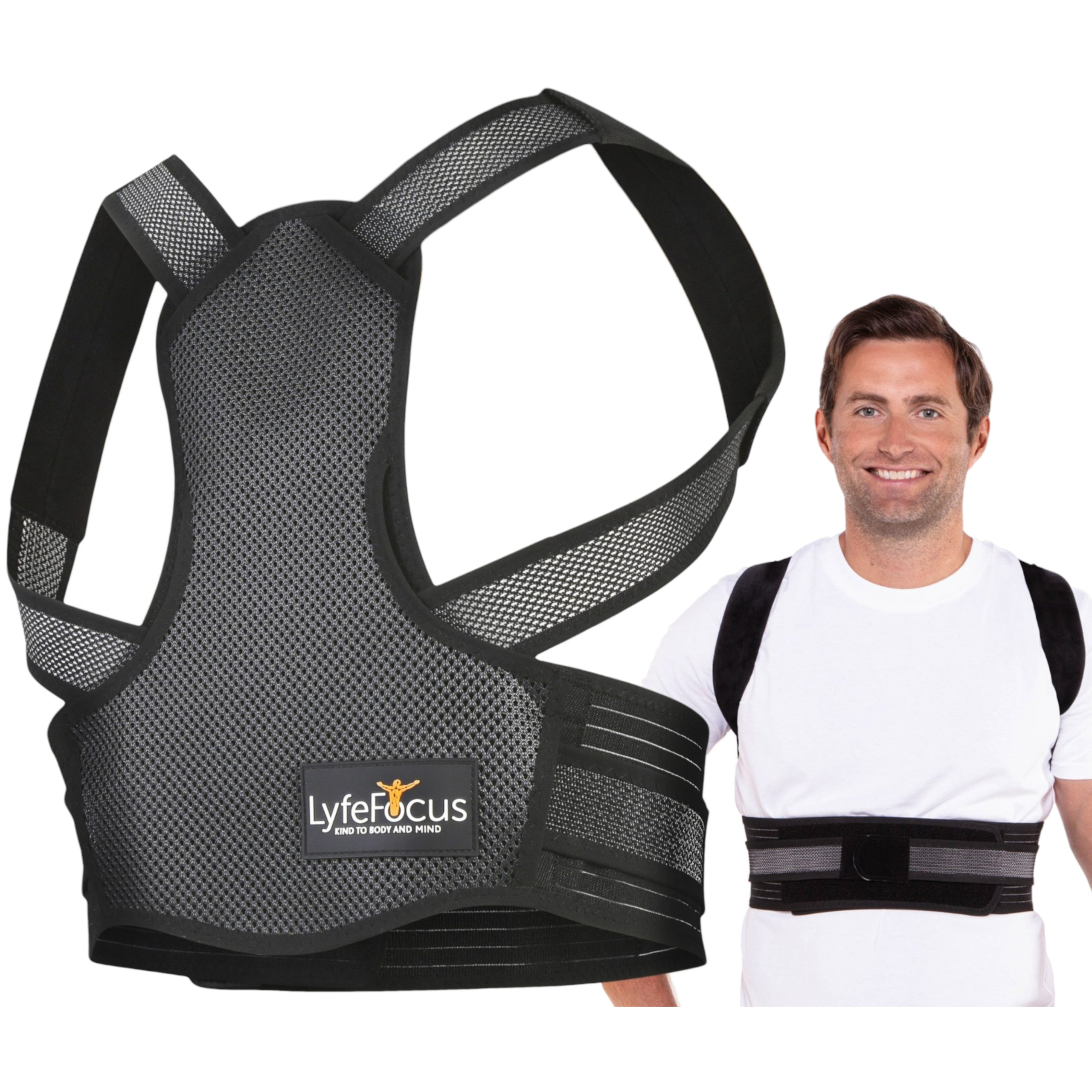
Posture Corrector for Rounded Shoulders: What Works and What to Avoid
Nearly three in four desk workers develop some degree of rounded shoulders after years at a screen. If your shoulders roll forward, your upper back aches by mid afternoon, and standing up straight feels like effort rather than default, a posture corrector for rounded shoulders can help retrain the position your body has forgotten. This guide explains why the slouch happens, how a posture corrector for rounded shoulders actually works, and how to use one properly so the results last.
What Causes Rounded Shoulders From Desk Work
Rounded shoulders develop gradually. Hours spent typing, scrolling, and leaning toward a monitor pull the shoulder blades forward and tighten the chest muscles. At the same time, the muscles between your shoulder blades weaken from disuse. The result is a forward, hunched shape that feels normal simply because you hold it for eight hours a day.
Left unaddressed, this posture pattern often leads to neck tension, tight shoulders, and a nagging ache between the shoulder blades. Many people try to correct it by consciously pulling their shoulders back, but that fix rarely lasts more than a few minutes without support. This is exactly the gap a posture corrector for rounded shoulders is designed to fill, since willpower alone cannot override hours of muscle memory built up at a desk.
Rounded shoulders are rarely caused by a single habit. Long commutes, phone scrolling, low chair height, and a monitor set too low all add up. The muscles at the front of the shoulder shorten and stiffen, while the muscles that should be pulling the shoulder blades back stay switched off. Over months, this imbalance becomes the body’s new normal, which is why a passive reminder tends to work better than trying to remember on your own.
Why a Posture Corrector for Rounded Shoulders Works
A posture corrector for rounded shoulders works by gently guiding the shoulders into a retracted position and giving your body a physical cue whenever you start to slump. This is known as proprioceptive feedback. Instead of forcing your spine into place, it reminds you the moment your shoulders begin rolling forward, so you can correct it yourself.
Over time, this repeated feedback trains the muscles responsible for holding good posture. A posture corrector for rounded shoulders is not a permanent brace, and it should not be worn as one. It is a training tool that helps your body relearn a healthier resting position, the same way a splint helps retrain movement after an injury.
- Encourages the shoulder blades back and down, opening the chest
- Reduces the tendency to hunch forward while sitting or standing
- Builds awareness of posture throughout the working day
- Supports the upper back without restricting arm movement
How to Choose a Posture Corrector for Rounded Shoulders
Not every posture corrector for rounded shoulders is built the same way, and the wrong fit can cause more discomfort than it solves. A few features make the biggest difference for daily, desk based use.
Fit and Adjustability
Look for adjustable straps that can be tightened or loosened as your posture improves. A good posture corrector for rounded shoulders should sit snugly across the shoulders and upper back without digging into the armpits or restricting circulation.
Materials and Comfort
Breathable, soft material makes a real difference if you plan to wear it under clothing during a full work day. Look for padded seams and a design discreet enough to wear at your desk without it showing through a shirt.
Size and Discretion
Sizing matters more than most people expect. An oversized posture corrector for rounded shoulders will slip and lose its effect within an hour, while one that is too small will dig into the skin and become unbearable long before lunchtime. Check the sizing chart against your chest measurement rather than guessing, and choose a colour or style that sits comfortably under your usual work clothes if discretion at the office matters to you.
Posture Corrector for Rounded Shoulders vs Stretching Alone
Stretching and strengthening exercises absolutely help with rounded shoulders, but they work best alongside support rather than instead of it. Stretches loosen the tight chest muscles, while strengthening moves rebuild the weak muscles around the shoulder blades. A posture corrector for rounded shoulders bridges the gap between the two by keeping your shoulders in a better position during the many hours you cannot dedicate to exercises.
Think of it as training wheels for your posture. Exercises build the strength, but a posture corrector for rounded shoulders gives your body the repeated positional feedback it needs while that strength is still developing. Used together, the two approaches tend to produce faster, more lasting results than either one on its own.
Using a Posture Corrector for Rounded Shoulders the Right Way
Getting results from a posture corrector for rounded shoulders comes down to consistency, not intensity. Wearing it correctly and gradually is far more effective than wearing it all day from the start.
- Start with 15 to 20 minutes a day so your muscles adjust gradually
- Increase wear time by 10 to 15 minutes every few days
- Wear it during desk work rather than during exercise or heavy lifting
- Pair it with simple stretches for the chest and strengthening moves for the upper back
- Take it off if you feel numbness, pinching, or restricted breathing
Most people notice a difference in awareness within the first couple of weeks, with visible postural change building over four to eight weeks of consistent use. Rounded shoulders rarely show up alone, and they often develop alongside forward head posture from the same desk habits, so it is worth addressing both together rather than treating the shoulders in isolation.
Common Mistakes to Avoid
A posture corrector for rounded shoulders is only as useful as the habits built around it. These mistakes are the most common reasons people give up on one too soon.
- Wearing it for a full working day right away instead of building up gradually
- Expecting the device to fix posture without any stretching or strengthening
- Choosing a size that is too tight, which restricts breathing rather than supporting it
- Ignoring the rest of the workstation, including screen height and chair support
- Stopping use as soon as posture feels slightly better, rather than building the habit fully
Your workstation setup matters just as much as the corrector itself. Simple adjustments such as raising your screen to eye level and relaxing your shoulders while typing make a genuine difference, and the HSE guidance on good posture when using display screen equipment is a useful reference for getting the basics right.
It also helps to check your chair and desk height at the same time you introduce a new support tool. A seat that sits too low forces the shoulders forward to reach the keyboard, undoing much of the benefit even with consistent wear. Take five minutes to adjust your monitor, chair, and keyboard position before you judge whether the corrector itself is working.
How Long Before You See Results
Patience matters here. Most people feel more aware of their posture within the first week, simply because the gentle pull on the shoulders acts as a constant reminder. Visible change in resting shoulder position tends to take longer, usually somewhere between four and eight weeks of regular, gradually increasing wear combined with basic stretching.
Progress is rarely a straight line. Some days your shoulders will feel noticeably better by the afternoon, and other days old habits creep back in, especially during stressful or busy periods at work. That is completely normal. Consistency over weeks matters far more than any single day of perfect posture, so avoid judging results too early or giving up after a slow week.
Start Feeling the Difference
Rounded shoulders are one of the most common side effects of desk based work, but they are also one of the most fixable. A posture corrector for rounded shoulders gives your body the feedback it needs to unlearn years of slouching, especially when paired with small daily habit changes and a better workstation setup. Small, consistent adjustments today add up to a straighter, more comfortable posture over the coming weeks.
Not sure where to start? Reach out and our LyfeFocus team will point you in the right direction.
Take the first step toward better posture and lasting comfort.
Posture Corrector S1 (Black)