NHS Recommended Back Support: 6 Essential Tips for Lower Back Relief
Back pain affects around 8 in 10 people in the UK at some point in their lives. If you are currently searching for NHS recommended back support, you are not alone. The good news is that the NHS provides clear, evidence-based guidance on managing lower back pain without needing surgery or long-term medication. This article covers exactly what the NHS recommends, why back support matters, and how the right tools can help you stay active and pain-free.
What Is NHS Recommended Back Support?
NHS recommended back support refers to the types of physical aids, exercises, and self-care approaches that NHS guidelines endorse for managing and preventing lower back pain. According to the NHS back pain guidance, the most effective approach for most people involves staying active, using heat or cold therapy, and strengthening the core and back muscles.
The NHS does not recommend extended bed rest. Instead, the focus is on gentle movement, targeted support, and consistent self-care habits. This is important because many people mistakenly believe that resting will solve the problem, when in reality, staying mobile is one of the most effective things you can do.
6 NHS Recommended Back Support Methods to Try
1. Stay Active and Keep Moving
The NHS consistently advises that light activity is better than rest for most cases of lower back pain. Walking, swimming, and gentle stretching keep the spinal muscles engaged and reduce stiffness. If you sit at a desk for most of the day, take regular breaks to stand, walk, and stretch your lower back.
2. Use Heat or Cold Therapy
Applying a heat pack to tight, stiff muscles or a cold pack to reduce inflammation is a well-established first-line treatment recommended by the NHS. Heat relaxes muscle tension and improves circulation, while cold therapy reduces swelling in the early stages of an injury. Alternating between the two can be particularly effective for chronic lower back discomfort.
3. Strengthen Your Core
Weak core muscles place extra strain on the spine. NHS physiotherapists frequently recommend core-strengthening exercises such as bridges, pelvic tilts, and bird-dogs to build a stable base for the lower back. These exercises do not require a gym and can be done at home in under 15 minutes a day.
4. NHS Recommended Back Support Belts for Daily Activity
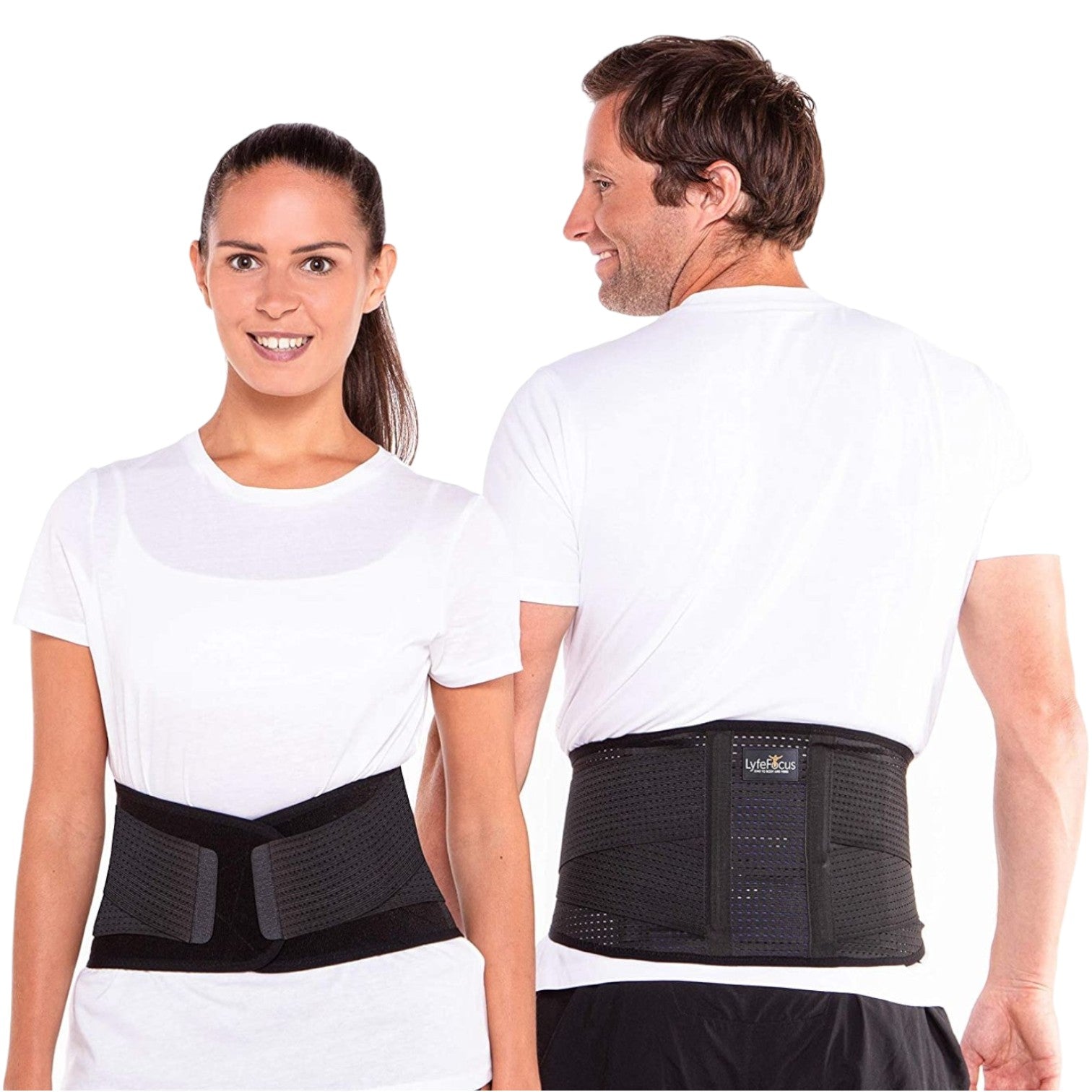
A lumbar support belt can be particularly useful when performing activities that place extra strain on the lower back, such as lifting, gardening, or prolonged standing. NHS recommended back support devices like lumbar belts stabilise the lower back and core, reducing the risk of strain during physical activity. They are not designed to be worn all day, but used strategically during high-risk tasks, they make a meaningful difference.
If you are looking for a product that combines lumbar stabilisation with optional heat and cold therapy in one, the LyfeFocus lower back collection includes CE-certified options designed for everyday use.
5. Improve Your Sitting Posture
Poor posture is one of the leading contributors to lower back pain, especially for office workers and remote workers. The NHS recommends keeping your back straight, shoulders relaxed, and feet flat on the floor when seated. A lumbar roll or lower back support cushion behind the seat can help maintain the natural curve of the spine during long periods of sitting.
6. Seek Physiotherapy if Pain Persists
If your back pain lasts more than a few weeks or keeps returning, the NHS recommends seeking physiotherapy. In many areas across England, you can now self-refer to NHS community musculoskeletal services without needing a GP referral first. A physiotherapist can assess the underlying cause and recommend a tailored programme of exercises and NHS recommended back support strategies specific to your situation.
How NHS Recommended Back Support Fits Into Your Daily Routine
The key to long-term back health is consistency. NHS recommended back support is not a one-off fix. It works best when it becomes part of how you move, sit, and recover every day. Here are a few practical ways to build it in:
- Set a timer to stand and move every 45 minutes at your desk
- Apply a heat pack to your lower back for 10-15 minutes after long periods of sitting
- Wear a lumbar support belt during gardening, DIY, or heavy lifting tasks
- Add 3 core exercises to your morning routine, 4-5 days per week
- Check your chair height and monitor position to reduce spinal strain at work
Small, consistent changes like these have a far greater impact than any single intervention.
Who Needs NHS Recommended Back Support the Most?
While anyone can develop lower back pain, certain groups are more vulnerable. People who spend long hours seated, those who perform manual labour, older adults, and people returning to activity after an injury are all at higher risk. Pregnancy is also a common cause of lower back strain, and NHS recommended back support approaches have been adapted to suit each of these groups.
If you fall into one of these categories, being proactive about spinal support before pain develops is far more effective than waiting until it becomes a problem.
Choosing the Right NHS Recommended Back Support Products
Not all back support products are equal. When selecting a lumbar belt or support aid, look for the following:
- Adjustable fit to accommodate different body shapes and activity levels
- Breathable material so it can be worn comfortably during the day
- Integrated heat or cold pack support for dual-purpose therapy
- Parallel support strips that run alongside the spine without compressing it
- CE certification as a Class I medical device for safety assurance
These features align with what NHS physiotherapists look for when recommending external support aids to patients.
Final Thoughts on NHS Recommended Back Support
The NHS approach to back pain is clear: stay active, use targeted support tools wisely, and address the underlying causes through exercise and posture improvement. NHS recommended back support works best as part of a consistent, multi-layered routine rather than a quick fix.
If you have questions about which product suits your situation, our support team is happy to help, visit our support page and we will point you in the right direction.
Stay active and protect your lower back with stabilising support.
Lower Back Support Belt