Sore Muscle Relief: 7 Proven Ways to Stop the Pain Fast
You pushed through a tough workout. Or maybe you sat at your desk all day. Either way your muscles are screaming.
Sore muscle relief isn’t just about comfort. It’s about getting your body back to doing what it does best. Whether you’re dealing with post-workout stiffness or that deep ache that won’t quit, you’re not stuck with the pain.
In this guide, you’ll learn exactly why your muscles get sore, what actually works to fix it, and the one thing most people skip that makes recovery take twice as long.
Why Are Your Muscles So Sore? (The Real Reason)
Most people blame a hard workout. But the real cause is a little more specific.
When you push your muscles beyond what they’re used to through exercise, long hours sitting, or physical labor tiny tears form in the muscle fibers. Your body responds with inflammation to repair and rebuild those fibers stronger than before.
This process is called Delayed Onset Muscle Soreness, or DOMS. It typically kicks in 12–72 hours after activity and can feel like stiffness, tenderness, or a deep aching sensation.
Here’s the important part: DOMS is normal. It’s a sign your muscles are adapting. But that doesn’t mean you have to suffer through it without help.
There are two main types of muscle soreness:
- Acute soreness the burn you feel during or right after exercise, caused by metabolite buildup. It fades fast.
- Delayed onset soreness (DOMS) the deep ache that sets in 1–3 days later as your body repairs itself.
Understanding which type you have helps you choose the right sore muscle relief approach.
The 7 Best Sore Muscle Relief Methods That Actually Work
1. Move Don’t Stay Still
It sounds backwards, but light movement is one of the best things you can do for sore muscles.
Active recovery think walking, gentle stretching, or low-intensity yoga increases blood flow to the affected area. More blood flow means more oxygen and nutrients reaching the damaged muscle tissue, which speeds up repair.
Staying completely still slows circulation and can actually make stiffness worse over time.
Try this: A 15–20 minute walk the day after a tough workout can dramatically reduce soreness by the following day.
2. Apply Heat to Tight, Sore Muscles
Heat therapy is one of the most underused sore muscle relief tools and one of the most effective.
Applying warmth to sore muscles increases circulation and helps relax tight tissue. It’s particularly helpful for chronic muscle tension or stiffness that lingers beyond 48 hours.
Use a heating pad, warm towel, or hot bath for 15–20 minutes. Heat works best for tension-related soreness, not acute injuries.
Important: For brand-new injuries or sudden muscle pain with swelling, use cold therapy first. Save heat for the recovery phase.
3. Use a Massage Ball for Deep Tissue Relief
This is where most people leave real relief on the table.
Foam rollers are popular, but a massage ball gets into the specific spots a foam roller can’t reach like the muscles around your shoulder blades, glutes, or the base of your neck.
Rolling out a sore muscle with a massage ball applies targeted pressure to tight spots (also called trigger points or muscle knots). This breaks up tension, improves circulation, and encourages the muscle to release.
If you’ve ever had a knot in your back that just won’t quit, you know how effective this can be. Studies on muscle knots in back show that prolonged sitting and poor posture make these trigger points significantly worse and targeted massage is one of the most effective ways to address them.
How to use it:
- Place the ball on the sore area
- Apply gentle bodyweight pressure
- Hold for 20–30 seconds on tight spots
- Slowly roll across the muscle (not directly on bone or joints)
4. Hydrate More Than You Think You Need To
Dehydration quietly makes sore muscles worse.
Water helps flush out metabolic waste products that build up during intense exercise. It also keeps muscle tissue supple and maintains the fluid balance your body needs for efficient repair.
Most people drink enough water to survive but not enough to support active muscle recovery.
Simple guideline: Aim for at least half your bodyweight in ounces of water daily. So if you weigh 160 lbs, target 80 oz. Add more if you’ve been sweating heavily.
5. Prioritize Sleep and Rest
No recovery strategy works without this one.
During deep sleep, your body releases growth hormone the primary driver of muscle repair and rebuilding. Without enough quality sleep, the recovery process slows to a crawl, no matter what else you do.
If your muscles seem to stay sore longer than usual, poor sleep is often the hidden culprit.
Target: 7–9 hours of quality sleep per night when you’re in an active recovery phase.
6. Try Anti-Inflammatory Nutrition
What you eat directly impacts how fast your muscles recover.
Certain foods contain compounds that reduce inflammation and support tissue repair. According to research, some of the most effective include:
- Tart cherry juice — shown in multiple studies to reduce DOMS severity
- Turmeric (curcumin) — a powerful natural anti-inflammatory
- Magnesium-rich foods — spinach, almonds, avocado magnesium deficiency is a common contributor to muscle cramping and soreness
- Protein — essential for rebuilding torn muscle fibers after exercise
Avoid processed foods and excess sugar during recovery, as both can increase systemic inflammation and slow healing.
7. Don’t Ignore the Power of Cold Therapy
Cold therapy works best in the early stages within the first 24–48 hours of soreness or right after an acute muscle strain.
Applying ice or a cold pack reduces inflammation and numbs the area temporarily, providing fast pain relief. Cold slows the metabolic activity in damaged tissue, which helps limit swelling.
After the first 48 hours, switch to heat for ongoing recovery.
A common mistake: Using cold therapy on chronic muscle tightness (not an acute injury). Cold constricts blood vessels which is the opposite of what tight, chronically sore muscles need.
What Most People Get Wrong About Sore Muscle Relief
The biggest mistake? Doing nothing and waiting it out.
Passive rest lying still, skipping movement, avoiding the area is not the same as recovery. Your muscles need circulation, nutrients, and gentle stimulation to heal efficiently.
The second biggest mistake is reaching for pain medication as the first response. While over-the-counter NSAIDs can help in some situations, recent sports medicine research suggests they may actually slow the natural muscle repair process when used regularly for workout soreness. Use them selectively and consult a healthcare provider if you’re unsure.
When to Be Concerned About Muscle Soreness
Normal DOMS fades within 3–5 days. Here’s when to pay closer attention:
- Pain is sharp, sudden, or severe (not a dull ache)
- Swelling, bruising, or significant weakness accompanies the soreness
- Pain doesn’t improve after 7 days
- Soreness occurs after most workouts, even light ones
- You notice dark urine after intense exercise (a potential sign of rhabdomyolysis a serious condition requiring immediate care)
If any of these apply, skip the home remedies and see a healthcare provider.
Start Your Sore Muscle Relief Routine Today
Sore muscles don’t have to slow you down for days. With the right combination of movement, targeted massage, nutrition, and rest you can cut your recovery time significantly and get back to feeling strong.
The most important step is being consistent. Pick two or three of the methods above and make them a regular part of your post-activity routine.
Your muscles work hard for you. Give them the recovery they deserve.
Have tight, knotted muscles that just won’t release? Contact us we’re here to help you find the right solution.
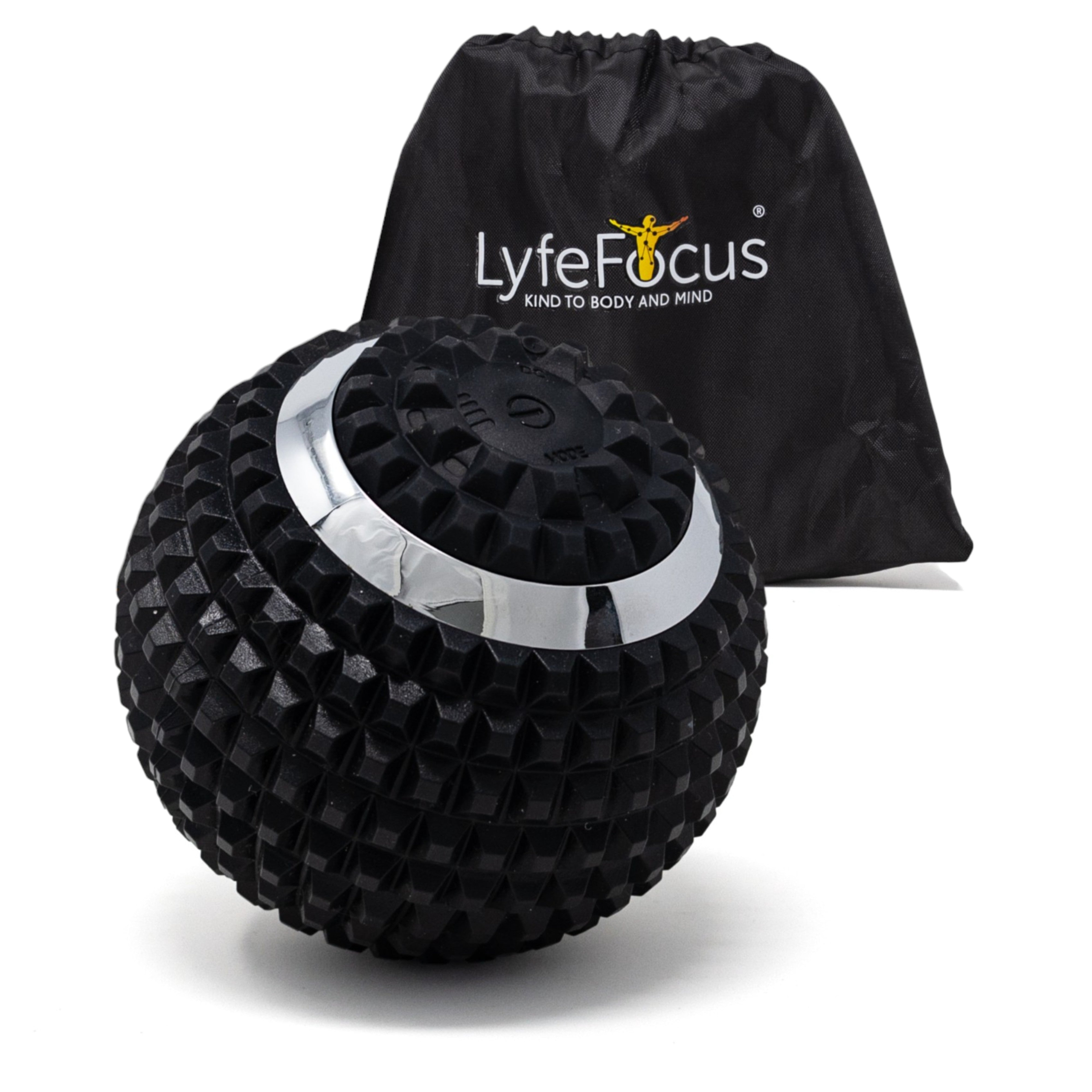
The LyfeFocus Massage Ball helps to ease muscle pain by massaging deep muscle tissue.
Vibrating Massage Ball (Black)