Sore Lower Back From Sitting All Day? Common Causes for Desk Workers

A sore lower back after a full day at the desk is one of those problems people brush off for far too long. They assume it is normal because they sit for work, commute less than they used to, or spend evenings on the sofa trying to recover from the day. But normal and common are not the same thing. Lower back discomfort is common among desk workers because modern work routines are brutal on the body, not because your back is supposed to feel worn out all the time.
Many desk workers experience a sore lower back, which is often exacerbated by poor posture and prolonged sitting.
The good news is that desk-related lower back pain is often heavily influenced by habit. That means you can usually improve it by changing the way you work, move, and recover, rather than just waiting for it to settle on its own.
Being aware of how you sit can lead to a reduction in sore lower back issues.
Why sitting can make the lower back flare up
Sitting itself is not evil. Sitting for long stretches in the same shape is the issue. When you stay planted in one position for hours, the muscles around the hips, pelvis, and lower back stop sharing the workload efficiently. Some tissues get compressed, some tighten up, and some simply become irritated by the lack of movement.
When you are seated for long periods, it can lead to a sore lower back, which can be managed with better seating habits.
A lot of desk workers also sit in positions that make the problem worse. They perch on the edge of the chair, tuck one foot under themselves, lean forwards for long periods, or slump backwards once fatigue kicks in. None of those positions is catastrophic for a minute or two, but repeated for weeks and months they can lead to that familiar stiff, sore, dragging sensation in the lower back.
Adjusting your position can help prevent that sore lower back feeling that many desk workers experience.
The most common triggers
One of the biggest triggers is poor hip support. If the chair is too low or too soft, the pelvis tends to roll backwards and the lower back loses support. Another is a screen position that pulls the body forwards. Once you start reaching with the head and shoulders, the lower back usually has to absorb some of that strain.
Ensuring that your chair provides proper support can greatly reduce the chances of developing a sore lower back.
Weak movement habits outside work also matter. If you spend all day sitting, then spend the evening sitting again, the lower back never really gets a change of rhythm. Tight hips and hamstrings can add to the problem, not because they are automatically the root cause, but because they can make certain positions feel stiffer and less forgiving.
Incorporating movement throughout your day can help mitigate the effects of a sore lower back.
Stress is another factor people underestimate. When you are overloaded, you tend to brace. That bracing does not only show up in the jaw and shoulders. Many people hold tension through the stomach, hips, and lower back without realising it, which can make the area feel more guarded and achy by the end of the day.
Being mindful of stress can also play a role in reducing a sore lower back.
What helps more than random stretching
A lot of people go straight to stretching because it feels like the obvious solution. Sometimes that helps, but random stretching is not a strategy. A better approach is to reduce the reason the back keeps getting irritated.
Consider that random stretching is not always enough to combat a sore lower back.
Start by checking your workstation. Your knees should be roughly level with or slightly below your hips, your feet should feel supported, and your screen should be at a height that stops you folding forwards all day. If your chair is not great, even a small cushion or rolled towel behind the lower back can make sitting feel less passive and collapsed.
Then deal with the bigger problem, which is static time. Stand up at regular intervals. Walk while taking calls. Put the printer, charger, or water bottle far enough away that you have to move. These changes sound almost stupidly simple, but they help because the lower back usually loves variety more than perfection.
A well-rounded approach can significantly improve your symptoms of a sore lower back.
A realistic desk-worker lower back routine
If your lower back is sore most evenings, try this short reset:
1. Sit-to-stand reps
Stand up from your chair and sit back down slowly ten times. This gets the hips and legs involved again.
2. Gentle hip flexor stretch
Take one foot behind you in a split stance and lightly tuck the pelvis under until you feel the front of the hip open. Hold for 20 seconds per side.
3. Controlled back extension
Stand tall, place your hands on your hips, and gently lean backwards within comfort for five reps.
4. Five-minute walk
This is usually more useful than collapsing straight onto the sofa.
Where supportive products can help
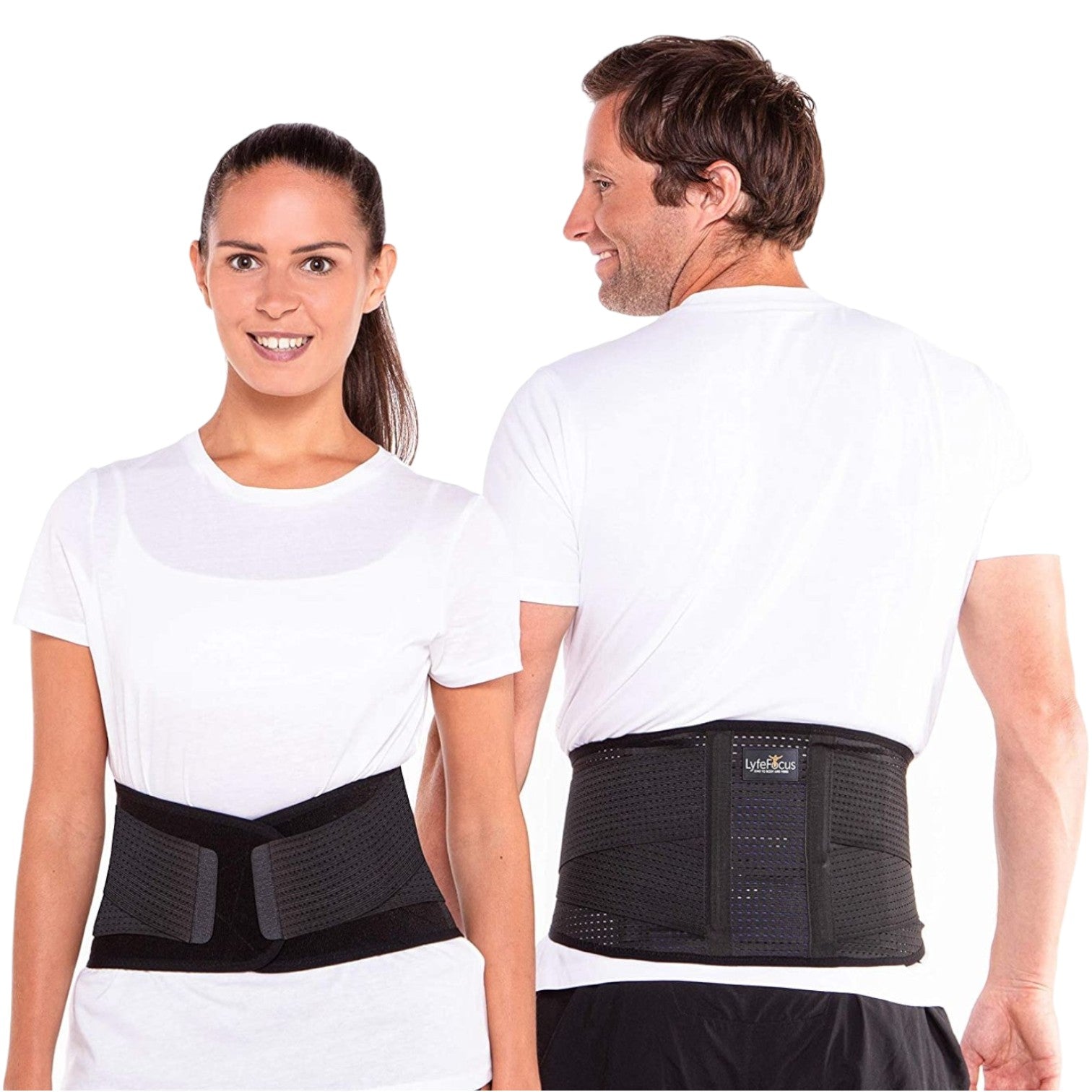
Supportive tools are most useful when they make it easier to manage the day, not when they are treated like magic fixes. For example, some desk workers find that a lower back support belt helps during specific periods of activity or when they need extra confidence getting moving again. Others prefer a gentle back stretcher as part of an evening wind-down. The win comes from using those tools intelligently while also fixing the habits that caused the soreness in the first place.
Using tools effectively can assist in managing symptoms of a sore lower back.
When it is time to get checked
If your lower back pain is severe, persistent, linked to an injury, or comes with symptoms like tingling, weakness, or pain travelling down the leg, it is worth getting proper advice. The same applies if the discomfort keeps getting worse despite sensible changes.
A sore lower back from sitting all day is rarely about one dramatic mistake. It is usually the result of too much stillness, too little support, and a work routine that leaves the body stuck in the same pattern. Change the pattern and you usually change the outcome. That is the part most people skip, and it is exactly why the problem hangs around.
Awareness of your body’s position can prevent a sore lower back from becoming a chronic issue.

Lower Back Support Belt
Stay active and protect your lower back with stabilising support.
Shop Now →