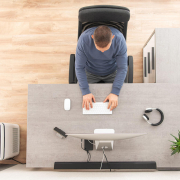
Why Working From Home Causes Upper Back Ache, and What To Do About It
Upper back ache is one of the most common complaints among people who work from home, and it rarely comes out of nowhere. In most cases, it builds slowly. A dining chair that offers poor support, a laptop screen that sits too low, a workday with very little movement, and stress that keeps your shoulders half-raised can all stack up until your upper back starts to feel tight, tired, or constantly irritated.Many individuals struggle with upper back ache, especially when they are seated for long hours.
The frustrating part is that many people try to treat the ache as a one-off problem. They stretch once, rub the sore spot for a minute, then go straight back to the same set-up that caused the issue in the first place. That is why the discomfort keeps returning. The ache is often less about one dramatic injury and more about the small habits repeated every day.
Why the upper back gets sore during home working

Your upper back works hard to support your head, neck, shoulders, and ribcage throughout the day. When you are working at a kitchen table or leaning towards a laptop, the muscles between the shoulder blades often have to stay switched on for hours. They are not producing huge force, but they are under low-level tension for far too long. Over time, that can leave the area feeling stiff, achy, and overly sensitive.
There is usually more than one trigger involved. A low screen encourages you to round forwards. A keyboard placed too far away makes you reach. A chair with no proper back support leaves your mid-back doing extra stabilising work. Then stress piles on top, which tends to show up as held tension in the shoulders and upper traps. Put all of that together and the result is exactly what many home workers describe: a dull upper back ache that gets worse later in the day and leads to chronic upper back ache issues.
Recognising the signs of upper back ache can help in addressing the root causes more effectively.
The habits that make it worse
The first bad habit is staying in one position for too long. Even a decent sitting posture becomes a problem if you hold it for hours without a break. The second is treating the laptop as a permanent desk setup. Laptops are convenient, but they push the screen and keyboard into the same fixed position, which usually means either the screen is too low or the arms are too high.
To address these issues, it is vital to understand the sources of your upper back ache and make specific adjustments.
The third issue is working with your shoulders lifted without realising it. This often happens during stressful periods, on calls, or when you are typing quickly. A fourth problem is collapsing into the chair once fatigue sets in. Early in the day you may sit reasonably well, but by mid-afternoon many people drift into a rounded, slumped position that puts more strain on the upper back and shoulders.
What actually helps
Incorporating simple stretches and movements can significantly alleviate upper back ache.
Regularly incorporating stretches can alleviate the discomfort associated with upper back ache.
The first fix is to make your screen work for your body, not the other way around. Raise the laptop so the top of the screen is closer to eye level, then use a separate keyboard and mouse if you can. That one change usually reduces the amount of forward head posture and upper back rounding.
Next, bring your elbows in closer and keep your wrists relaxed. If you have to reach forward all day, the upper back will keep paying the price. It also helps to put a small cushion or rolled towel behind the mid to lower back if your chair offers very little support. That gentle support can make it easier to sit upright without feeling rigid.
Movement matters just as much as desk setup. Stand up every 30 to 45 minutes, even if it is only to make tea, refill your water, or walk to another room. The point is not to create the perfect fitness routine in the middle of work. The point is to stop the upper back from being held in one shape all day.
Be mindful that prolonged sitting can contribute to your upper back ache, so make it a habit to stand frequently.
A simple upper back reset you can actually stick to
You do not need an elaborate stretching plan. A realistic reset is better than an ambitious one you never do. Start with this:
If you experience consistent upper back ache, consider evaluating your workspace ergonomics.
1. Shoulder rolls
Roll both shoulders slowly up, back, and down for ten repetitions.
2. Chest opening stretch
Stand in a doorway, place your forearms lightly on the frame, and lean forward until you feel a stretch through the front of the chest. Hold for 20 to 30 seconds.
3. Mid-back extension
Sit tall, place your hands behind your head, and gently lift your chest towards the ceiling without flaring the ribs too much. Repeat for five controlled reps.
4. Walk for two minutes
This sounds basic because it is basic, but it works. Walking resets breathing, reduces static loading, and gives the upper back a break from the desk position.
Where LyfeFocus products fit in
A product should support better habits and make them easier to stick with. For example, if your upper back feels tight after a long desk day, gentle posture support or a back stretcher can be a worthwhile addition to an evening recovery routine because they help the area open up and feel less locked. The best results usually come when those tools are paired with a better setup, more regular movement, and less time hunched over a laptop.
Using the right products can significantly reduce the occurrence of upper back ache during long working hours.
Adding supportive products can also help reduce upper back ache during long working hours.
That softer, supportive approach fits home working far better than trying to force the body into a perfect position for eight hours straight. Your upper back usually responds best to a combination of awareness, movement, and sensible support.
Listening to your body when it signals upper back ache is crucial for long-term health.
When not to ignore upper back ache
Most work-from-home upper back ache is mechanical and habit-related, but there are times to stop guessing and get checked properly. If the pain is severe, follows a fall or injury, spreads with numbness or tingling, affects breathing, or does not improve with sensible changes, it is worth speaking to a healthcare professional.
Never ignore severe upper back ache, as it could indicate a more serious issue.
If your upper back aches every day, there is usually nothing mysterious about it. The body is telling you that your routine is asking too much from the same muscles over and over again. Fix the setup, break up long periods of sitting, lower your stress where you can, and use supportive tools as exactly that, support. Do that consistently and the upper back ache usually becomes far less dramatic.

Posture Corrector
S1 (Black)
Improve your posture
and relieve back & neck pain.