Spine Stretching Equipment: 5 Essential Tools for Back Pain Relief
If you spend most of your day sitting down, your spine is under load from the moment you wake up to the moment you go to bed. Over time, that sustained compression leads to stiffness, muscle tightness, and the kind of persistent dull ache that becomes normal because you have lived with it long enough. Spine stretching equipment exists to reverse that process. The right spine stretching equipment creates a gentle, controlled decompression of the vertebral column, restores the natural curvature of the back, and gives the surrounding muscles the space they need to release tension that has built up over hours, days, or years of poor posture.
This guide covers five of the most effective types of spine stretching equipment available for home use, explains how each one works, and helps you match the right tool to your situation.
Why Spine Stretching Equipment Works Better Than Stretching Alone
Stretching exercises are valuable and should remain part of any back health routine. Guy’s and St Thomas’ NHS Foundation Trust physiotherapy guidance confirms that keeping as active as possible and gradually building exercise tolerance is central to recovering from low back pain. But manual stretching on its own has a key limitation: you can only apply the tension your own flexibility allows. Spine stretching equipment removes that ceiling. It uses your body weight, mechanical leverage, or targeted design to create a stretch that goes beyond what manual movement can achieve, reaching deeper into the facet joints, discs, and paraspinal muscles that manual stretching struggles to access.
The result is faster, more consistent relief, particularly for people dealing with thoracic stiffness, lumbar compression, or the rounded posture that develops from prolonged desk work. Good spine stretching equipment also encourages a consistent routine because it removes the guesswork of how deep or how long to stretch. You use it as designed, for the recommended duration, and the results follow.
5 Types of Spine Stretching Equipment for Home Use
1. Back Stretcher Board
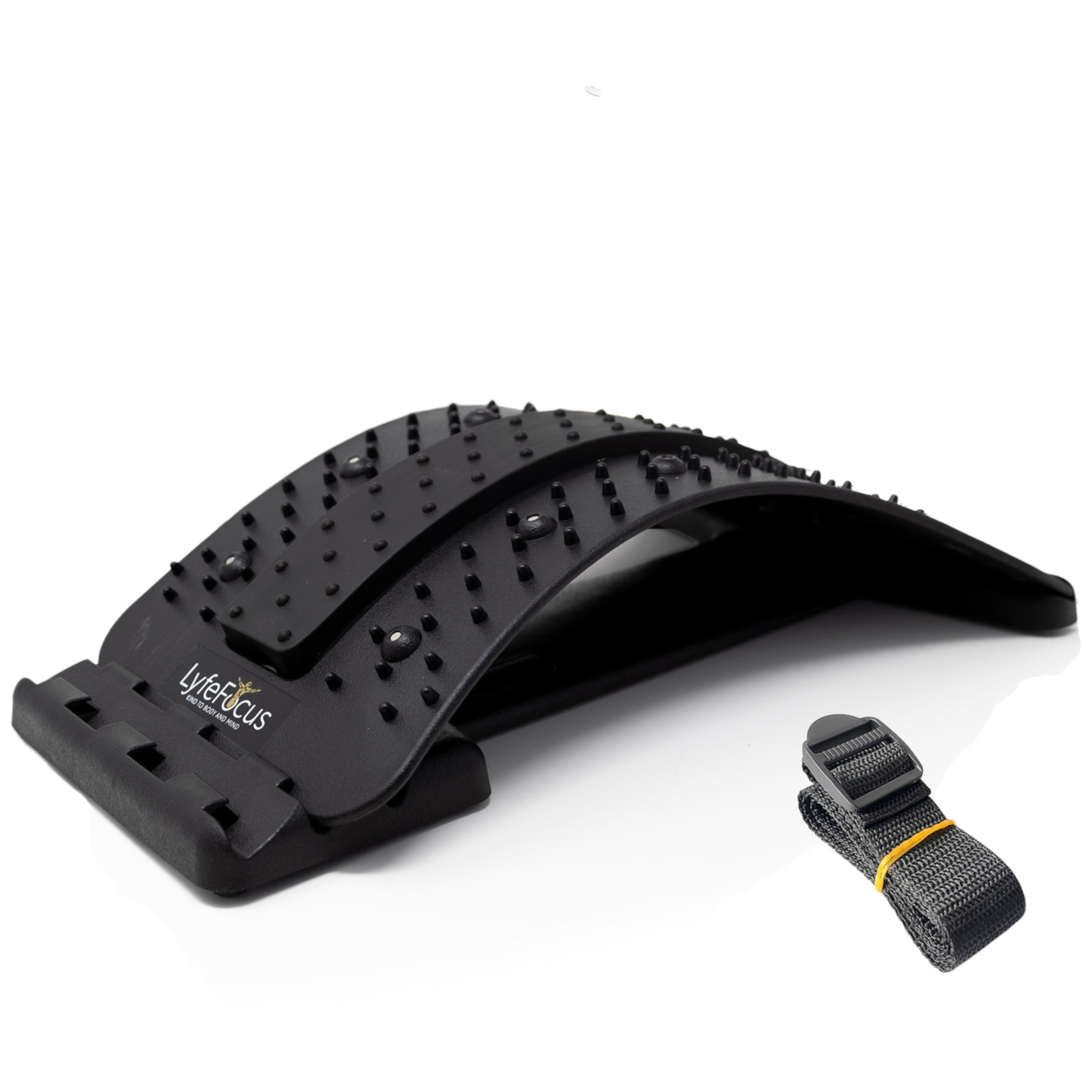
The back stretcher board is the most widely used and most accessible piece of spine stretching equipment for desk workers and people with chronic lumbar or thoracic tension. You lie over the curved board, which positions the spine in a gentle extension that decompresses the vertebrae, opens the facet joints, and lengthens the paraspinal muscles simultaneously. The LyfeFocus Back Stretcher S1 takes this further with 86 acupressure points and 10 therapy magnets built into the surface, which target pressure points to improve blood flow and enhance muscle relaxation while you stretch. Used at one of three adjustable height levels, this type of spine stretching equipment allows you to progress the depth of the stretch as your flexibility and comfort improve over time.
2. Heated Back Stretcher
Heat therapy and spinal decompression work exceptionally well together, which is why the heated back stretcher is one of the most effective categories of spine stretching equipment for people with chronic muscle tightness or stiffness. The heat penetrates the muscle tissue before and during the stretch, reducing the resistance of the paraspinal muscles and allowing the spine to release into the decompression position more readily. This makes the overall stretch deeper and more effective than a standard back stretcher alone. For people who sit at a desk for eight or more hours a day and find the muscles of the mid and lower back chronically rigid by the end of the working day, a heated spine stretching equipment option is often the fastest route to meaningful relief.
3. Foam Roller
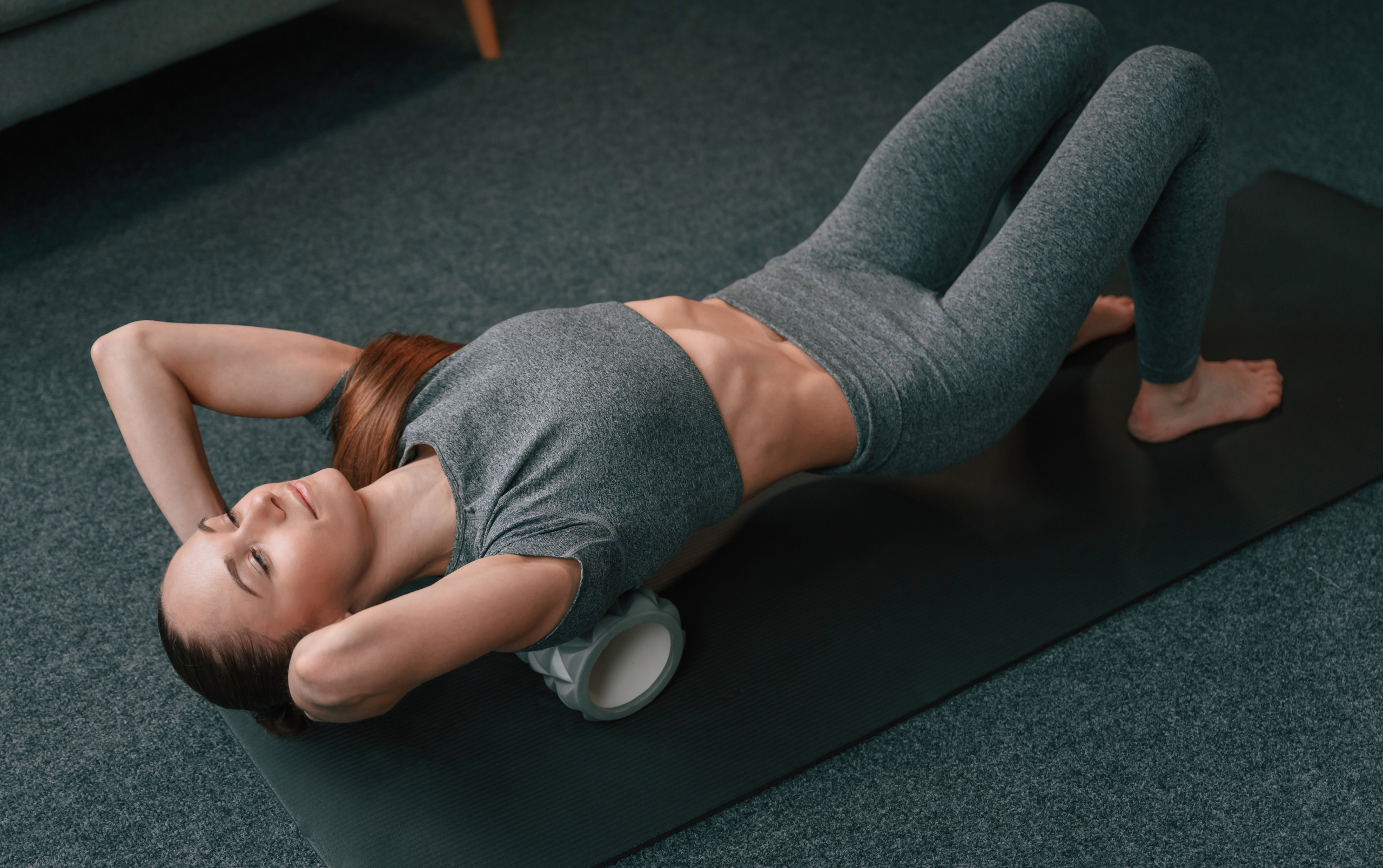
The foam roller is one of the most versatile pieces of spine stretching equipment available, and one of the most underused. Placed horizontally beneath the thoracic spine and rolled slowly from the mid-back to the upper back, it applies targeted myofascial release to the muscles running alongside the vertebral column. This breaks up adhesions, reduces the chronic tightness that limits spinal mobility, and prepares the tissue for deeper stretching. As spine stretching equipment goes, the foam roller also offers the advantage of being usable across the entire back and lower body, making it a high-value addition to any back health routine. Sessions of five to ten minutes on the thoracic spine two to three times per week produce noticeable improvements in spinal mobility within a few weeks.
4. Neck Stretcher
The cervical spine is the uppermost section of the vertebral column and one of the areas most affected by desk work, screen use, and forward head posture. Neck stretchers are spine stretching equipment designed specifically to decompress this segment, gently tractioning the cervical vertebrae apart to relieve the compression that causes headaches, stiffness, and radiating tension into the upper back and shoulders. Many people who invest in spine stretching equipment for the lumbar region overlook the cervical spine entirely, despite the fact that the two areas are mechanically linked. Addressing the neck as part of a broader spinal decompression routine produces better overall results than focusing on one section alone.
5. Posture Corrector
While not spine stretching equipment in the mechanical sense, a posture corrector works in close partnership with stretching tools by addressing the structural cause of spinal compression. When the shoulders round forward and the thoracic spine flexes chronically, the vertebrae are loaded unevenly, accelerating the tension and compression that spine stretching equipment is trying to undo. A posture corrector worn for short periods throughout the day retrains the muscles and ligaments responsible for upright alignment, reducing the rate at which spinal compression redevelops between stretching sessions. Used together, spine stretching equipment and a posture corrector create a complementary loop: the stretcher releases accumulated tension, and the corrector slows the rate at which it returns.
How to Choose the Right Spine Stretching Equipment
The best spine stretching equipment for you depends on three things: where your pain is located, how severe your current stiffness is, and how much time you can realistically commit to a daily routine.
- Lumbar and mid-back pain responds best to a back stretcher board used daily for five minutes, progressing through the adjustable levels as comfort allows.
- Chronic muscle rigidity benefits most from a heated spine stretching equipment option that softens the tissue before decompression begins.
- Thoracic stiffness and upper back tension responds well to a foam roller used in combination with a back stretcher.
- Neck pain and cervical compression requires dedicated cervical spine stretching equipment such as a neck stretcher, used separately from lumbar tools.
- People who want prevention rather than treatment benefit from combining a posture corrector with their spine stretching equipment to reduce daily spinal load.
For most desk workers dealing with a combination of lumbar, thoracic, and postural issues, the most practical starting point is a back stretcher board used once daily, supported by a posture corrector worn for short periods at the desk. This covers the majority of spinal compression patterns caused by prolonged sitting without requiring a large time commitment or multiple pieces of spine stretching equipment used simultaneously.
Using Spine Stretching Equipment Safely
Spine stretching equipment is safe for most healthy adults when used as directed, but a few principles are worth following regardless of which tool you choose. Always start at the lowest intensity level and build up gradually over one to two weeks. Stop immediately if you feel sharp, shooting, or radiating pain during use, as this may indicate nerve involvement that requires a physiotherapist or GP assessment. People with diagnosed spinal conditions including disc herniation, spondylolisthesis, or osteoporosis should consult a healthcare professional before using any spine stretching equipment at home. For general back stiffness and postural tension, most people find their symptoms improve meaningfully within two to four weeks of consistent daily use.
Your Next Move
The right spine stretching equipment does not need to be complicated or expensive. A quality back stretcher used daily for five minutes delivers consistent, cumulative spinal decompression that most desk workers will feel within the first week of use. Pair it with a foam roller for thoracic mobility and a posture corrector for structural support, and you have a complete home-based spine care routine that addresses tension, compression, and alignment together. Browse the full range of back and neck stretchers designed for home use and find the right starting point for your needs.
For personalised product advice, contact Lyfe Focus and see what fits you the best.
Relieve back pain and restore your posture with a gentle, effective stretch.
Back Stretcher S1
Related posts:
 Lower Back Pain That Shoots Down Your Legs: What It Usually Means And What To Do Today
 Foam Roller for Back Pain: The 10-Minute Routine That Actually Hits The Right Spots
 Lower Back Achiness: 6 Effective Ways to Find Lasting Relief
 Shoulder and Upper Back Stretches: 6 Effective Moves for Desk Workers
