
Shoulder and Upper Back Stretches: 6 Effective Moves for Desk Workers
If you sit at a desk for most of the day, shoulder and upper back stretches are not a luxury. They are a necessity. Hours spent hunched over a keyboard, leaning into a screen, or cradling a phone between your ear and shoulder builds tension that compounds day after day. Without regular shoulder and upper back stretches, that tension turns into chronic tightness, reduced range of motion, and eventually pain that follows you home from work. This guide covers six straightforward shoulder and upper back stretches you can do at your desk, at home, or anywhere in between — no equipment, no gym, no excuses.
Why Shoulder and Upper Back Stretches Matter for Desk Workers
The muscles of the upper back and shoulders — the trapezius, rhomboids, and levator scapulae — are under constant low-level load when you are seated and looking at a screen. They are never fully at rest. This sustained tension leads to trigger points, knots, and the kind of deep ache that makes it hard to concentrate by the afternoon. Shoulder and upper back stretches counteract that load by restoring length to shortened muscles, improving blood circulation to the area, and signalling the nervous system to release accumulated tension.
There is also a posture element. Most desk workers develop rounded shoulders over time, where the chest muscles tighten and pull the shoulders forward. Shoulder and upper back stretches that open the chest and draw the shoulder blades back are one of the most effective tools for interrupting that pattern before it becomes permanent. Combined with a posture corrector worn for short periods throughout the day, regular stretching creates a two-pronged approach that addresses both muscle tightness and structural alignment.
How Often Should You Do Shoulder and Upper Back Stretches?
Consistency matters far more than duration. Research and guidance from NHS physiotherapy services consistently recommend that shoulder and upper back stretches performed little and often throughout the day are more effective than a single long session done occasionally. A practical target for desk workers is a two to three minute stretch routine every 60 to 90 minutes. That is roughly four to five sessions in a standard working day, which adds up to meaningful cumulative benefit without disrupting your workflow.
If you currently do no stretching at all, start with once in the morning and once in the afternoon. The NHS East Lancashire upper limb exercise resources include shoulder and upper back stretches recommended by physiotherapists that follow this same principle of frequency over intensity. Build the habit first, then increase the frequency as it becomes automatic.
6 Shoulder and Upper Back Stretches to Do Right Now
1. Cross-Body Shoulder Pull
Bring your right arm across your chest and hold it just above the elbow with your left hand. Gently pull the arm toward your chest until you feel a stretch across the back of the shoulder. Hold for 20 to 30 seconds, then switch sides. These shoulder and upper back stretches target the posterior deltoid and rhomboids — exactly the muscles that shorten from sustained forward posture. Repeat two to three times each side.
2. Doorway Chest Opener
Stand in a doorframe and place both forearms vertically against the frame with your elbows at shoulder height. Lean gently forward until you feel a stretch across the front of the chest and the fronts of the shoulders. Hold for 20 to 30 seconds. This is one of the most important shoulder and upper back stretches for anyone with rounded shoulders, because it lengthens the pectoral muscles that pull the shoulders forward in the first place. No doorframe available? Place your hands behind your head and draw your elbows back instead.
3. Seated Thoracic Extension
Sit in a firm chair and interlace your fingers behind your head. Gently lean back over the top edge of the chair, allowing your upper back to arch slightly. Hold for 10 to 15 seconds and return to upright. Repeat five to six times. This targets the thoracic spine — the section of the back that stiffens most from prolonged sitting. Shoulder and upper back stretches that mobilise the thoracic spine also help take pressure off the neck and lower back, making this one of the highest-value moves in any desk worker’s routine.
4. Shoulder Blade Squeeze
Sit or stand with your arms at your sides. Draw your shoulder blades together as if you are trying to hold a pencil between them. Hold for five seconds, then release. Repeat 10 to 15 times. These shoulder and upper back stretches are deceptively simple but highly effective for activating the mid-trapezius and rhomboids, which tend to become weak and overstretched in people who sit with forward-rounded shoulders. This move also reinforces the muscle memory of correct shoulder positioning throughout your day.
5. Upper Trapezius Side Neck Stretch
Sit tall and tuck your right hand under your right thigh to anchor the shoulder. Slowly tilt your head to the left, bringing your left ear toward your left shoulder. Use your left hand to apply very gentle additional pressure. Hold for 20 seconds and repeat on the opposite side. Shoulder and upper back stretches that address the upper trapezius are particularly relevant for people who carry stress in their neck and upper shoulders, which covers the vast majority of desk workers. You should feel a clear stretch running from the base of your neck to the top of your shoulder.
6. Eagle Arms (Seated)
Sit up straight and extend both arms forward at shoulder height. Cross the right arm under the left, wrapping the forearms so that your palms face each other. Lift the elbows slightly and allow the shoulders to drop. Hold for 20 to 30 seconds, then switch which arm is on top. These shoulder and upper back stretches target the rear deltoids, the rotator cuff, and the muscles between the shoulder blades simultaneously. Many desk workers find this stretch reaches areas that other moves do not, particularly the deep tension that builds between the shoulder blades after hours of typing.
What to Do Between Shoulder and Upper Back Stretches
Stretching is most effective when it is part of a broader approach to desk worker wellbeing. Between your shoulder and upper back stretches, pay attention to your workstation setup. Your screen should be at eye level, your shoulders should be relaxed and not raised toward your ears, and your elbows should rest comfortably at approximately 90 degrees. These small positioning adjustments reduce the baseline tension your muscles accumulate throughout the day, which means your shoulder and upper back stretches are working from a lower starting point of tightness each time.
Heat therapy is another effective complement. Applying warmth to the neck and shoulder area before shoulder and upper back stretches helps the muscles relax and respond more readily to movement. The same principle applies after a long day at the desk — heat encourages the muscle fibres to release tension more completely than stretching alone can achieve in cold tissue.
Start Feeling the Difference
Shoulder and upper back stretches do not require a major time commitment or any special equipment. What they require is consistency and the understanding that small, regular inputs add up to real change over time. Start with the six moves in this guide, do them at least twice a day, and pair them with a sensible workstation setup. Within two to three weeks, most desk workers notice a meaningful reduction in end-of-day tension and a broader sense of ease across the upper body.
If you have questions about which product suits your situation, do not hesitate to contact us.
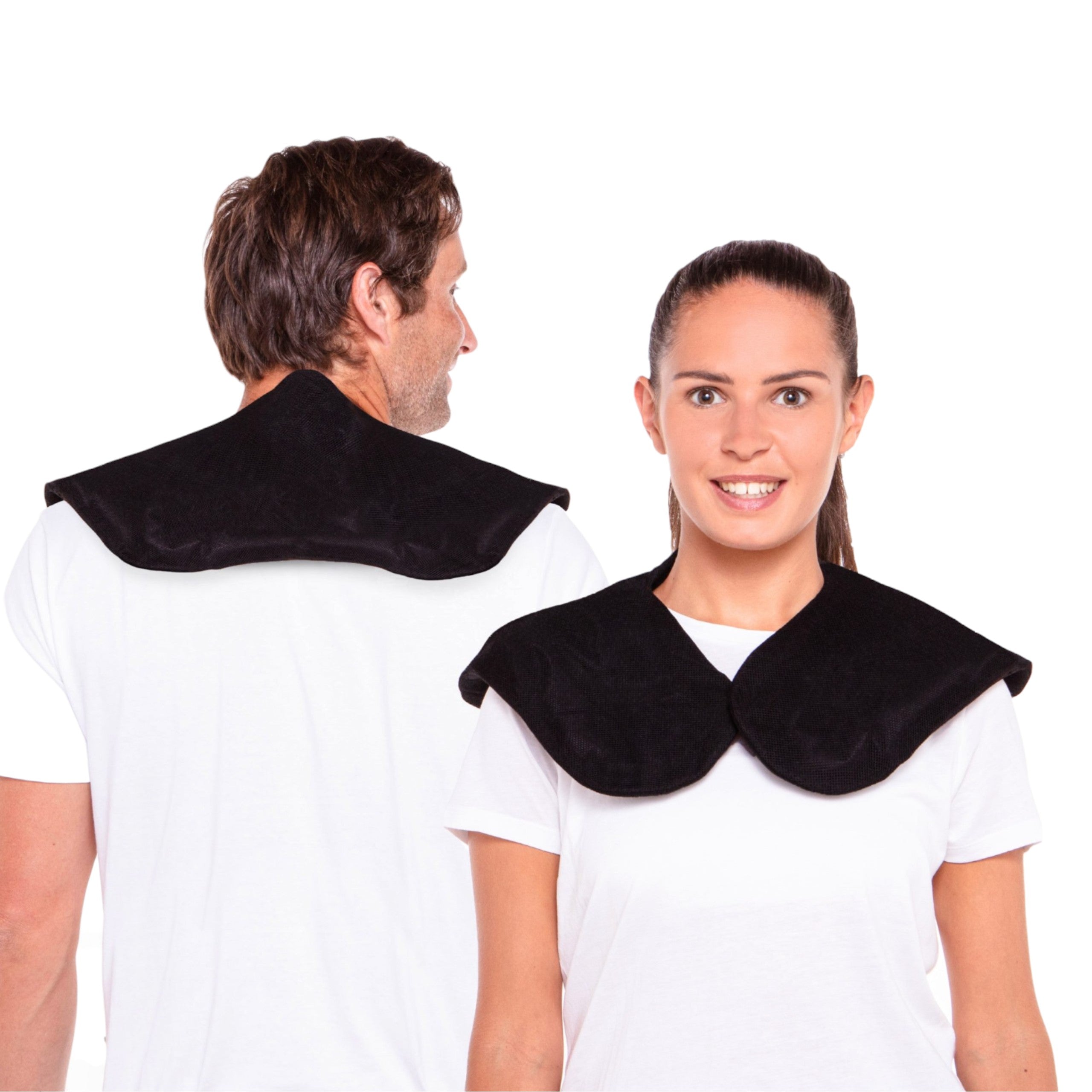
Relieve neck and shoulder pain fast with targeted hot or cold therapy.
Hot/Cold Pack Neck & Shoulder
Related posts:
 How to Fix Rounded Shoulders From Desk Work (Without Turning Your Life Into a Gym)
 Lower Back Pain That Shoots Down Your Legs: What It Usually Means And What To Do Today
 Foam Roller for Back Pain: The 10-Minute Routine That Actually Hits The Right Spots
 Frozen Shoulder Treatment: 6 Effective Ways to Find Relief

