Self-Massage: 7 Easy Techniques to Relieve Desk Pain
If your neck feels like a knot by mid afternoon and your shoulders seem to creep up toward your ears, you are not alone. Hours spent at a desk leave muscles tight, circulation sluggish, and tension building with nowhere to go. Self-Massage is one of the simplest ways to release that tightness without booking an appointment or even leaving your desk. With a few minutes and the right technique, you can ease pain, improve mobility, and feel noticeably looser by the end of the working day, even on the busiest of weeks. Best of all, it fits into the gaps you already have, whether that is a short break between meetings or a few quiet minutes before bed, and it travels with you wherever you go.
Why Self-Massage Matters for Desk Workers
Sitting for long stretches places constant strain on the neck, shoulders, lower back, and hips. Muscles shorten, blood flow slows, and small knots form within the tissue. Left untreated, these knots tighten further and often lead to stiffness, tension headaches, and a reduced range of movement that can creep up on you slowly.
Self-Massage works by applying direct pressure to these areas, which encourages blood flow and helps tight muscle fibres release. Unlike stretching alone, pressure changes the texture of the tissue itself, reaching the kind of deep tightness that stretching often cannot touch.
Practising Self-Massage regularly also helps you notice problem areas early, before they develop into ongoing pain. Just a few minutes a day can prevent the chronic tightness that builds up after weeks of desk based work, and it costs nothing beyond a little time.
Getting Started with Self-Massage at Home
You do not need special training or expensive equipment to begin. A pair of hands, a firm surface, and a few simple tools are all you really need to get started.
Many people start with their hands alone, using fingertips, knuckles, or the heel of the palm to apply pressure to tight areas. For deeper or harder to reach muscles, a tool makes a noticeable difference. Foam rollers and massage balls are designed for exactly this kind of work, allowing you to target large muscle groups or pinpoint a single stubborn knot with controlled, even pressure.
Set aside five to ten minutes, ideally away from your desk, and work through whichever areas feel tightest first. A short break like this can also reset your posture and concentration for the rest of the day.
7 Self-Massage Techniques to Try Today
These seven techniques target the areas desk workers feel tightest. Start gently, build pressure gradually, and stop if anything feels sharp rather than tender.
- Neck release. Place your fingertips at the base of your skull and work slowly down either side of your neck using small, firm circles.
- Shoulder squeeze. Reach across your body and squeeze the opposite shoulder muscle between your fingers and thumb, holding each tender spot for a few seconds.
- Upper back roll. Lie on the floor with a foam roller positioned under your upper back, then gently roll up and down across your shoulder blades.
- Forearm press. Use your thumb to press along the inside of the opposite forearm, working from wrist to elbow to ease tension built up from typing.
- Lower back release. Place a massage ball between your lower back and a wall, then shift your body weight slowly to find and press into tight spots.
- Hip and glute work. Sit on a massage ball positioned under one hip, shifting your weight gradually until you locate a tender area, then hold steady pressure.
- Calf and foot roll. While seated, roll a massage ball under your foot or along your calf, applying steady pressure along the full length of the muscle.
Spend thirty seconds to a minute on each area, breathing slowly throughout. Self-Massage feels best when the pressure is firm but never painful or sharp.
Building Self-Massage Into Your Daily Routine
With Self-Massage, consistency matters more than intensity. A short session every day will do far more for tight muscles than one long session once a month, because tension builds up gradually and responds best to gradual release.
Try linking your Self-Massage routine to something you already do. A few minutes of neck and shoulder work after your morning coffee, a quick foot roll under the desk during a video call, or five minutes with a foam roller in front of the television in the evening can all become natural habits.
Keeping a massage ball or foam roller somewhere visible, rather than tucked away in a cupboard, makes it far more likely you will actually use it. Out of sight quickly becomes out of mind, especially on busy days.
Common Mistakes to Avoid with Self-Massage
Pushing too hard too soon is the most common mistake people make when they start out. Deep pressure on a cold, tight muscle can cause bruising or make soreness worse rather than better, which often puts people off continuing.
- Applying maximum pressure straight away instead of building up gradually
- Holding your breath, which keeps muscles guarded and tense throughout the session
- Rushing through each area in a few seconds rather than holding steady pressure
- Pressing directly onto bone, joints, or the spine itself
- Skipping the areas that feel most uncomfortable, which are often the ones that need attention most
Self-Massage should feel like a release, not a fight. If an area feels too sensitive to work on directly, start around it and let the surrounding tissue soften first before returning to it.
When Self-Massage Is Not Enough
Self-Massage is a useful daily habit, but it has limits. Persistent pain, numbness, tingling, or pain that spreads down an arm or leg are signs that something more is going on and deserve a proper assessment.
Tension headaches are a common example of where Self-Massage genuinely helps. NHS guidance on tension headaches notes that activities such as massage, exercise, and better sleep habits can ease symptoms, alongside simple pain relief where needed.
If pain continues for more than a couple of weeks despite a regular Self-Massage routine, or it starts affecting sleep and daily activities, it is worth speaking to a GP or physiotherapist for a proper diagnosis rather than relying on home techniques alone.
Take The Next Steps
Self-Massage will not fix every problem, but as a daily habit it can make a real difference to how your body feels after hours at a desk. Start with the areas that feel tightest, build up gradually, and use simple tools where they help most. For personalised product advice, get in touch with the LyfeFocus team directly.
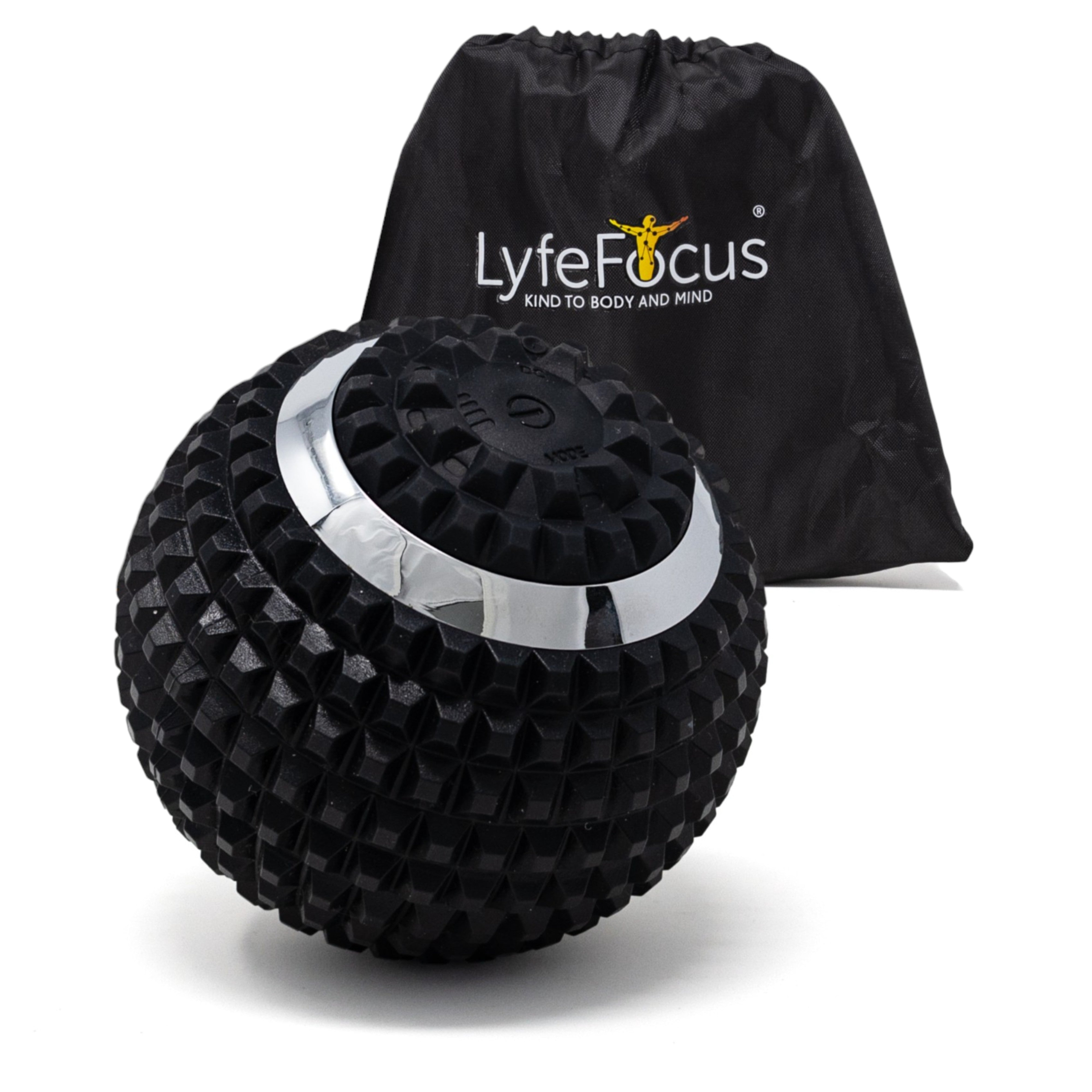
The LyfeFocus Massage Ball helps to ease muscle pain by massaging deep muscle tissue.
Vibrating Massage Ball (Black)