Trigger Point Massage: 6 Effective Ways to Release Muscle Knots at Home
That persistent ache between your shoulder blades. The stubborn knot in your calf that never fully loosens. If you have lived with this kind of pain, you already know how draining it can be. Trigger point massage is one of the most effective ways to address it, and the good news is that you can start seeing results at home, without a clinic appointment.
This guide explains what trigger point massage is, why muscle knots form in the first place, and six practical techniques you can use today to finally get some relief.
What Is Trigger Point Massage and Why Does It Work?
A trigger point is a tight, hyper-irritable knot within a muscle that does not release on its own. These knots can cause pain both at the site and in entirely different areas of the body, a phenomenon known as referred pain. A tight spot in your neck, for example, can trigger headaches or send discomfort down your arm.
Trigger point massage works by applying sustained, focused pressure directly to these knots. This pressure interrupts the pain cycle, increases blood flow to the area, and encourages the muscle fibres to relax and lengthen. According to the NHS, manual therapy techniques including targeted soft tissue work are widely used to manage musculoskeletal pain.
Unlike general relaxation massage, trigger point massage is intentional and precise. It targets the source of the problem rather than just easing surface tension.
Why Trigger Point Massage Is Especially Useful for Desk Workers
Sitting at a desk for long periods is one of the leading causes of trigger point development. When you hold the same posture for hours, certain muscle groups stay contracted without ever getting the chance to fully release. The upper traps, levator scapulae, and hip flexors are particular hot spots for desk workers.
Over time, the muscles become overworked, lose circulation, and develop those characteristic knots. Trigger point massage interrupts this cycle and helps restore normal muscle function before the problem becomes chronic.
The good news is that trigger point work does not require a therapist. With the right tool and the right approach, you can target most areas yourself.
6 Trigger Point Massage Techniques You Can Use at Home
1. Locate the Knot Before You Apply Pressure
The most common mistake people make with trigger point massage is pressing too quickly in the wrong area. Start by slowly moving your fingers along the muscle to find the exact spot that refers pain elsewhere or feels noticeably more tender than the surrounding tissue. That is your target.
2. Apply Sustained Pressure, Not Friction
Once you find a trigger point, press firmly into it and hold. You are not rubbing or rolling. Hold the pressure for 15 to 30 seconds while breathing slowly and deeply. The discomfort should ease gradually as the knot releases. If the pain increases sharply, reduce your pressure.
3. Use a Massage Ball for Precision
Your fingers are effective for accessible muscles like the neck and forearms, but for the back, glutes, and calves, a massage ball gives you far better leverage and precision. Place the ball between your body and a wall or the floor, position it over the trigger point, and let your body weight do the work.
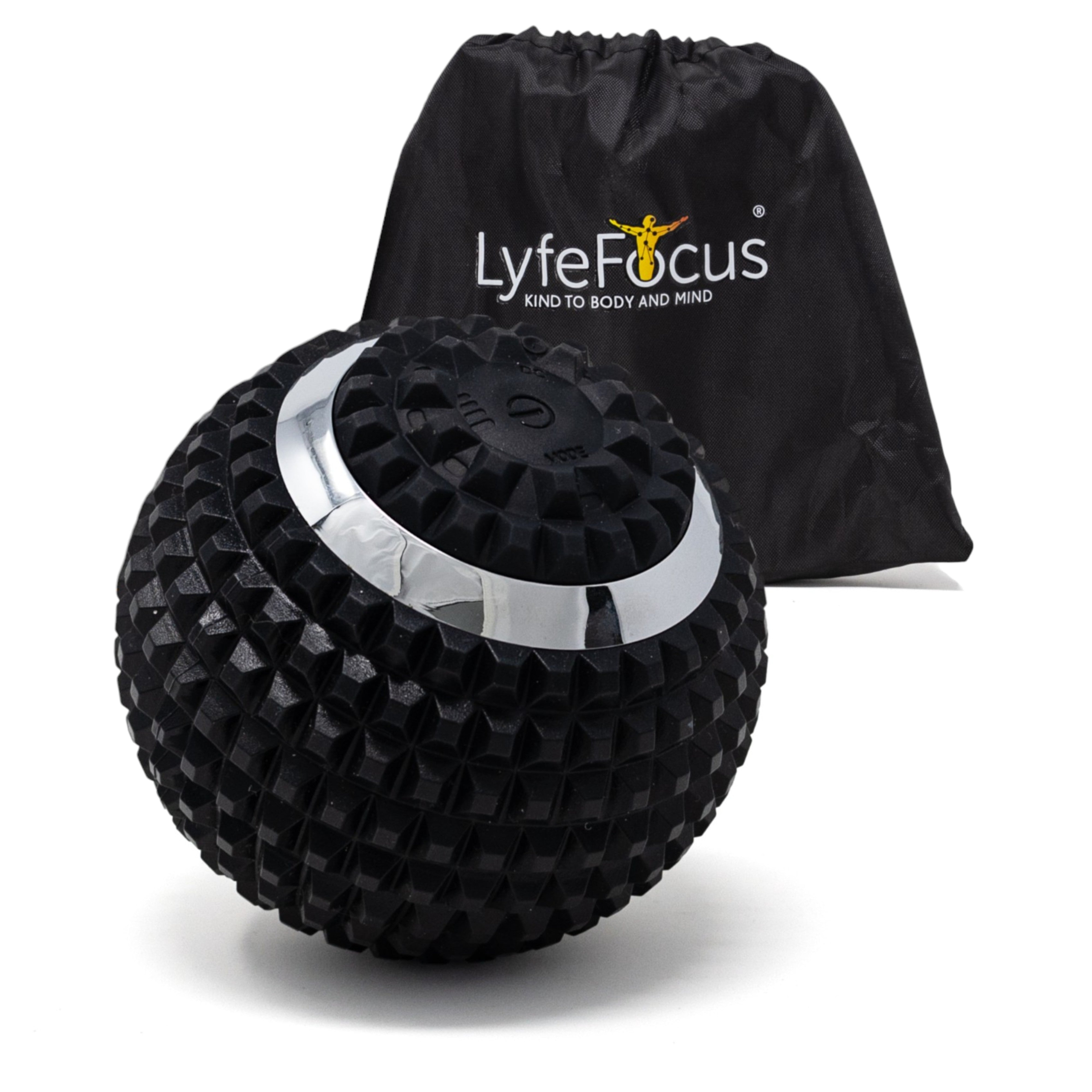
The LyfeFocus Vibrating Massage Ball is designed specifically for trigger point work. Its silicone ridges grip the muscle tissue, and four vibration intensity settings let you adjust the depth of treatment. Use the lower settings for sensitive areas and progress to higher settings on larger muscle groups like the glutes and quads.
4. Breathe Through the Discomfort
Trigger point massage can be uncomfortable, particularly in areas of chronic tightness. Deep, slow breathing is not just a relaxation technique here. It actively helps the muscle release. Shallow breathing signals threat to the nervous system, which causes muscles to brace. Long exhales encourage the opposite response.
5. Work the Surrounding Tissue Too
After releasing a trigger point, spend a minute using slow rolling movements around the affected area. This improves circulation, clears metabolic waste products, and prevents the knot from reforming as quickly. A foam roller works well for this stage on larger areas like the upper back and thighs.
6. Stay Consistent Rather Than Intense
One aggressive session will not resolve a long-standing muscle knot. Short, consistent sessions spread across the week are far more effective. Aim for five to ten minutes of trigger point massage daily on the areas that trouble you most. Results typically become noticeable within a week of regular practice.
Trigger Point Massage: Common Areas and How to Target Them
Upper back and shoulders: Place a massage ball against a wall at shoulder height. Lean in and shift your weight until you find the tender spot. Hold for 20 to 30 seconds, then release.
Neck: Use your fingertips to press along the base of the skull and down the sides of the neck. Move slowly and pause on any spots that reproduce your familiar discomfort.
Glutes and piriformis: Sit on a massage ball on a chair or the floor. Shift your weight until you locate the trigger point. This area responds well to vibration at medium intensity.
Calves: Place the massage ball on the floor and roll your calf over it slowly. Pause for 15 seconds on any knots you find before moving on.
When to Seek Professional Help for Muscle Knots
Self-directed trigger point massage is effective for most everyday muscle tension and desk-related pain. However, you should consult a physiotherapist or GP if your pain is severe, worsening, or accompanied by numbness, tingling, or weakness in a limb. These can be signs of nerve involvement that require professional assessment.
For most people, though, a consistent trigger point massage routine is a straightforward way to manage and prevent the kind of muscular pain that accumulates through daily life.
Start Your Trigger Point Massage Routine Today
Trigger point massage is one of those interventions that pays dividends the more consistently you apply it. A few minutes each day, with the right technique and the right tool, can make a significant difference to how your body feels in the weeks ahead.
For personalised product advice, get in touch with the LyfeFocus team directly.
The LyfeFocus Massage Ball helps to ease muscle pain by massaging deep muscle tissue.
Vibrating Massage Ball (Black)