Neck and Head Pain: 6 Effective Ways to Find Relief
If you regularly wake up with a stiff neck and a throbbing head, you are not alone. Neck and head pain affect millions of people in the UK, and the two problems are almost always connected. Poor posture at a desk, long hours on a screen, stress, and muscle tension can all trigger both at the same time. The good news is that most cases of neck and head pain respond well to simple, consistent self-care strategies you can start today.
This guide covers six practical approaches to tackling neck and head pain at home, without relying solely on painkillers.
Why Neck and Head Pain So Often Occur Together
The neck and head share a network of nerves called the trigeminocervical complex. When muscles in the cervical spine become tight or inflamed, pain signals travel upward into the head, causing what is known as a cervicogenic headache. This type of neck and head pain accounts for an estimated 15 to 20 percent of all headache disorders, according to research published in the NHS headache resource.
Common triggers include:
- Forward head posture from screen use (sometimes called tech neck)
- Tension held in the trapezius and suboccipital muscles
- Poor sleeping position or an unsupportive pillow
- Emotional stress, which causes the shoulder and neck muscles to contract
- Sedentary work with little movement throughout the day
6 Ways to Ease Neck and Head Pain at Home
1. Stretch Your Neck Daily
Gentle neck stretches are one of the most effective first-line responses to neck and head pain. A supported stretch helps restore the natural cervical curve, releasing pressure on the muscles and vertebrae that refer pain into the skull. Aim for two to three sessions per day, especially after long periods of sitting.
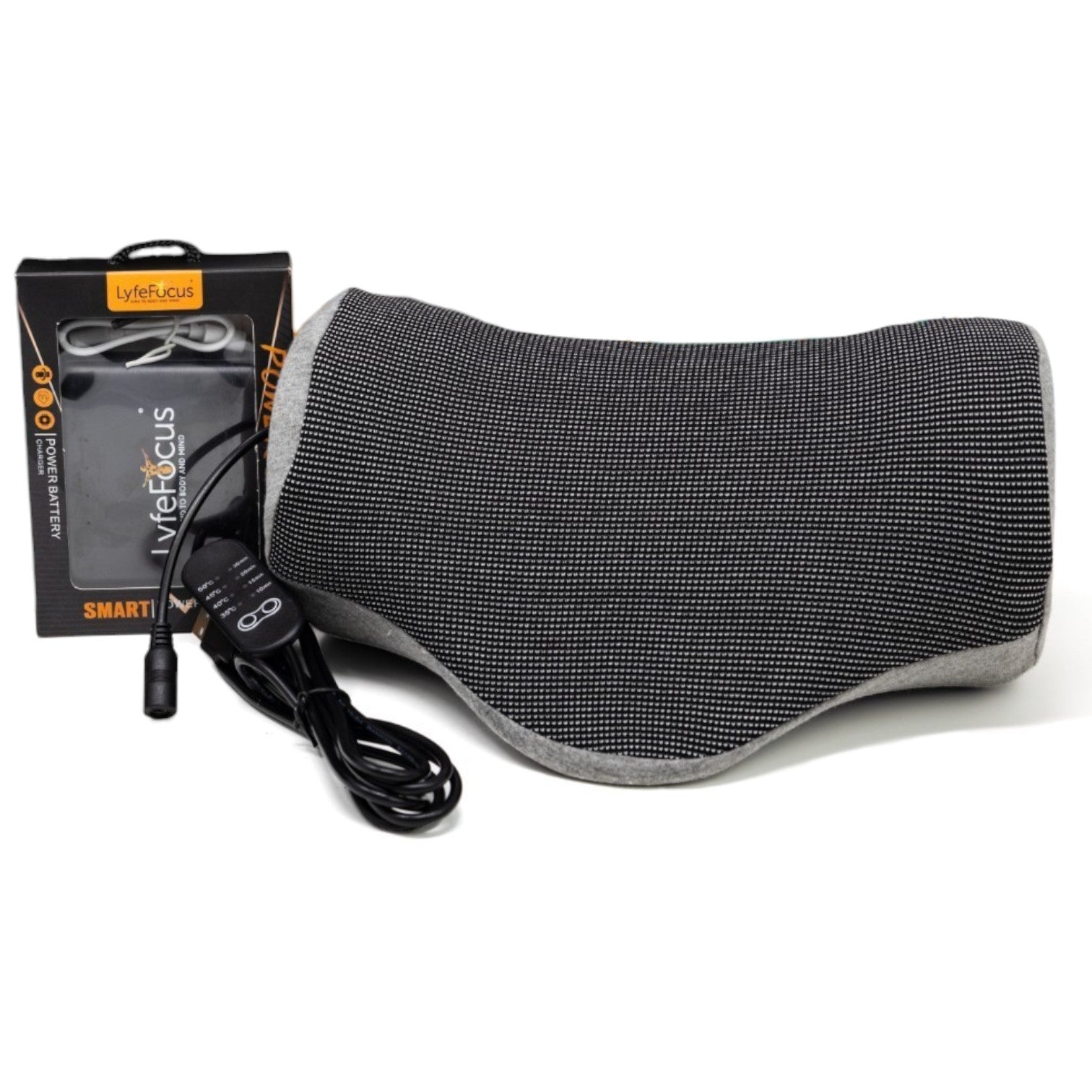
A cervical traction device like the LyfeFocus neck and shoulder range is designed to guide your neck into a gentle decompression position. The arch supports the natural curve of the spine while the massage nodes target deep muscle tissue, helping to break the tension cycle that drives neck and head pain.
2. Apply Heat to Tight Muscles
Heat therapy relaxes contracted muscles, improves blood flow, and reduces the stiffness that contributes to cervicogenic headaches. For neck and head pain triggered by tension rather than inflammation, heat is typically more effective than cold.
Apply a warm compress or a heated device to the back of the neck for ten to fifteen minutes. Consistency matters more than intensity. Short daily sessions tend to produce better results than occasional longer ones.
3. Improve Your Screen Posture
Every inch that your head moves forward from a neutral position adds around 4.5 kilograms of effective load on the cervical spine. Over a working day, that sustained strain is a primary cause of neck and head pain in desk-based workers.
Simple adjustments that make a real difference include:
- Raising your monitor so the top third of the screen is at eye level
- Moving your keyboard close enough that your elbows rest at 90 degrees
- Taking a standing or walking break every 45 minutes
- Using a lumbar-supported chair that encourages an upright spine
4. Manage Stress Proactively
Stress is one of the most underestimated drivers of neck and head pain. When you are anxious or overwhelmed, the muscles around the shoulders, neck, and jaw contract involuntarily. Over hours and days, that sustained contraction creates the tight bands of muscle that trigger tension headaches.
Regular breathwork, short walks, and even five minutes of deliberate relaxation between tasks can meaningfully reduce the physical tension that builds up during a stressful day. Combining stress management with physical therapy tools gives faster, longer-lasting results than either approach alone.
5. Review Your Sleep Position
Sleeping on your front with your head rotated to one side places the cervical spine in a sustained awkward position for six to eight hours. This is a frequent and overlooked cause of morning neck and head pain.
Side sleeping with a pillow that keeps the head level with the spine, or back sleeping with a supportive contour pillow, reduces the overnight strain that compounds during the day. If you regularly wake up with a headache or stiff neck, your sleep position is worth examining before anything else.
6. Use a Neck Stretcher With Heat for Combined Relief
When neck and head pain is driven by both muscle tension and structural tightness, combining cervical stretching with localised heat provides faster relief than either method on its own. The heat relaxes the soft tissue while the stretch restores the cervical curve and decompresses the joint surfaces.
The LyfeFocus Neck Stretcher With Heat is designed specifically for this combination. It features a built-in heat strip with four temperature settings, firm massage nodes that target the central and lateral neck muscles, and a hollow-core arch that prevents excessive pressure while still delivering an effective stretch. It comes with a portable power bank so you can use it at home or at your desk.
When Should You See a Doctor About Neck and Head Pain?
Most cases of neck and head pain improve with consistent self-care over days to weeks. However, you should seek medical advice promptly if you experience any of the following:
- Sudden severe headache described as the worst of your life
- Neck and head pain following an injury or fall
- Pain accompanied by numbness, tingling, or weakness in the arms
- Fever, stiff neck, and sensitivity to light together (possible meningitis)
- Headaches that are progressively worsening over several weeks
The NHS provides clear guidance on when headaches and neck pain require urgent attention. When in doubt, always consult a qualified healthcare professional.
Building a Routine That Keeps Neck and Head Pain Away
One-off treatments rarely deliver lasting results. The people who see the most improvement from neck and head pain are those who build small, repeatable habits into their daily routine. A morning stretch session, a posture check at the desk, heat therapy in the evening, and a considered sleep setup create a cumulative effect that reduces both the frequency and severity of symptoms over time.
The goal is not to manage neck and head pain indefinitely. It is to address the underlying tension and postural patterns driving it, so relief becomes the norm rather than the exception.
Ready to Tackle Your Neck and Head Pain?
If you are looking for a drug-free starting point, a structured approach to stretching and heat therapy is one of the most evidence-supported options available. For personalised product advice, get in touch with the LyfeFocus team directly at lyfefocus.com/pages/contact.
Relieve neck tension, improve mobility, and relax deeply with soothing heat.
Neck Stretcher With Heat