
Lower Back Achiness: 6 Effective Ways to Find Lasting Relief
If you have ever stood up from your desk at the end of a long day and felt that deep, dull ache radiating through your lower back, you are not alone. Lower back achiness is one of the most common complaints among desk workers, parents, and anyone who spends long hours on their feet. According to the NHS, back pain affects most people at some point in their life, and the lower lumbar region is the area most commonly affected. The good news is that with the right habits and tools, it is possible to reduce the ache and get back to moving freely.
What Causes Lower Back Achiness?
Lower back achiness is rarely caused by a single event. In most cases, it builds gradually as a result of daily habits that place sustained stress on the lumbar spine. The most common contributing factors include:
- Prolonged sitting without lumbar support
- Poor posture at a desk or while driving
- Weak core and glute muscles that fail to stabilise the spine
- Muscle tightness in the hips and hamstrings pulling the pelvis out of alignment
- Sleeping in a position that strains the lower back overnight
Understanding the root cause of your lower back ache matters because different causes respond to different solutions. A dull lumbar ache from tight hip flexors, for example, will not resolve with rest alone. It requires targeted stretching and movement.
1. Start Each Morning with a Gentle Spinal Stretch
The lower back stiffens during sleep, especially if you sleep in a position that compresses the lumbar discs. Starting the day with a 5-minute stretching routine can make a significant difference in how your back feels for the rest of the day.
Try lying on your back and pulling both knees gently toward your chest, holding for 20-30 seconds. Follow this with a seated forward fold, reaching toward your toes while keeping your spine long. These movements create space between the lumbar vertebrae and reduce the morning achiness that many people accept as normal.
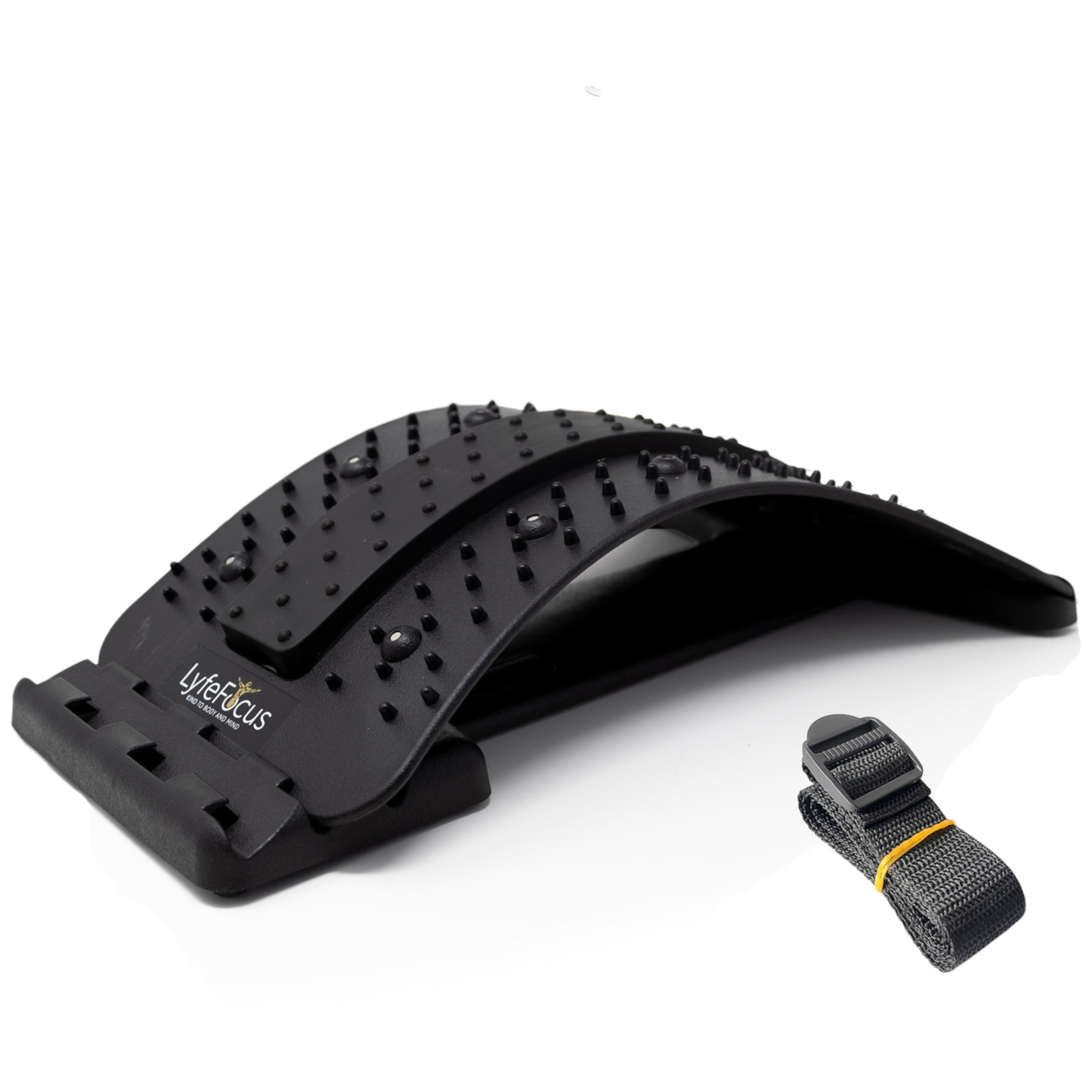
2. Decompress Your Spine with a Back Stretcher
One of the most effective tools for persistent lower back achiness is a back stretcher. Sitting for hours compresses the lumbar discs, reducing the space between vertebrae and irritating surrounding nerves and muscles. A back stretcher gently reverses this compression by supporting the spine in a gentle backward arc, encouraging traction and restoring a healthy lumbar curve.
Using a back stretcher for 10 minutes after a long day at your desk can noticeably reduce the dull ache that builds from accumulated compression. It works passively, meaning you simply lie on it, making it easy to fit into an evening wind-down routine. For anyone dealing with chronic lower back discomfort, this kind of daily decompression is one of the most overlooked and undervalued habits.
3. Strengthen the Core to Protect the Lumbar Spine
Weak core muscles are one of the leading contributors to lower back achiness. When the deep abdominal and spinal stabiliser muscles are underdeveloped, the lumbar spine absorbs forces it was never designed to handle alone.
You do not need a gym membership to build core strength. Three exercises performed 4-5 times a week can make a meaningful difference:
- Dead bug: Lie on your back, raise arms and legs, and slowly lower opposite arm and leg while keeping your lower back pressed to the floor.
- Bird dog: On all fours, extend the opposite arm and leg simultaneously, holding for 3-5 seconds each rep.
- Glute bridge: Lie on your back with knees bent, drive hips toward the ceiling, hold for 2 seconds, lower slowly.
Consistency is more important than intensity here. Two sets of 10 reps of each exercise, three days a week, is enough to build a meaningful foundation over 6-8 weeks.
4. Adjust Your Sitting Position Throughout the Day
If you work at a desk, how you sit matters more than how long you sit. Most lower back achiness in desk workers comes from a collapsed lumbar curve, where the lower back rounds instead of maintaining its natural inward arch. This position places the lumbar discs under uneven pressure for hours at a time.
Small, consistent adjustments make a big difference. Move your chair close enough to the desk so your forearms rest flat. Keep your feet flat on the floor or on a footrest. Sit with your hips slightly higher than your knees. Use a lumbar support cushion or roll a small towel to place at the curve of your lower back. Set a timer to stand and take a 2-minute walk every 45-60 minutes.
5. Apply Heat to Tight Lumbar Muscles
Lower back achiness that results from muscle tension rather than inflammation responds well to heat therapy. Heat increases blood flow to the muscles, reduces stiffness, and helps the nervous system shift out of a guarded, contracted state. This is particularly effective in the evening, after the stresses of the day have caused the lumbar muscles to tighten.
A heat pack applied to the lower back for 15-20 minutes before bed can meaningfully reduce residual achiness and improve sleep quality. Heat is generally most appropriate for dull, chronic aching rather than acute, sharp pain, which may benefit more from cold therapy in the first 24-48 hours.
6. Do Not Ignore the Role of Sleep Position
Many people who deal with lower back achiness every morning are unknowingly making it worse through their sleep position. Sleeping on your stomach is the most problematic position for the lumbar spine, as it forces the lower back into extension for hours. Side sleeping with a pillow between the knees is generally the most spine-friendly option, as it keeps the hips aligned and prevents the pelvis from rotating.
If you sleep on your back, placing a pillow under the knees reduces the load on the lumbar spine by flattening the lower back slightly toward the mattress. These small adjustments, made consistently over weeks, can have a cumulative positive effect on morning stiffness and overnight back aching.
When to See a Professional
Most lower back achiness responds well to the self-care strategies above. However, if your lower back pain is severe, persists beyond a few weeks, radiates down the leg, or is accompanied by numbness or tingling, it is important to consult a healthcare professional. The NHS recommends seeking medical advice if back pain does not improve after a few weeks of self-management.
Taking the Next Step
Lower back achiness does not have to be a permanent fixture of your daily life. With consistent stretching, targeted strengthening, smarter sitting habits, and the right recovery tools, most people see meaningful improvement within a few weeks. If you have questions about which product suits your situation, our support team is happy to help, visit our support page.
Relieve back pain and restore your posture with a gentle, effective stretch.
Back Stretcher S1
Related posts:
 Do Posture Correctors Work? Here’s How To Use One Without Making Things Worse
 Back Support Belt For Lower Back Pain: When It Helps, When It Hurts, And How To Pick One
 Back Flexibility Stretches: 7 Essential Moves to End Stiffness
 6 Core Exercises for Back Pain: The Complete Guide to a Pain-Free Back
