Foam Rolling for Knee Pain: 5 Ways to Ease Stiffness
Climbing stairs, standing up after a long day at your desk, or going for a short walk should not leave your knees feeling stiff and sore. Yet for many people, that tightness around the joint becomes a daily frustration. Foam rolling for knee pain is one of the simplest ways to ease this discomfort, because it works on the muscles surrounding the knee rather than the joint itself. Tight quads, hamstrings, calves and IT bands can all pull on the knee and make movement feel restricted. In this guide, we will look at why this happens, how foam rolling can help, and five exercises you can try at home to support more comfortable, mobile knees.
Why Knee Pain Often Starts Above and Below the Joint
Many people assume knee pain means something is wrong inside the knee itself, but that is often not the case. The knee sits between two of the largest muscle groups in the body, the quadriceps above and the calves below, with the hamstrings and IT band running along the back and outside of the leg. When these muscles become tight, they pull on the knee from different directions and change how the joint moves and tracks during everyday activities.
Sitting at a desk for long hours is one of the most common causes. Hip flexors and quads shorten, hamstrings stiffen, and the IT band along the outer thigh becomes tense from staying in one position. None of this happens inside the knee joint, yet the knee is often where the strain shows up first, especially when standing, kneeling, going downstairs or getting up after sitting for a while.
This is why stretching alone does not always solve the problem. Tight muscles need direct pressure to release properly, and that is where a foam roller becomes useful as part of a daily routine rather than an occasional fix. Foam rolling for knee pain works because it applies that direct pressure exactly where tight muscles need it most.
How Foam Rolling for Knee Pain Helps
Foam rolling for knee pain focuses on the muscles around the joint rather than the knee itself. Slowly rolling along the quads, calves, hamstrings and IT band applies gentle, sustained pressure to the muscle and the fascia, the connective tissue that surrounds it. This is sometimes known as self myofascial release, and it is widely used by physiotherapists, personal trainers and athletes alike.
Over time, this pressure helps loosen tight spots, improve blood flow and ease the tension that pulls on the kneecap and the tendons around it. Many people notice their knee feels less stiff after a short rolling session, particularly first thing in the morning or after sitting at a desk for long periods. This is part of why foam rolling for knee pain is often recommended alongside other recovery habits.
Foam rolling for knee pain works best as part of a regular routine rather than a one off fix. A few minutes a day, combined with gentle stretching and movement, tends to give better and longer lasting results than an occasional long session. It also pairs well with other recovery habits, such as taking short walking breaks during the working day and keeping the knees moving rather than locked in one position for hours.
5 Foam Rolling for Knee Pain Exercises to Try at Home
Start gently, especially if foam rolling is new to you. Spend 30 to 60 seconds on each area below, breathing steadily and easing off if anything feels sharp rather than simply tender.
- Quadriceps, front of thigh. Lie face down with the roller under your thighs, supporting your weight on your forearms. Roll slowly from just above the knee up towards the hip, pausing on any tender spots you find along the way.
- IT band, outer thigh. Lie on your side with the roller under the outside of your thigh. Roll from the hip down to just above the knee, taking extra care as this area often feels more sensitive than others.
- Calves. Sit on the floor with the roller under your calves, lift your hips slightly and roll from the ankle up to just below the knee, working both legs in turn.
- Hamstrings, back of thigh. Sit with the roller under the back of your thighs, hands behind you for support, and roll from the knee crease up towards the glutes.
- Glutes. Sit on the roller, cross one ankle over the opposite knee, and roll gently across the glute on that side to release tension that often travels down the leg.
Each of these areas connects directly to the knee, so releasing tension here often brings more noticeable relief than working on the knee itself, which should generally be avoided altogether. Together, these five moves form the basis of a simple foam rolling for knee pain routine that takes around ten minutes.
Common Mistakes to Avoid With Foam Rolling for Knee Pain
Rolling directly over the kneecap or the bony sides of the knee. Foam rolling for knee pain should always target the soft muscle tissue above and below the joint, never the joint itself.
Using too much pressure too soon. Some discomfort over tight spots is normal, but sharp or shooting pain is a sign to ease off straight away and try again more gently next time.
Rolling too quickly. Fast, jerky movements do little for the tissue. Slow, controlled passes give the muscle time to respond and release properly.
Skipping consistency. A single session rarely makes a lasting difference. Short, regular sessions, even just a few minutes most days, tend to work far better than occasional long ones.
Other Ways to Support Your Knees Day to Day
Foam rolling works well alongside a few simple habits. Taking short movement breaks every hour if you sit for work helps stop the surrounding muscles from tightening up in the first place. Supportive, well fitted footwear also makes a noticeable difference, particularly if you spend a lot of time walking or standing on hard floors.
Gentle strengthening for the quads and glutes can help support the knee joint over time, since stronger muscles around the joint take some of the load off the knee itself. Combining this with regular foam rolling for knee pain and a few minutes of stretching tends to give the most consistent results.
Frequently Asked Questions
Is it safe to foam roll the knee directly? Generally, no. Focus on the muscles above and below the joint, such as the quads, hamstrings, calves and IT band, rather than the kneecap or sides of the knee.
How often should I use a foam roller for knee discomfort? Most people find a short session of around 10 minutes, three to five times a week, fits easily into a daily routine and gives noticeable benefits over time.
Can foam rolling help with knee pain from sitting all day? Yes. Tight hip flexors, quads and hamstrings from prolonged sitting often contribute to knee stiffness, and a short foam rolling for knee pain session focused on these areas can ease that tension.
When to Get Extra Support
Foam rolling for knee pain works well for tightness, stiffness and general discomfort linked to muscle tension. It is not a substitute for medical advice if your knee pain is severe, sudden, or linked to swelling, locking or an injury. The NHS guidance on knee pain outlines when self care is appropriate and when you should seek further help.
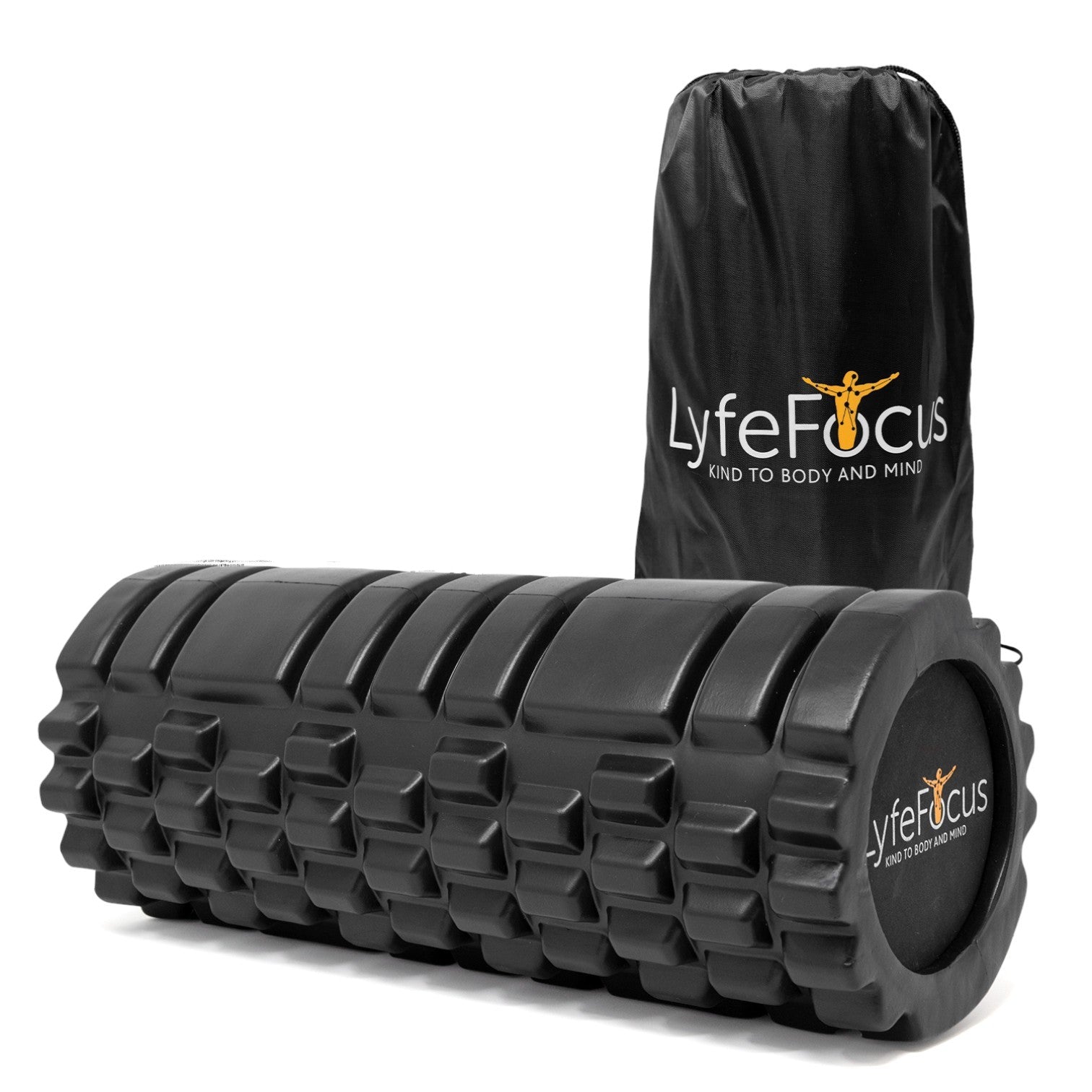
For everyday tightness, having a dedicated tool makes the routine easier to stick to. Our range of foam rollers and massage balls is designed for exactly this kind of targeted muscle work, whether you are easing tension after a desk based day or recovering after exercise.
Knee discomfort can be frustrating, but it is often the muscles around the joint, not the joint itself, that need attention. Foam rolling for knee pain is a simple, low cost way to ease tightness in the quads, hamstrings, calves and IT band, helping your knees move more freely day to day. If you have questions about which product suits your situation, our support team is happy to help, just get in touch with the LyfeFocus team.
Ease muscle pain fast with deep-tissue relief you can take anywhere.
Foam Roller (Black)