5 Stretches for Lower Back Pain That Bring Instant Relief
If you’ve ever stood up from your desk and felt your lower back seize, or stepped off a long commute and struggled to straighten up properly, you already know that lower back pain doesn’t wait for a convenient moment to strike. It’s one of the most common physical complaints affecting people in desk jobs and physical trades alike. The good news is that targeted stretches for lower back pain are one of the most effective, accessible, and immediate tools available for managing it. You don’t need a gym, a physiotherapy appointment, or a lot of time. You need the right movements, done consistently.
This guide covers the stretches that work, the spine stretch benefits that make them worth doing daily, and how to pair them with the right recovery tools for lasting results.
Why Stretches for Lower Back Pain Actually Work
Before diving into the movements themselves, it’s worth understanding why stretching relieves lower back pain rather than just masking it. The lumbar spine is supported by a network of muscles, ligaments, and fascia that — when held in shortened, tight positions for extended periods — begin to generate pain signals. Sitting for hours, sleeping in a poor position, or repeatedly loading the back under strain all contribute to this tightening.
Stretching addresses this at the source. It lengthens contracted muscle fibres, restores range of motion in the joints, increases blood flow to oxygen-deprived tissues, and reduces the neural tension that amplifies pain signals. The result isn’t just temporary comfort — regular stretching genuinely changes the tissue quality and mobility of the lumbar region over time.
According to NHS guidance on lower back pain exercises, staying active and incorporating targeted movement is one of the most important things you can do to manage and prevent back pain — more effective, in most cases, than rest alone.
Stretches for Lower Back Pain That Feel Better Immediately
These are the movements most likely to bring noticeable relief within a single session. They’re accessible to most fitness levels and require no equipment beyond a mat or soft floor surface.
Knee-to-Chest Stretch
Lie flat on your back with both legs extended. Slowly draw one knee toward your chest, holding it with both hands just below the kneecap. Hold for 20–30 seconds, breathing steadily, then switch sides. This stretch directly decompresses the lumbar vertebrae, releases the hip flexors, and eases the deep gluteal muscles that often refer pain into the lower back. It’s one of the best stretches for lower back pain that feels better immediately — even one or two repetitions per side can produce a noticeable shift.
Child’s Pose (Extended)
Kneel on all fours, then slowly sit your hips back toward your heels while extending your arms forward along the floor. Allow your chest to drop toward the ground and breathe deeply. Hold for 30–60 seconds. This position provides a long, sustained stretch along the entire length of the lumbar and thoracic spine, counteracting the forward compression that builds up during prolonged sitting.
Cat-Cow Mobilisation
Starting on all fours with a neutral spine, inhale as you drop your belly toward the floor and lift your head (cow position), then exhale as you round your spine toward the ceiling and tuck your chin (cat position). Move slowly between the two for 8–10 repetitions. This rhythmic movement lubricates the facet joints of the lumbar spine, gently mobilises the intervertebral discs, and begins to restore the segmental movement that stiffness progressively erodes.
Supine Spinal Twist
Lie on your back, draw one knee to your chest, then gently guide it across your body to the opposite side while extending the same-side arm out flat. Keep both shoulders on the floor. Hold for 20–30 seconds per side. This rotation releases tension in the quadratus lumborum — one of the most common contributors to lower back pain — as well as the piriformis and the thoracolumbar fascia.
Seated Forward Fold
Sit on the floor with your legs extended straight in front of you. Inhale to lengthen your spine, then hinge forward from the hips (not the lower back), reaching toward your feet as far as is comfortable. Hold for 30 seconds. This stretch targets the hamstrings and the posterior chain — tight hamstrings are a frequently overlooked contributor to lower back pain, as they pull on the pelvis and alter lumbar mechanics.
Spine Stretch Benefits: Why You Should Make This a Daily Habit
The spine stretch benefits that accumulate with consistent practice go well beyond short-term pain relief. Regular spinal stretching:
- Improves spinal mobility and range of motion, reducing the risk of acute injury during everyday movements
- Reduces disc compression, allowing the intervertebral discs to rehydrate (particularly relevant after a full day of loading)
- Lowers baseline muscle tension across the lumbar and thoracic regions, making pain episodes less frequent and less severe
- Supports better posture by lengthening the hip flexors and anterior chain that pull the pelvis into anterior tilt under prolonged sitting
- Enhances sleep quality — lower baseline pain and muscle tension means the nervous system can downregulate more effectively at night
The key is consistency over intensity. Five to ten minutes of targeted stretching done daily will outperform a 45-minute session done sporadically.
Pairing Stretching With the Right Recovery Tools
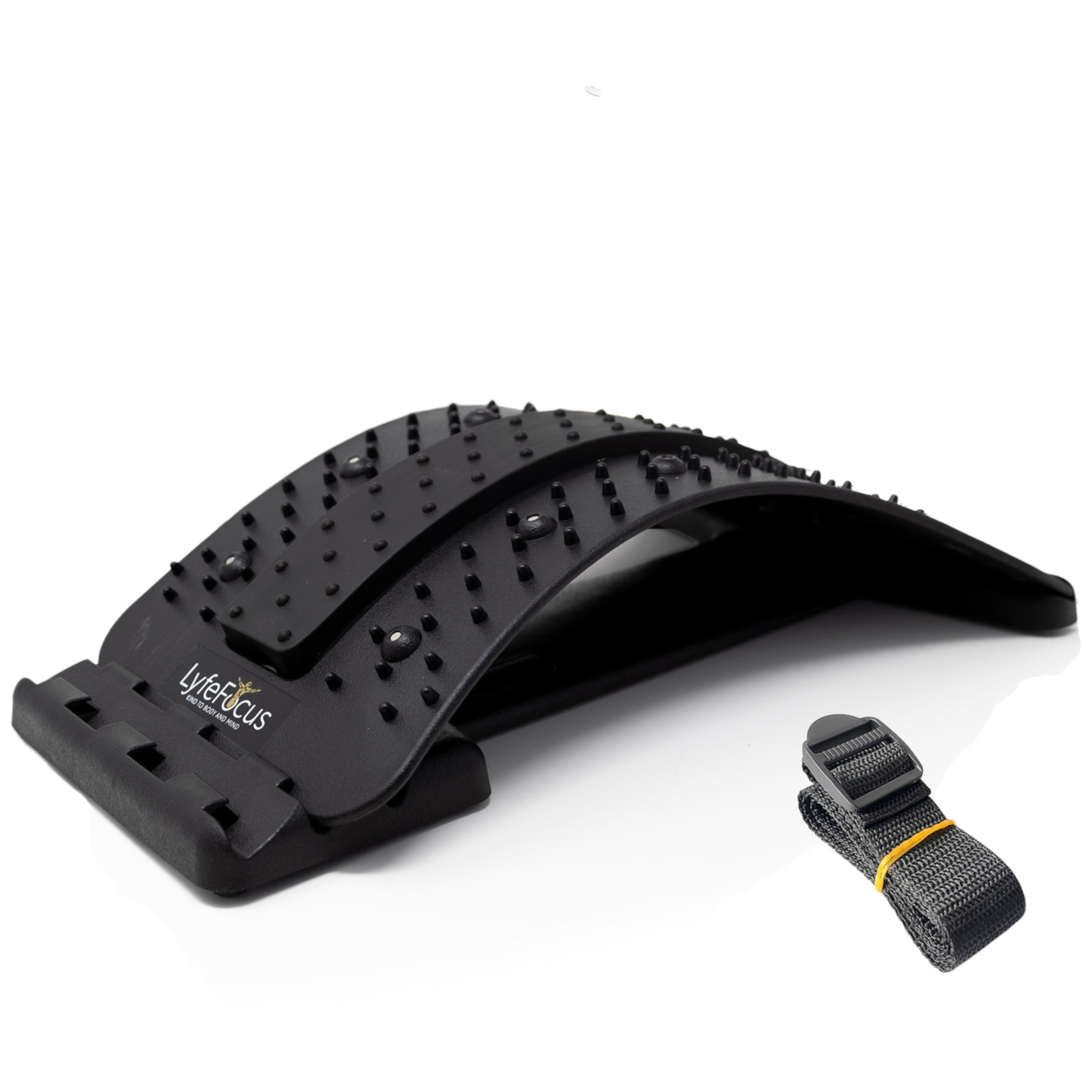
Stretching becomes significantly more effective when combined with tools that prepare the tissues beforehand or support recovery afterward. Heat applied to the lower back before a stretching session increases muscle pliability, making stretches both easier and more productive. A dedicated back stretcher used after your routine provides passive spinal decompression — the kind of sustained, gentle traction that active stretching alone can’t fully replicate.
The LyfeFocus Back Stretcher with Memory Foam is designed precisely for this purpose: place it beneath the lumbar curve and allow gravity to gently restore the spine’s natural shape while you rest. It requires no effort and takes just 10 minutes, making it a natural complement to an active stretching routine.
For full guidance on how to use it safely and effectively, visit the LyfeFocus back stretcher instructions page.
FAQs About Stretches for Lower Back Pain in Lancashire
How often should I do lower back stretches?
For most people managing lower back pain or tightness, daily stretching is ideal. A 5–10 minute routine performed each morning or evening will produce more consistent results than longer, irregular sessions. If you’re in a physically demanding role — common in Lancashire’s manufacturing, logistics, and healthcare sectors — adding a short mid-shift stretch break can also help prevent the accumulative tension that builds up over a full working day.
Are there stretches for lower back pain that help immediately after sitting for long periods?
Yes — the knee-to-chest stretch and the supine spinal twist are particularly effective immediately after prolonged sitting, as they directly counteract the hip flexor tightening and lumbar compression that desk work produces. Even 5 minutes of these two movements after a long session at a workstation can noticeably reduce the stiffness and aching that builds up over hours of static posture.
Can stretching make lower back pain worse?
In most cases, no — gentle, controlled stretching is safe and beneficial for lower back pain. However, if your pain is acute, follows a recent injury, or is accompanied by symptoms such as leg numbness, tingling, or significant weakness, you should seek a medical assessment before beginning a stretching programme. Sharp or shooting pain during any stretch is a signal to stop that movement and consult a GP or physiotherapist.
Is lower back pain common among workers in Lancashire?
Lower back pain is extremely prevalent among Lancashire’s workforce, particularly in physically demanding sectors such as logistics, manufacturing, NHS, and construction. It is one of the leading causes of workplace absence in the UK. Incorporating targeted stretches for lower back pain into a daily routine — whether at home or during work breaks — is one of the most practical, low-cost interventions available for managing and reducing its impact.
Start Your Lower Back Recovery Today
The stretches for lower back pain covered in this guide are simple, equipment-free, and genuinely effective — and for most people across Lancashire, they represent the fastest route to feeling better and staying better. The key is to start today and make them a consistent part of your routine, not something you only reach for when the pain becomes unbearable.
Ready to take the next step? Get in touch with our team in Lancashire today and we’ll help you find the right combination of stretching routine and recovery tools for your specific pain pattern.

Back Stretcher S1
Relieve back pain and restore your posture with a gentle, effective stretch.
Shop Now →