Foam Roller for Legs: 7 Proven Ways to Ease Muscle Soreness Fast
Ever finish a long walk, a gym session, or even a full day on your feet and feel your legs tighten up like a knotted rope? A good foam roller for legs can undo that tension in minutes. Tired, achy legs are one of the most common complaints among office workers, runners, and anyone who spends hours standing or sitting still. This guide shows you exactly how to use a foam roller for legs to relieve soreness, improve circulation, and get back on your feet faster.
Why Your Legs Need Recovery After a Long Day
Your legs carry you through every step, squat, and stair climb. Quads, hamstrings, and calves absorb repeated stress, and when that stress builds up faster than your body can recover, you end up with stiffness, reduced range of motion, and lingering soreness. This is exactly where a foam roller for legs earns its place in your daily routine.
Rolling out tight muscle fibres helps release trigger points, the small knots that form when muscle tissue stays contracted for too long. Left untreated, these knots can restrict movement and even throw off your posture. A few minutes with a foam roller for legs each day keeps that tension from building into something worse.
Desk workers are often surprised to learn that sitting still all day causes just as much leg tightness as a hard workout. Poor circulation from long periods of sitting leads to heavy, stiff calves and hips by mid afternoon. Rolling breaks up that stagnation and gets blood moving again, which is one reason a foam roller for legs has become a common sight under office desks and beside gym bags alike.
How to Choose the Right Foam Roller for Legs
Not every roller works the same way. A soft, smooth roller suits beginners or anyone with sensitive muscles. A textured or multi-zone roller reaches deeper into stubborn knots, which is useful if you train often or sit at a desk with little movement most of the day.
- Smooth surface: gentle, good for first-time users
- Textured or ridged surface: deeper pressure for tight calves and quads
- Firm density: better for larger muscle groups like the hamstrings
- Compact size: easier to pack for travel or the gym bag
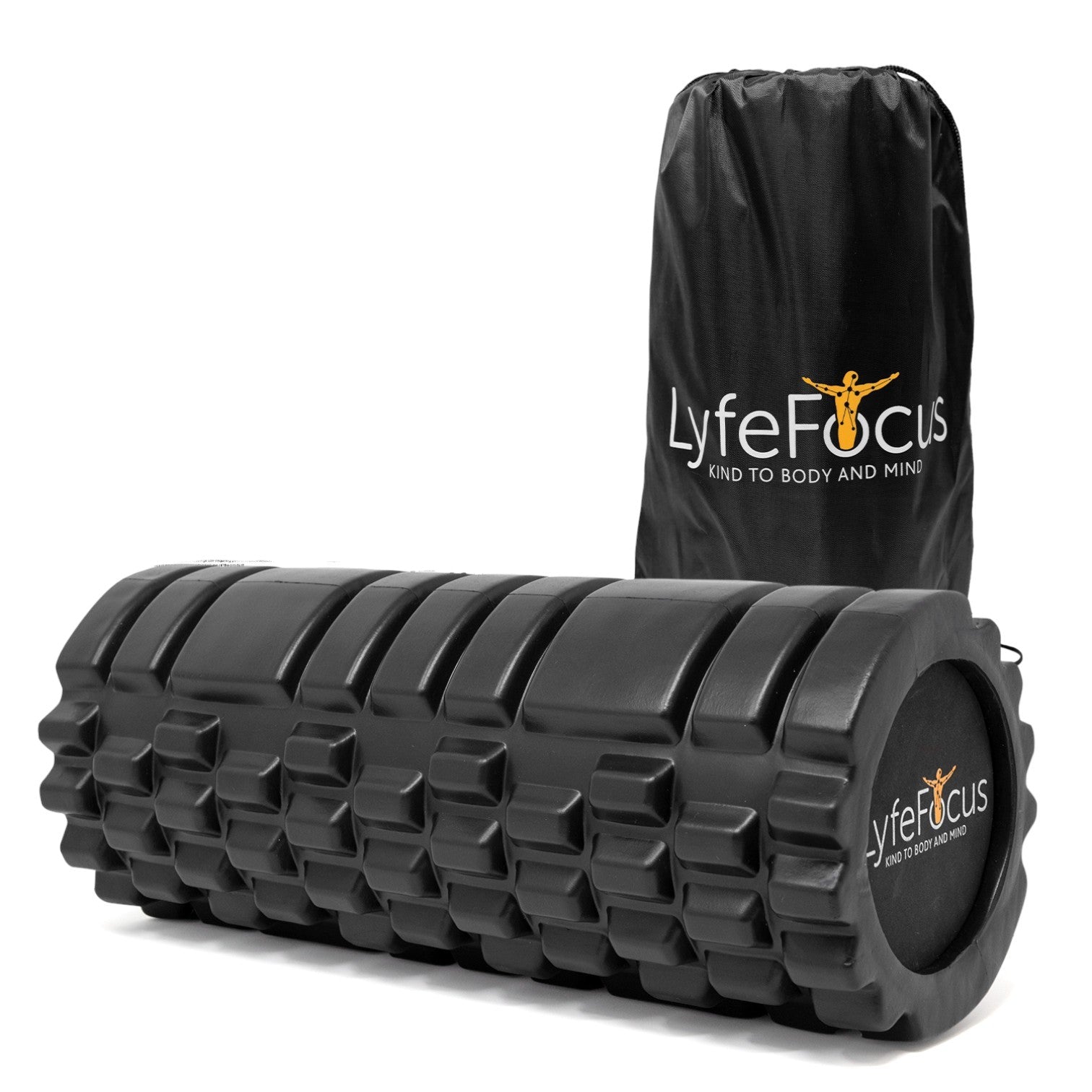
Whichever style you pick, consistency matters more than the roller itself. A foam roller for legs only helps if it becomes part of your routine, not something that sits in a cupboard. A roller with multiple surface zones, such as a broad rolling area alongside firmer ridges, gives you flexibility to switch between gentle warm-up passes and deeper trigger point work in the same short session.
Step-by-Step: Using a Foam Roller for Legs
Using a foam roller for legs is simple once you know the basic technique. Spend 30 to 60 seconds per muscle group, roll slowly, and pause on any tender spot for a few extra seconds rather than rushing past it. Consistency across all three major muscle groups, quads, hamstrings, and calves, gives you the most balanced relief.
Quads
Get into a plank position with the roller under your thighs. Roll slowly from your hips down to just above your knees, keeping your core engaged throughout. Avoid collapsing your weight straight down onto the roller, and instead let your arms control the pace.
Hamstrings
Sit with your legs extended and the roller beneath the back of your thighs. Lift your body with your arms and roll from your glutes down to just above the knee. If one leg feels tighter than the other, spend a little longer on that side.
Calves
Sit with the roller under one calf, cross the opposite leg over for extra pressure, and roll slowly from ankle to knee. Switch legs and repeat. Calves tend to hold tension from standing desks, long commutes, and daily walking, so this area often needs the most attention.
Breathe steadily throughout each pass. Holding your breath tightens the muscle further and makes the exact areas you are trying to release harder to reach. Aim for slow, controlled breathing in through the nose and out through the mouth as you work through each section.
How Often Should You Use a Foam Roller for Legs
There is no strict rule here, but most people benefit from rolling a few times a week, with daily sessions being perfectly safe for general maintenance. Athletes or anyone training intensely may want to use a foam roller for legs both before and after a workout, using lighter pressure to warm up and firmer pressure afterwards to aid recovery.
For non-athletes, a quick session in the evening while watching television or listening to a podcast is often enough to keep legs feeling loose and comfortable. The goal is regular, low-effort maintenance rather than one intense session that tries to undo weeks of built-up tension in a single sitting.
Common Mistakes to Avoid
Even with the right tool, technique matters. Here are the mistakes that stop people getting the full benefit from a foam roller for legs.
- Rolling too fast, which skips over trigger points instead of releasing them
- Applying full body weight straight away instead of easing in gradually
- Rolling directly over a joint, such as the knee or ankle
- Skipping the warm-up roll before exercise and only rolling afterwards
- Using the roller once and expecting long-term results without repetition
- Ignoring pain signals and pushing through sharp discomfort instead of easing off
If a spot feels sharp or genuinely painful rather than tender, ease off. A foam roller for legs should feel like firm pressure, not sharp pain. Building tolerance gradually over several sessions is far more effective, and far more comfortable, than trying to force results on day one.
Foam Roller for Legs vs Other Recovery Tools
Vibrating massage balls target smaller, more precise trigger points, while a foam roller for legs covers broader muscle groups in fewer passes. Hot and cold packs are better suited to acute swelling or inflammation rather than everyday muscle maintenance.
For most people dealing with general leg fatigue, tightness after exercise, or stiffness from a desk job, a foam roller for legs is the most practical starting point. It is portable, requires no setup, and fits into a short break between tasks. Unlike a massage appointment, it does not need to be booked in advance and can be used whenever tightness builds up.
Pairing rolling with light stretching and proper hydration builds a recovery routine that keeps your legs functioning well, whether you are training for a race or simply trying to stay comfortable through a working week. Core strength and good posture also play a supporting role, since weak stabilising muscles often force the legs to compensate and tighten up faster.
Sitting position matters too. Slouching or crossing your legs for long stretches at a desk restricts blood flow through the thighs and calves, which is part of why so many desk workers reach for a roller by the end of the day. Small adjustments to your desk setup, combined with a short rolling session, address the problem from both angles.
The Next Step Is Simple
Sore, tight legs do not have to be part of your daily routine. A few consistent minutes with a foam roller for legs can noticeably reduce stiffness, improve mobility, and help you move through your day with less discomfort. If you have questions about which product suits your situation, our support team is happy to help, visit our support page.
For more on rolling technique beyond the legs, read our guide on using a foam roller for tight hips. And for a closer look at how foam rolling affects muscle recovery and soreness, Cleveland Clinic’s guide to foam rolling is a useful reference.
Ease muscle pain fast with deep-tissue relief you can take anywhere.
Foam Roller (Black)