Back Roller Balls: 5 Powerful Ways to Ease Back Pain at Home
If you sit at a desk for most of the day, you already know how quickly tension builds in your back, hips, and shoulders. Back roller balls are one of the most effective self-care tools you can use to tackle that tension directly, without needing an appointment or expensive equipment. In this guide, you will find out exactly how back roller balls work, where to use them, and how to get the most from each session so your back starts feeling better fast.
What Are Back Roller Balls and Why Do They Work?
Back roller balls are firm, compact spheres designed to apply targeted pressure to specific points on the back, hips, and surrounding muscle groups. Unlike a foam roller, which covers a broad area, back roller balls concentrate pressure into a small surface zone. That focused contact mimics the feel of a therapist’s thumb pressing directly into a knot.
When a muscle is overworked or held in a fixed position for long periods, small areas of contracted fibre called trigger points develop. These knots restrict blood flow, limit movement, and refer pain to other parts of the body. Back roller balls interrupt that cycle by applying sustained pressure that encourages the muscle to release.
The NHS recommends staying active and using targeted self-care techniques to manage back pain at home. Pressure-based tools like back roller balls support that approach by helping you maintain mobility between sessions with a physiotherapist or GP.
5 Ways to Use Back Roller Balls Effectively
Getting results from back roller balls comes down to technique. Here are five specific ways to use them that desk workers and remote workers find most effective.
1. Upper Back Release Against a Wall
Place one or two back roller balls between your upper back and a firm wall. Lean your bodyweight into the ball and bend your knees slightly to control the pressure. Move slowly up and down until you find a tender spot, then hold for 20 to 30 seconds. This targets the rhomboids and trapezius, two muscles that tighten significantly from prolonged screen use.
2. Thoracic Spine Mobility on the Floor
Lie on your back and position two back roller balls on either side of your spine, just below the shoulder blades. Keep the balls off the spine itself and rest your weight into them. Slowly raise your arms overhead to encourage thoracic extension. This is one of the most underused techniques and one of the most effective for people who feel their upper back is constantly stiff.
3. Glute and Hip Release
Sit on the floor with one back roller ball under one glute. Cross the ankle of that leg over the opposite knee to open the hip joint. Shift your weight slowly across the muscle until you find tightness. The glutes are a major contributor to lower back pain in office workers, and back roller balls used here can reduce that referred discomfort significantly.
4. Lumbar Support Roll
Position back roller balls on either side of the lower spine while seated in a chair. Lean back gently so the balls press into the paraspinal muscles that run along the lumbar region. Hold for one to two minutes and breathe steadily. This works best at the end of a long desk session when the lower back has been compressed for hours.
5. Between-the-Shoulder-Blades Trigger Point Work
Back roller balls placed directly between the shoulder blades can reach the exact area most desk workers carry chronic tension. Use a wall or the floor and guide the ball to the tightest point. Apply pressure, breathe out slowly, and hold. You will often feel a dull ache that gradually softens. That is the trigger point releasing.
How Back Roller Balls Differ From Foam Rolling
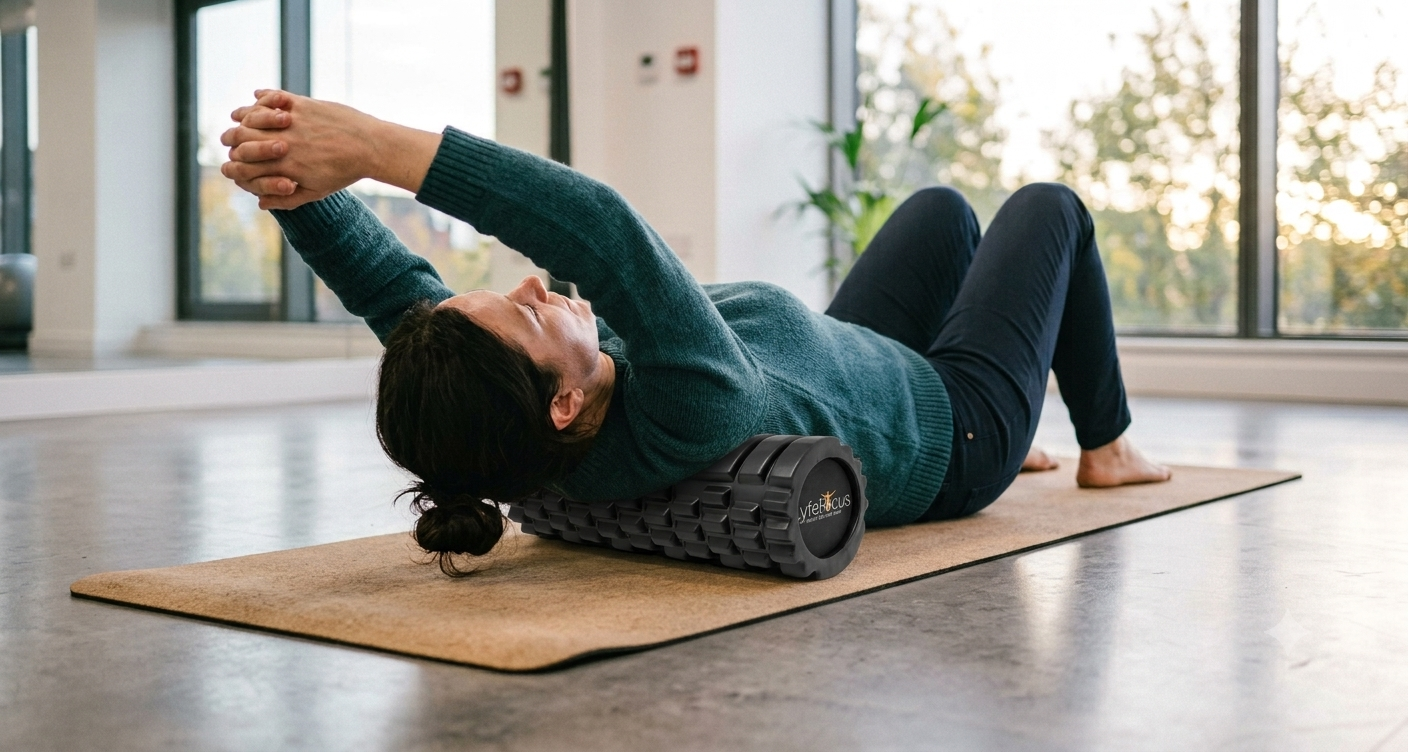
Foam rollers and back roller balls serve different purposes, and understanding the difference helps you use both tools more effectively. A foam roller is ideal for covering large surface areas quickly, warming up tissue before movement, and applying even pressure across a muscle group.
Back roller balls go deeper. Because all the force is directed through a smaller contact point, they reach knots that a roller simply rolls over. If you have ever used a foam roller for tight hips and found it helpful but incomplete, back roller balls are the natural next step for the spots that remain sore after rolling.
For a complete recovery routine, use your foam roller to warm up the area first, then follow up with back roller balls on specific trigger points. The combination produces better results than either tool alone.
How Often Should You Use Back Roller Balls?
For most desk workers, using back roller balls once a day is a practical and effective starting point. A session of 10 to 15 minutes, targeting two or three areas, is enough to make a noticeable difference within a week. If your back tension is more severe, two short sessions daily, one in the morning and one after work, will accelerate progress.
Consistency matters more than duration. Using back roller balls for 10 minutes every day will outperform a 40-minute session once a week. The goal is to keep the tissue responsive and prevent trigger points from settling in permanently.
Avoid using back roller balls directly on the spine, over any area of acute inflammation, or on recently injured tissue. If your pain is sharp, follows a fall, or does not ease after two weeks of daily use, speak to your GP or physiotherapist before continuing.
Common Mistakes to Avoid With Back Roller Balls
Back roller balls deliver excellent results when used correctly, but a few common errors reduce their effectiveness or cause discomfort.
- Rolling too fast: Speed prevents the muscle from releasing. Move at one centimetre per second and pause on tender spots.
- Using them on the spine: Back roller balls should always sit either side of the spine, never directly on the vertebrae.
- Applying too much pressure too soon: Start with light bodyweight contact and build gradually. Bruising-level pressure is counterproductive.
- Skipping the breath: Holding your breath keeps muscles guarded. Exhale slowly as you move through each point.
- Treating only one area: Back pain rarely has a single source. Work through the upper back, lumbar region, and glutes in each session.
Choosing the Right Back Roller Balls
Not all back roller balls perform equally. A ball that is too soft will compress under bodyweight before reaching the muscle depth needed to release a trigger point. Look for a firm ball with enough density to maintain its shape under pressure.
Size also matters. Smaller back roller balls, around 7 to 10 centimetres in diameter, are well suited to the upper back and glutes. Pairs of balls that can be positioned either side of the spine offer more control and comfort than a single ball.
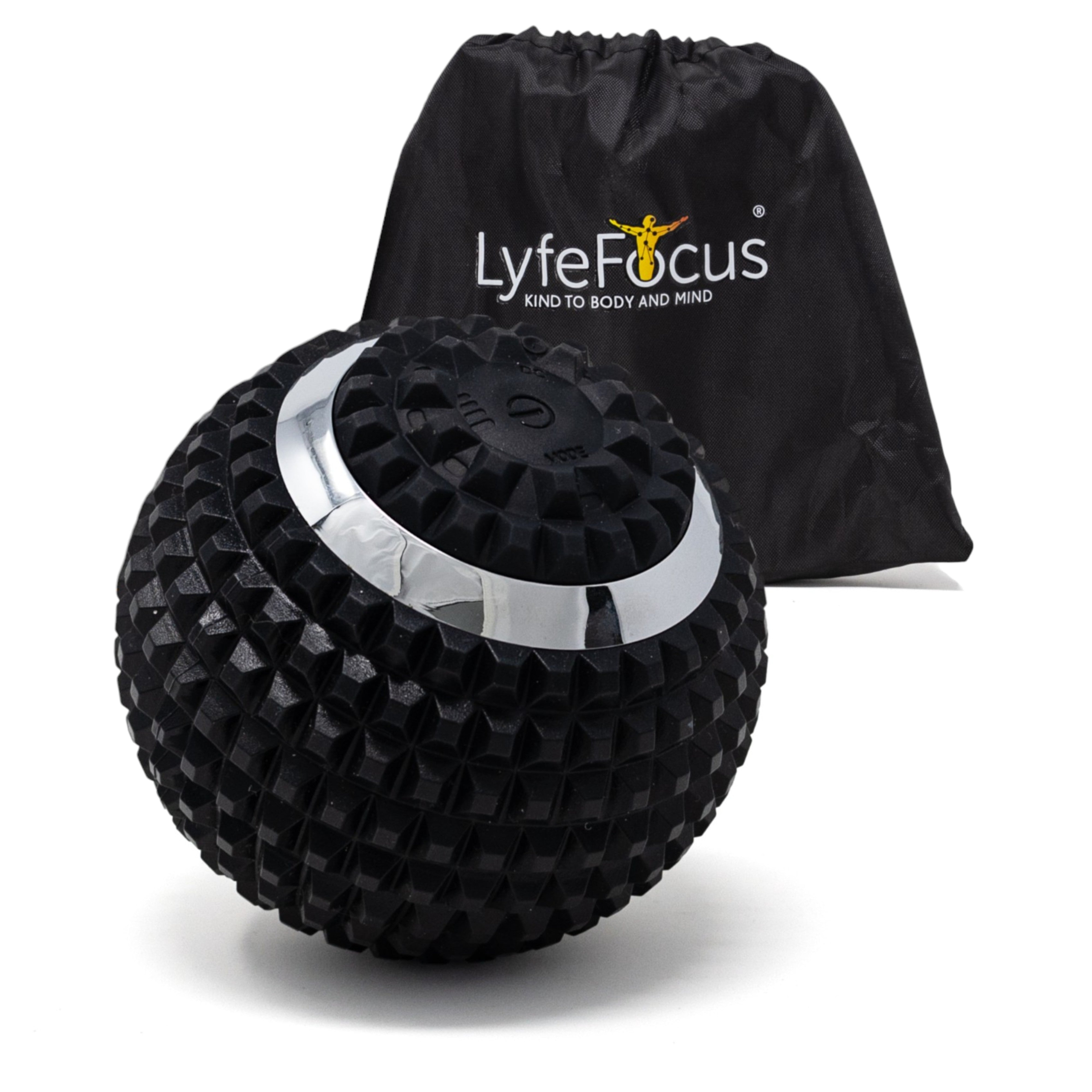
If you want to add vibration to your back roller balls routine, the LyfeFocus Vibrating Massage Ball delivers targeted vibration at the contact point. That vibration penetrates further into the muscle than static pressure alone, which is particularly useful for stubborn trigger points that resist standard rolling techniques.
Your Next Move
Back roller balls are one of the simplest, most cost-effective tools a desk worker can add to their daily routine. Five minutes of targeted rolling after a long day at your screen can undo hours of accumulated tension and keep your back feeling mobile and pain-free. Start with the upper back wall release, learn where your tightest points are, and build your routine from there. Want to know more before you commit? Our friendly support team is happy to chat, visit our support page.
The LyfeFocus Massage Ball helps to ease muscle pain by massaging deep muscle tissue.
Vibrating Massage Ball (Black)