Ice Bath Benefits: 6 Reasons Cold Water Therapy Works
If you have ever finished a hard training session and felt your muscles seize up the next day, you already know the problem. Delayed onset muscle soreness slows your recovery, limits your next workout, and chips away at your consistency. The ice bath has long been the tool athletes reach for to break that cycle. Once reserved for elite sports facilities, cold water immersion is now accessible at home, and the evidence behind it is stronger than ever. Here are six reasons an ice bath belongs in your recovery routine.
What Happens to Your Body During an Ice Bath
Cold water immersion triggers a specific physiological response. When you lower your body into cold water, your blood vessels constrict. This reduces blood flow to the muscles, which in turn limits the inflammatory response that builds up after intense exercise. Once you step out, circulation rebounds. Fresh, oxygenated blood floods back into the muscle tissue, removing waste products and delivering nutrients needed for repair.
The water temperature matters. Most ice bath protocols recommend a range of 10 to 15 degrees Celsius. Cold enough to trigger the vasoconstriction response, but not so extreme that it becomes dangerous for healthy adults. Duration is equally important. Starting with two to three minutes and building gradually toward ten minutes is a sensible approach for most people new to cold water therapy.
6 Ice Bath Benefits Backed by Evidence
1. Faster Muscle Recovery
The primary reason athletes use an ice bath is to reduce delayed onset muscle soreness, commonly known as DOMS. The constriction of blood vessels slows the inflammatory cascade that causes that familiar stiffness in the days following a hard session. Research published by the NHS consistently supports cold therapy as a short-term tool for managing exercise-induced inflammation. For people training multiple days per week, faster recovery means more consistent output.
2. Reduced Inflammation
Inflammation is a normal part of the repair process, but chronic, excessive inflammation slows recovery and can contribute to ongoing discomfort. Cold water immersion acts as a physical brake on that process. By reducing tissue temperature and slowing nerve conduction, an ice bath limits swelling and gives the body a cleaner environment in which to repair.
3. Mental Resilience and Stress Tolerance
Getting into cold water is uncomfortable. That discomfort is also the point. Repeated exposure to cold trains the nervous system to remain calm under stress. Over time, the initial shock response becomes less intense, and the ability to regulate breathing and stay composed in difficult conditions improves. Many people who use an ice bath regularly report a noticeable improvement in their general tolerance for stress outside of sport and exercise.
4. Improved Sleep Quality
Body temperature plays a central role in sleep onset. A cold immersion session in the evening helps accelerate the natural drop in core temperature that signals to the brain that it is time to rest. For people who struggle to wind down after intense evening training, an ice bath can become a reliable part of a pre-sleep recovery routine.
5. Reduced Muscle Tension
Cold water does not only affect inflammation. It also acts directly on muscle tension. The numbing effect of cold reduces the firing rate of muscle fibres, allowing tight, overworked muscles to relax more effectively than they might through stretching alone. For desk workers and people who carry physical tension through the shoulders, hips, and lower back, this can be a significant benefit even without intense exercise in the picture.
6. Sharper Focus and Energy
The cold shock response triggers a release of noradrenaline, a neurotransmitter associated with alertness, focus, and mood. Many people who use an ice bath in the morning describe a sustained improvement in mental clarity and energy levels that carries through the working day. This benefit is one reason cold water immersion is increasingly popular with professionals and remote workers, not just athletes.
Ice Bath Safety: What to Know Before You Start
Cold water immersion is generally safe for healthy adults when approached sensibly. That said, a few precautions are worth observing.
- Always start with shorter sessions of two to three minutes and increase duration gradually
- Keep the water temperature between 10 and 15 degrees Celsius for most protocols
- Never use an ice bath alone if you are new to cold water therapy
- Avoid ice baths if you have a heart condition, circulatory disorder, or Raynaud’s syndrome without first consulting a medical professional
- Step out slowly, dry off quickly, and allow your body to rewarm naturally rather than jumping into a hot shower immediately
If you have any underlying health conditions, always speak with your GP before starting a cold water immersion routine.
Ice Bath at Home: What to Look For
The main barrier to cold water immersion used to be access. Permanent cold plunge pools are expensive and impractical for most homes. Portable ice baths have changed that. A good portable ice bath needs to hold its temperature for a full session, provide enough space to immerse the body properly, and be straightforward to fill, drain, and store between uses.
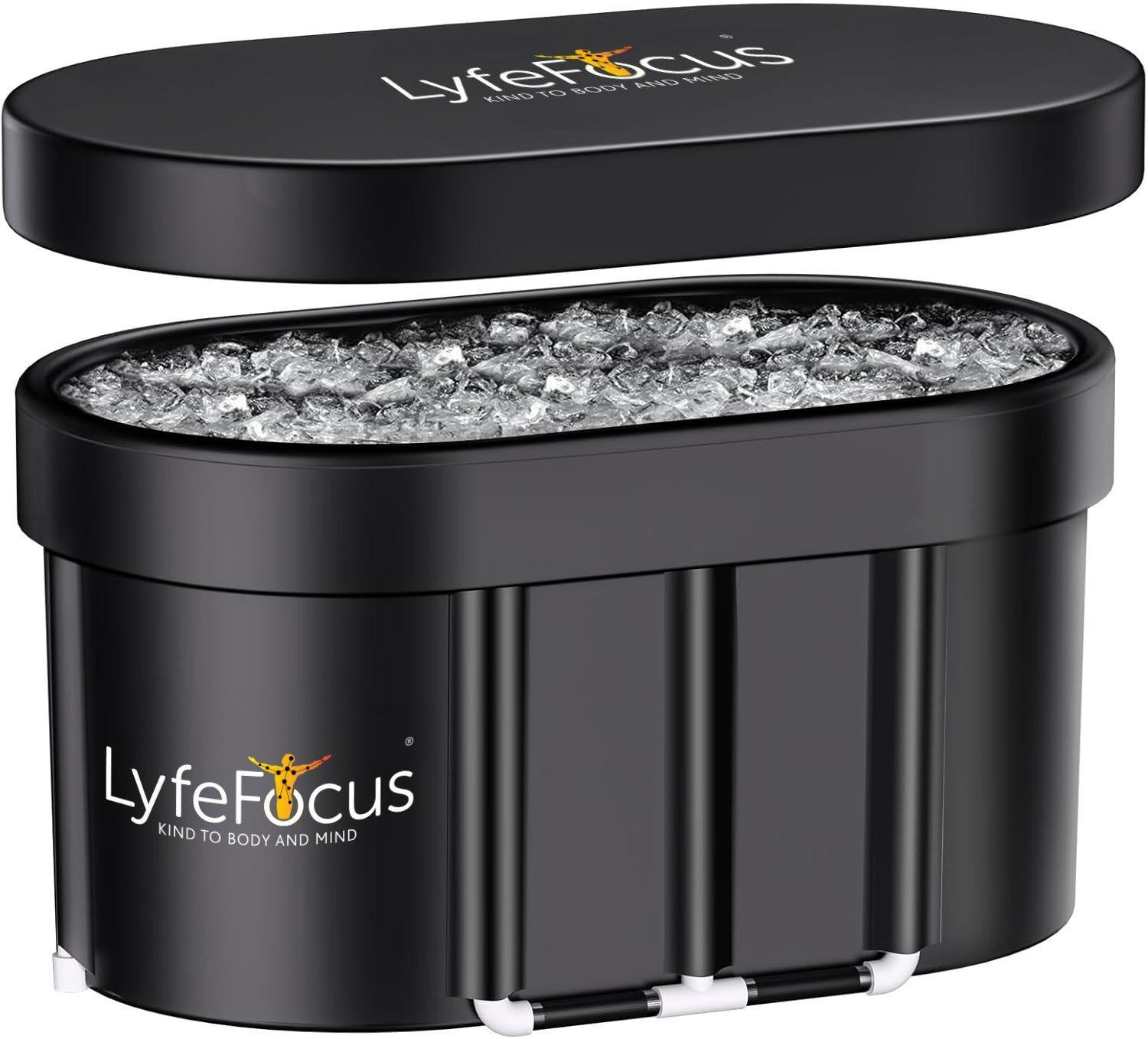
The LyfeFocus ice bath collection is designed specifically for home recovery. Each model features a large bath-shaped design for a full-body immersive experience, multi-layer insulation to hold the cold for longer, and eight support bars for structural stability. Every kit includes a foot mat, groundsheet, pump, drain hose, ice cube trays, lid, thermometer, and travel bag, so there is nothing extra to source before your first session.
How Often Should You Use an Ice Bath
For most people, two to three sessions per week after training is a practical and effective frequency. Daily use is possible for those who tolerate cold well, but recovery protocols should always be matched to training volume. An ice bath is a tool, not a punishment. Using it consistently after your hardest sessions will deliver more value than irregular attempts at maximum cold exposure.
Morning sessions suit those who want the energy and focus benefits throughout the day. Evening sessions work well for people who train after work and want to support overnight recovery and sleep quality. Experiment with timing and find what fits your schedule.
Start Your Recovery Routine Today
An ice bath is one of the most effective and accessible recovery tools available. It reduces inflammation, speeds muscle recovery, improves sleep, builds mental resilience, and sharpens focus, all from the comfort of home. If you are serious about your training, your wellbeing, or simply want to feel better day to day, cold water immersion is worth adding to your routine.
If you have questions about which model suits your setup, our support team is happy to help, get in touch with the LyfeFocus team directly.
Upgrade your recovery with an immersive, full-body ice bath experience.
Ice Bath (Black Top)